
EVs are getting cheaper everywhere except the U.S.
Global EV affordability is improving in 2025, but weak policy, missing cheap Chinese models, and America's love of big cars are holding prices up.
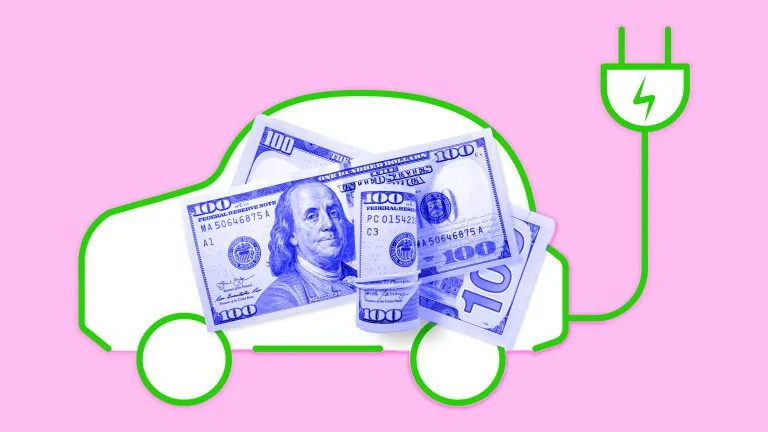
Electric cars became more affordable across much of the world in 2025, but the U.S. is being left behind by weak subsidies, limited access to low-cost Chinese EVs, and consumer demand for larger vehicles. For executives, that means the U.S. EV market is being shaped less by product innovation than by policy gaps and market structure.
Electric cars got cheaper across much of the world in 2025. The big exception is the U.S., where the affordability curve has not bent the same way. One in four cars sold globally is now electric, which is a useful reminder that EVs are no longer a niche experiment or a luxury showcase. They are a mainstream category in motion. In the U.S., though, penetration is still being held back by a familiar mix of weak support, expensive vehicles, and a market that keeps rewarding size.
The source points to three reasons the U.S. is lagging. First, it lacks supportive policy and subsidies at the scale that help buyers close the price gap. Second, the U.S. does not have access to affordable Chinese models, which have helped push EV prices down in other markets. Third, American buyers still prefer big cars, and bigger vehicles typically cost more to produce, buy, and run. Put together, those forces make the U.S. an outlier in a year when EV affordability is improving almost everywhere else.
That matters because price is still the gatekeeper for EV adoption. A car can be cleaner, quieter, and more advanced, but if it costs too much upfront, many buyers will stick with what they know. That is especially true in the U.S., where the purchase decision is often shaped by monthly payments, financing terms, and the tradeoff between range, size, and total cost. When subsidies are limited and cheaper imported options are off the table, the market has less room to pull first-time EV buyers in. The result is not just slower adoption, but a narrower lane for competition.
Globally, the fact that one in four cars sold is now electric suggests the industry has crossed a major threshold. EVs are no longer only for early adopters, coastal buyers, or premium-brand loyalists. In many markets, cost reductions have made them a practical choice for a much broader set of consumers. That shift is important for automakers, suppliers, and investors because it changes the basic shape of the race. Companies are no longer only competing on battery specs or charging speed. They are also competing on price discipline, manufacturing scale, and the ability to serve mass-market buyers without destroying margins.
The U.S. market, however, is being pulled in a different direction. Supportive policy can make a huge difference in whether consumers cross the EV adoption gap, especially when sticker prices are still sensitive. When subsidies are weak or inconsistent, the burden shifts back onto manufacturers to cut costs or offer cheaper trims. But the source notes another constraint: affordable Chinese models are unavailable in the U.S. That matters because Chinese automakers have been a major source of low-priced EV pressure globally. Without that competitive force, U.S. buyers see fewer bargain options, and domestic automakers face less direct pressure to reset entry-level pricing.
There is also a structural wrinkle that should not be ignored: Americans like big cars. That preference is not just a style issue. Bigger cars generally require more materials, bigger batteries, and more capital to build, all of which can keep prices elevated. In other words, the market is not merely rejecting cheaper EVs. It is favoring a product mix that is inherently harder to make cheap. For executives, that means the U.S. problem is not going to be solved by one lever alone. It is the combination of policy, competition, and consumer taste that keeps the country behind the global affordability trend.
For decision-makers, the strategic read is straightforward even if the politics are not. The rest of the world is proving that EV adoption can accelerate when cheaper models are available and policy supports the transition. The U.S. is showing what happens when those conditions are weaker or missing. Automakers, lenders, dealers, and policymakers all have a role in how quickly the market catches up. And for peers watching from the boardroom, the lesson is bigger than EVs alone: when affordability opens a market, the companies that can serve the lower end of demand first usually get the advantage. In 2025, that advantage is spreading globally. In the U.S., it is still waiting to arrive.
This story's Key Insights and Take-aways are locked.
Create a free account to unlock Executive Actions for one credit.
Register to UnlockAlways free for Executives Club members. Join the Club
More in Technology

US startup bets on Japan with AI agents that tap live web data
A U.S. startup is targeting Japan with AI agents built to pull live web data, a signal that demand for real-time automation may be ready to cross borders fast.
Steam's store refresh lands, and some users are calling it 'hot garbage'
Valve's latest Steam store redesign adds a personalized release calendar and higher-res art, but it also reignites the perennial UI revolt that every product team fears.

Fermentation turns food waste into profit, not landfill
A centuries-old process is turning processing byproducts into valuable ingredients, hinting at a cleaner, more circular supply chain for food makers.