
Ex-OpenAI engineer stays in jail as Saudi-backed $1M bond fails to sway judge
A federal judge refused to release Abdulrahman Alfozan, citing flight risk and Saudi government support for his bond, deepening a national security case.
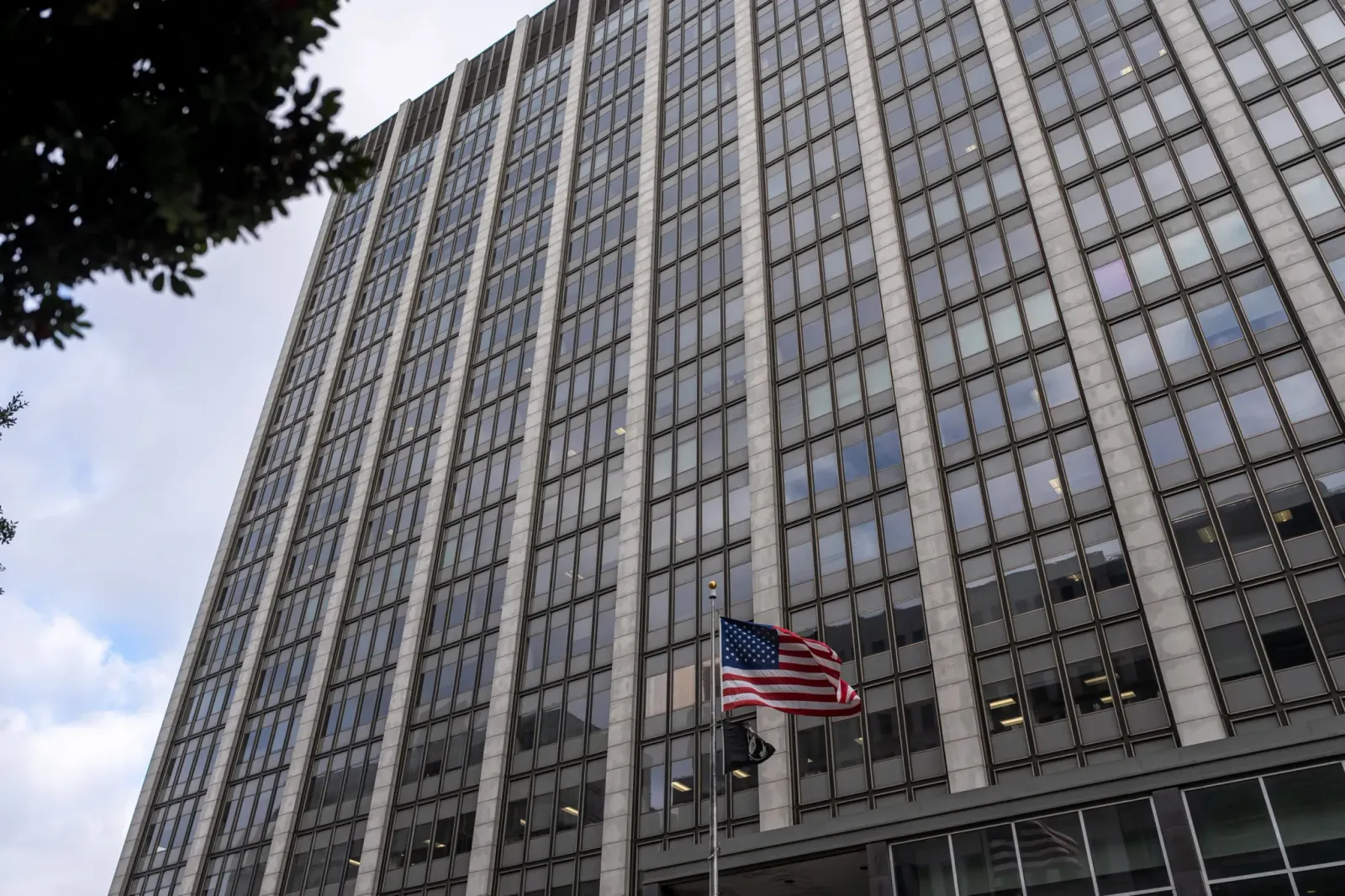
Abdulrahman Alfozan, a former OpenAI engineer accused of bugging a conference room, remains in federal custody after a judge rejected a $1 million bond backed by the Saudi government. The ruling signals that courts and prosecutors will treat insider access at AI leaders as a national security flashpoint, not just a corporate HR matter.
A federal judge on Monday ordered former OpenAI engineer Abdulrahman Alfozan to remain in jail, rejecting a $1 million bond that the Saudi government had offered to guarantee. Magistrate Judge Alex G. Tse said the bond had to be weighed against Alfozan's potential access to much greater wealth, warning: "Once he leaves, there's no getting him back, and that's why this is a bigger case." Alfozan, 35, has been in custody since the FBI arrested him on Oct. 9, and he will stay there until a preliminary hearing on Nov. 6. He appeared in court in an orange jumpsuit and white face mask, escorted by two U.S. marshals, with about 60 people watching, including a group of high school students drawn by the case's prominence.
The case centers on a recording device Alfozan allegedly planted on Sept. 28 in a conference room where OpenAI executives, and sometimes government officials, discussed sensitive information. He faces one count of using or attempting to use a device to intercept oral communications, which carries a maximum of five years in prison. The criminal complaint does not charge him with espionage, theft of trade secrets, or acting as an agent of a foreign government, a point his defense stressed. OpenAI has said it has "no indications" that he inappropriately accessed or took model weights, source code, or customer data. Still, prosecutors argued he posed a danger to the community and to U.S. national security, and the judge agreed that the risk of flight was too high.
New court filings revealed why Alfozan had a one-way flight to Saudi Arabia booked for Oct. 12, three days after his arrest. His lawyer said Alfozan is a Saudi citizen who has been in the U.S. for 15 years, got his green card in 2020, and joined OpenAI in 2025. The flight was booked Sept. 13 for Alfozan, his wife, also a Saudi national, and their 3-month-old baby. The economy fare for all three cost $1,897.59 and could be changed for a $180 fee. The defense said this was not unusual: 70% of the 138 airline bookings in his email since January 2021 were one-way tickets, and his naturalization application lists 25 trips abroad between 2020 and 2025, 20 of which included Saudi Arabia, with returns from every one. The Oct. 12 date mattered because it was the end of his wife's 60-day grace period after her U.S. work permit expired on Aug. 13. She has struggled with postpartum depression and anxiety since giving birth, according to the defense motion. Alfozan had filed for paternity leave from OpenAI from Oct. 19 to Dec. 20, after which he planned to return to the Bay Area and his role.
Prosecutors painted a different picture. After Alfozan's arrest, his wife allegedly told authorities that she and the baby intended to permanently move to Saudi Arabia, and that her husband intended to move there at some point to be with them, though he was first spending two months of paternity leave in the country. In court Monday, the defense said she now plans to return to the U.S. on a temporary B-1 visa and left rather than overstay her visa. The government also detailed evidence found on Alfozan's iPhone: several electronic components similar to the device allegedly installed behind a TV in the conference room, a second device found in his bag, and photographs dated Sept. 22 to Sept. 28 of another recording device. Other photos showed input and output panels on televisions and devices in various OpenAI buildings, including another conference room where sensitive meetings frequently occurred, suggesting Alfozan had done reconnaissance to determine where he might install additional devices. A deleted note from September 2026 contained links to recording devices, including the Seeed Studio type allegedly used. Two other notes stood out: one titled "Riyadh tasks," last modified Sept. 13, listed finding an apartment and a job for his wife and getting a Saudi passport for his son; another titled "OpenAI leave," last modified Oct. 7, suggested an early pickup of the devices and extending his leave to full. His wife also told FBI agents she had seen her ChatGPT account open on her husband's laptop.
The defense pushed back hard. Attorney William Pernik argued the conference room was "an open room where anyone could walk in," that Alfozan held meetings and led teams there, and that "OpenAI encouraged Mr. Alfozan to be involved with Saudi Arabia." He noted Alfozan stayed in the country for eight to ten days after OpenAI confronted him, asking: "If he really were an agent of a foreign government... why wouldn't he just leave right away?" The complaint, however, says Alfozan had no authority to enter the room or take part in meetings there. OpenAI terminated his employment on Oct. 9, although his lawyer said the company never formally told him; he had been placed on administrative leave before his arrest. Judge Tse noted that OpenAI would not have fired him if it had no concern about what it found.
The deeper worry, prosecutors said, is unknown. "That is the concern, that something is going to leave OpenAI and the U.S., and quite frankly we don't even know what that is," Assistant U.S. Attorney Nick Parker said in court. The filings also show Alfozan's browser history allegedly accessed a folder called "Saudi Gov Docs" on Oct. 4, 2026, and that between July 6 and Sept. 21 he queried an internal OpenAI productivity tool about which staff could be suitable to attend a high-level informal meeting with ministers in Saudi Arabia, and about planned OpenAI visits to the country. The case has become a symbol of how AI companies' crown-jewel assets attract foreign government interest, and how a single insider with access to sensitive meetings can trigger a national security review even without espionage charges.
For executives and boards, the lesson is that insider risk at AI companies is now a federal matter with geopolitical dimensions. Corporate security teams should treat unusual travel, foreign government contacts, and device behavior as interconnected signals, not isolated HR issues. The case also shows that termination decisions can quickly become public evidence in criminal proceedings, and that cooperation with investigators, while necessary, does not shield a company from reputational scrutiny. With the next hearing set for Nov. 6, the legal fight is only beginning, and the outcome will be watched closely by every AI company with sensitive conversations happening behind closed doors.
This story's Key Insights and Take-aways are locked.
Create a free account to unlock Executive Actions for one credit.
Register to UnlockAlways free for Executives Club members. Join the Club
More in Business

Elon Musk unveils a flying car, and SpaceX helped build it
The Tesla CEO's showcase at a SpaceX facility signals a future where road and rocket engineering converge.

Apple's $2,000 iPhone Duo opens preorders, taking on Samsung and Google
Apple's first foldable hits the market at a premium price, reshaping a category Samsung and Google have led.

Pope Leo XIV, first American pope, diagnosed with lung cancer
The 71-year-old Chicago-born pontiff underwent successful surgery on his right lung, and his diagnosis raises new questions about his AI-focused papacy and the Vatican's future.