
Exxon and Chevron say refining is the bottleneck keeping fuel prices high
Even as WTI falls 26%, retail gasoline and diesel barely budge because wars have choked global refining.
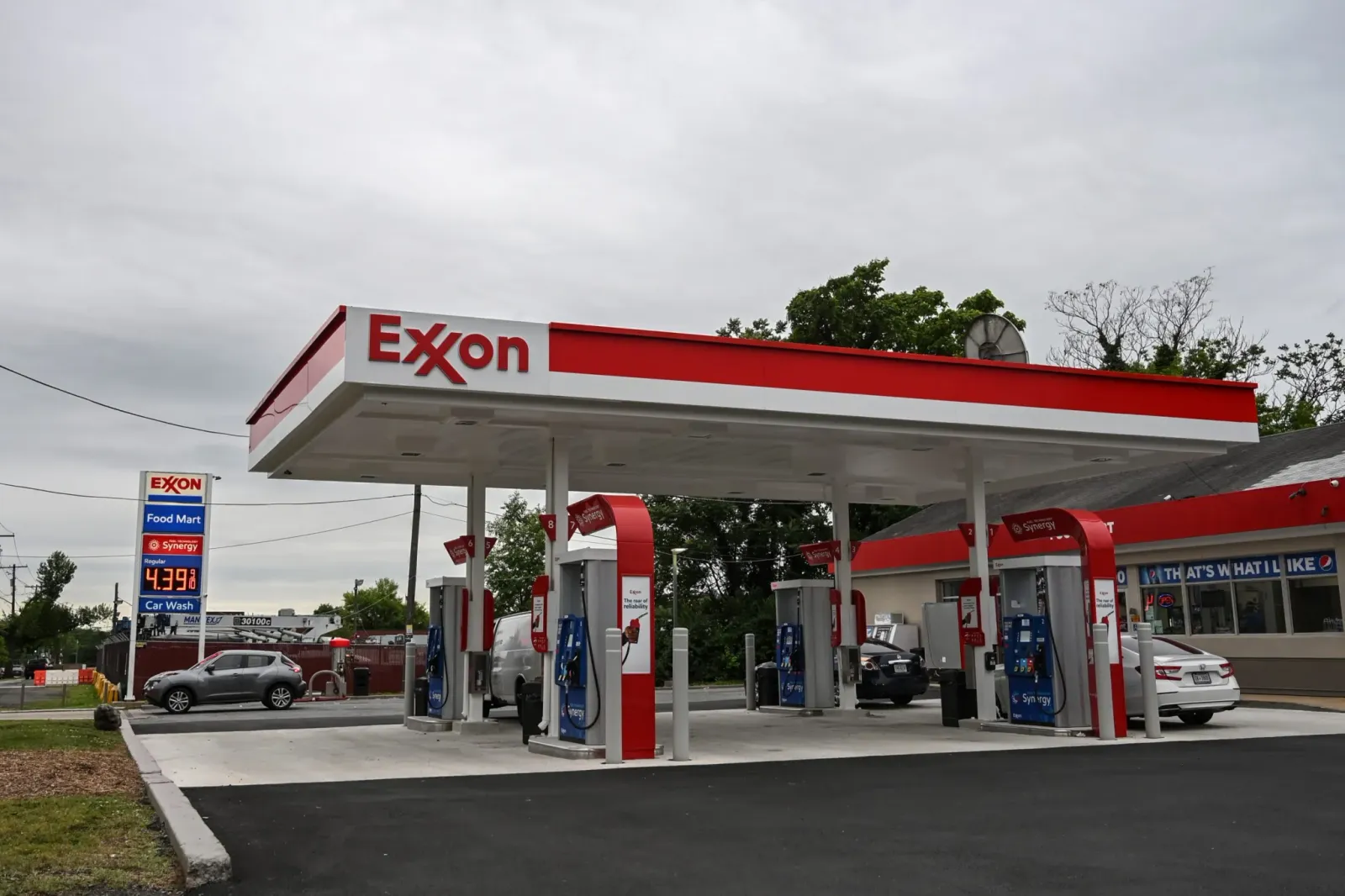
ExxonMobil CFO Neil Hansen and ExxonMobil CEO Darren Woods, along with Chevron CEO Mike Wirth and Chevron CFO Eimear Bonner, warned that wars have left global refining capacity critically short. For decision-makers, the message is clear: consumers feel the pain even when crude gets cheaper, because products stay scarce and margins stay high.
ExxonMobil CFO Neil Hansen and Chevron leadership delivered the same uncomfortable takeaway: refining is the constraint. And because global refining capacity has been knocked offline by war, fuel prices can stay stubbornly high even if crude oil drops. The executives are not talking about a theory. They are pointing to what’s happening to the pump and the supply chain right now.
The data they cite is brutal in its simplicity. Retail gasoline prices are just 10% below this year’s peak in May, even though West Texas Intermediate is down 26% from its 2026 high. That gap tells you the market is no longer moving in lockstep with oil. When refineries cannot produce more gasoline, diesel, and jet fuel, you can have cheaper crude and still get expensive finished products. That is exactly why Hansen called refining the “constraint pain point in the energy system,” saying it’s “something that perhaps the market isn’t fully focused on.” His point is that the problem is not only upstream pricing. It is downstream throughput, and war has reduced it.
So what changed? Nearly 10% of the world’s ability to refine crude oil is effectively offline, according to Melius Research, tied to a cluster of disruptions: the Strait of Hormuz is largely closed, continuing Ukrainian attacks have hit Russian refineries, and China’s export ban further limits supply flows. The result is that the refineries still operating have to run flat out to meet demand. When those plants are at maximum utilization, they cannot “create capacity” on demand just because oil becomes cheaper or inventories shift. With the system already tight, the link between crude prices and retail product prices grows tenuous.
This tightening shows up in margins and inflation pressure. The executives describe record-high fuel-making margins that benefit refinery owners but drive up costs for consumers. In the US, the average price of gasoline has crept up above $4 a gallon, frustrating drivers and politicians, including President Donald Trump, who has criticized Big Oil in recent weeks for not bringing down costs fast enough. The underlying mechanism matters for strategy: if the constraint is refining, then cutting crude costs does not automatically relieve consumer prices. It also means inflation can keep biting even during a crude downturn, because finished fuels do the “late” transmission.
The pain is especially sharp in the middle distillates market, Chevron says. Chevron CEO Mike Wirth points to diesel, jet fuel, and heating oil as the real bottleneck. Retail diesel prices are just 6% below their highs this year, even though the drop in WTI has been four times as much. That mismatch suggests product scarcity is driving price more than crude. Wirth also warns that the market could tighten further as countries in the northern hemisphere restock heating oil ahead of winter, adding upward pressure on product pricing into the third quarter and perhaps beyond. This is not just a summer story. It is a seasonal unwind with a geopolitical kicker.
Another shift is that gasoline starts trading on storage levels and inventories rather than oil. Rob Thummel, senior portfolio manager at Tortoise Capital Advisors LLC, says refined product inventories are approaching historical lows, and that gasoline prices are “not as much being represented by the movement in oil prices” but more by the movement in inventories. For executives who think in balance sheets and risk, this matters because inventories can tighten quickly and recovery can be slow when physical throughput is constrained. It also explains why the “oil down, prices down” narrative has stopped working.
ExxonMobil says the situation is likely to persist. ExxonMobil, which operates the world’s biggest refinery network outside of China, sees the trend advancing for the foreseeable future because about 5 million barrels a day of refining capacity is unable to reach the global market. Exxon CEO Darren Woods said on a call with analysts that he’s “never seen the available capacity relative to demand as low as it is today,” adding, “It’s going to take a while for the industry to climb its way out of that hole.” In a system with so little slack, utilization numbers become destiny. Exxon’s Gulf Coast refineries ran at a utilization rate of 95% in the second quarter, while Chevron’s US facilities ran even harder at 97%. Shell ran its refineries at 102% in the period but expects that to drop this quarter due to scheduled maintenance.
There are second-order implications for everyone in energy, industrials, logistics, and capital allocation. Chevron CFO Eimear Bonner frames it as a market structure issue: geopolitical uncertainty has tightened markets and reinforced the importance of reliable supply, while “the shock absorbers that have mitigated the volatility up until now, those continue to be drawn down.” If your industry relies on predictable input costs or just-in-time deliveries, you should expect volatility where it is hardest to hedge: finished fuels. The executives are also implicitly warning peers that ramping output is not a fast fix when key plants are offline or constrained by geopolitical realities. Even when crude volatility cools, product constraints can keep consumers paying and companies managing margin swings the hard way.
This story's Key Insights and Take-aways are locked.
Create a free account to unlock Executive Actions for one credit.
Register to UnlockAlways free for Executives Club members. Join the Club
More in Business

Anthropic’s Levant Alpöge cracks the Jacobian conjecture after 87 years
A Harvard valedictorian used Claude to hit a 1939 breakthrough, but the missing “why” is the real problem.

Uber buys Delivery Hero for nearly $15B, vaulting to top food delivery outside China
The deal doubles Uber's dual-services footprint and pushes a ride-and-eats bundling play into 50 more markets.

Epic and Google drop settlement bid, forcing rival Android app stores by July 22
Google told the court it is ready to carry third-party app stores starting Wednesday, July 22.