
Eye-in-a-Care-Box keeps pig and human retinas alive long enough to “see” again
A perfusion device revived light response after death, and preserved donated human retinas for possible whole-eye transplants.
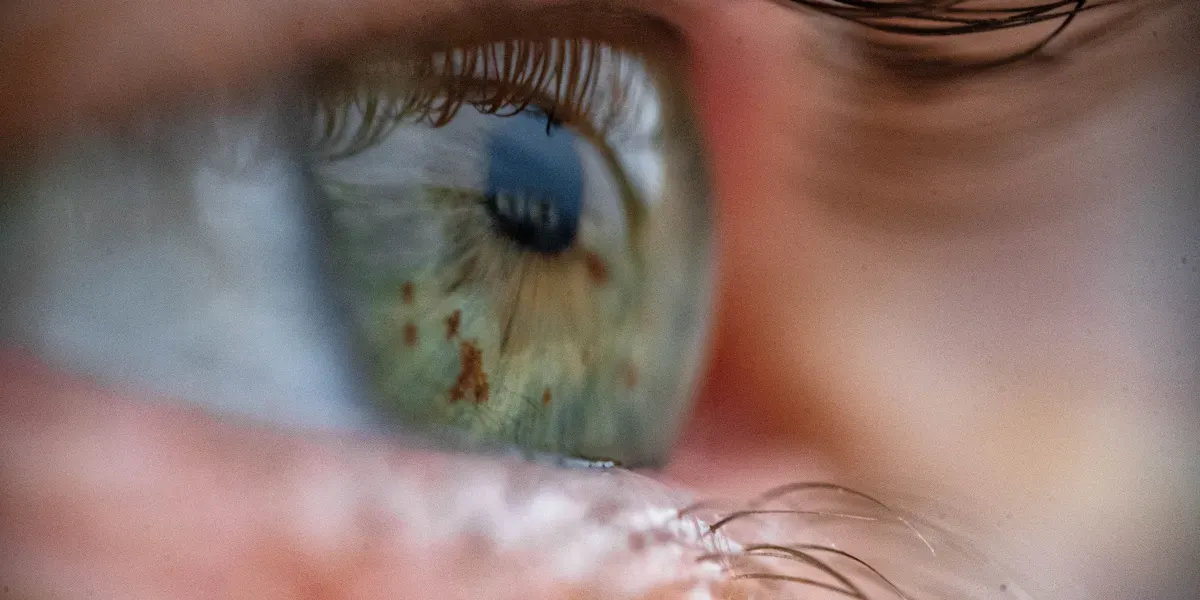
Researchers at the Centre for Genomic Regulation (CRG) and the Barcelona Institute of Science and Technology developed the Eye-in-a-Care-Box (ECaBox), a perfusion device meant to maintain surgically removed eyes. Their experiments in pig eyes and with 12 donated human eyes suggest better retina viability, plus restored light response in treated eyes.
Eye transplants face a brutal bottleneck: the moment an eye leaves the body, it starts to degenerate. Researchers have now tried to fix that with an “Eye-in-a-Care-Box” (ECaBox) that uses perfusion, the same basic idea of feeding organs oxygen and nutrients through their blood supply, while the eye is kept in a controlled environment. In experiments, pig eyes that were maintained in the device appeared “significantly more viable” after 24 hours than untreated eyes, and they also seemed able to respond to light. After about 15 minutes of perfusion, light responsiveness returned in the treated pig eyes, while untreated eyes lost this ability as soon as they were removed.
The most consequential part is not the pig data, it is the early human work. Cosma and her colleagues collected 12 eyes from six people who had died, then compared each pair by placing one eye in the ECaBox and leaving the other without the device. Again, the perfused eyes did better and their retinas were preserved.
To understand why this matters for anyone making decisions in health systems, investing in medtech, or governing clinical research, zoom out to how eye preservation typically works. Whole-eye transplantation is difficult surgically, but there is a second, equally unforgiving problem: timing and tissue breakdown. Eyes begin to degrade quickly after removal, and researchers have struggled with outcomes from earlier attempts, including efforts where a newly transplanted eye was not able to see. That sets up the core promise of the ECaBox: if perfusion can slow deterioration and preserve the eye’s ability to function, the transplant procedure becomes more than an impressive transplant story, it becomes a viable pathway.
The ECaBox is designed to mimic aspects of what the body normally does, but in a lab-friendly container. The device delivers an oxygen-rich supply of fluid through the artery that normally supplies the eye with blood. The eye sits on a “bed,” and excess fluids are drained away. While the device itself is sealed to maintain a specific temperature and pressure, a clear window on its side lets researchers study and image the eye during perfusion. This combination is more than convenience. Imaging access matters because it gives scientists a way to observe what is happening during preservation, not just measure outcomes at the end.
In the pig experiments, the researchers used eyes anatomically similar to human eyes, sourcing them from a local slaughterhouse. Their results were a clear contrast between “ambient time” and controlled perfusion. Pig eyes kept at room temperature outside the device degraded pretty quickly. Cells in the eye shrank, and the eyes started to lose their structure. Cooling alone did not solve it either. Even when eyes were kept at 4°C (39°F), they degenerated within 24 hours. Perfusion inside the ECaBox changed the picture: after 24 hours, tests suggested the perfused eyes were “significantly more viable” compared with eyes not maintained in the device.
The light-response angle is where the story grabs people who care about function, not just survival. Untreated pig eyes lost the ability to respond to light immediately after removal. In the treated eyes, that ability came back after about 15 minutes of perfusion. A few perfused eyes kept going for 10 hours or more. That is not the same thing as proving a transplanted eye will ultimately see, but it does indicate that certain electrical signaling and light response pathways can be re-enabled or preserved long enough to test viability. As Shannon Tessier at Massachusetts General Hospital, who was not involved in the research but studies perfusion of other organs, put it, the work is “really cool” and could be “a new frontier for retina preservation.”
Still, the work is early, and governance matters. Cosma and her colleagues described the study in a preprint article that has not yet been peer reviewed, and they did not want to comment on the work. That distinction matters for executives because preprints can be promising while still being unvalidated. For decision-makers, the practical question is not whether ECaBox is interesting, it is what evidence will look like once it moves toward clinical-grade validation and, potentially, protocols for donated human eyes.
The regulatory and clinical context is also hard to ignore. Whole-eye transplants have been attempted before, mostly in research animals, with limited success. There is, however, a recent high-visibility human case that shows what can go right and what can still fail. In May 2023, a team at NYU Langone transplanted an eye along with part of a face to a man who had survived a high-voltage electrical accident that resulted in the loss of much of the left side of his face, including his left eye, two years earlier. He recovered well, but he was not able to see out of the transplanted eye. That history is why Tessier’s caution resonates: it is unknown whether eyes treated in the ECaBox would do any better until they are transplanted.
So what is the next step, and why should boards and investors care? Cosma and her colleagues plan to use a newer version of the device to collect more human eyes for research. They also write that they are planning to develop a portable, surgery-room ECaBox to minimize degradation in heart-beating donor eyes when they become available. Portability is not a cosmetic upgrade. If this is going to touch real donor workflows, it has to fit into surgery rooms and time windows, not just controlled lab conditions. For executives watching medtech and translational science, this is the moment where a promising tool becomes a potential platform: preserve tissue better, expand what can be studied without live-animal experiments, and, with improvements, potentially make whole-eye transplantation more feasible.
But the stakes are broader than one organ. If a sealed, perfused, imageable preservation system can extend the functional window for complex neural tissue like the retina, it could set expectations for how other time-critical transplants are developed and tested. The immediate decision landscape is still research-first, with peer review and transplant outcomes still pending. Yet the ECaBox story already lands a clear message: the “can it live?” question might be partially solvable. The remaining question, the one that will determine whether eye transplant becomes routine, is whether function survives the final step, the surgery itself.
This story's Key Insights and Take-aways are locked.
Create a free account to unlock Executive Actions for one credit.
Register to UnlockAlways free for Executives Club members. Join the Club
More in Science

Alaska's 1,580-foot tsunami had warning signs. Scientists just found them.
Rapid glacier retreat, heavy rainfall, and thousands of tiny tremors preceded Alaska's 1,580-foot tsunami, a warning for every coastal community in a warming world.

The rare mutation that lets high-risk brains dodge Alzheimer's
Scientists found a natural defense against protein buildup, opening a new path to preventive treatments.

3,000 steps a day may halve Alzheimer's decline, study finds
New research links a modest daily walk to less tau buildup and nearly half the cognitive and functional decline, even for those with early signs.