
FAA investigates after Boeing 777 freighter nearly clipped Texas ground in test flight
A Qatar-liveried 777F flyover dipped to 0-25 feet, triggering pilot alarms and an FAA review.
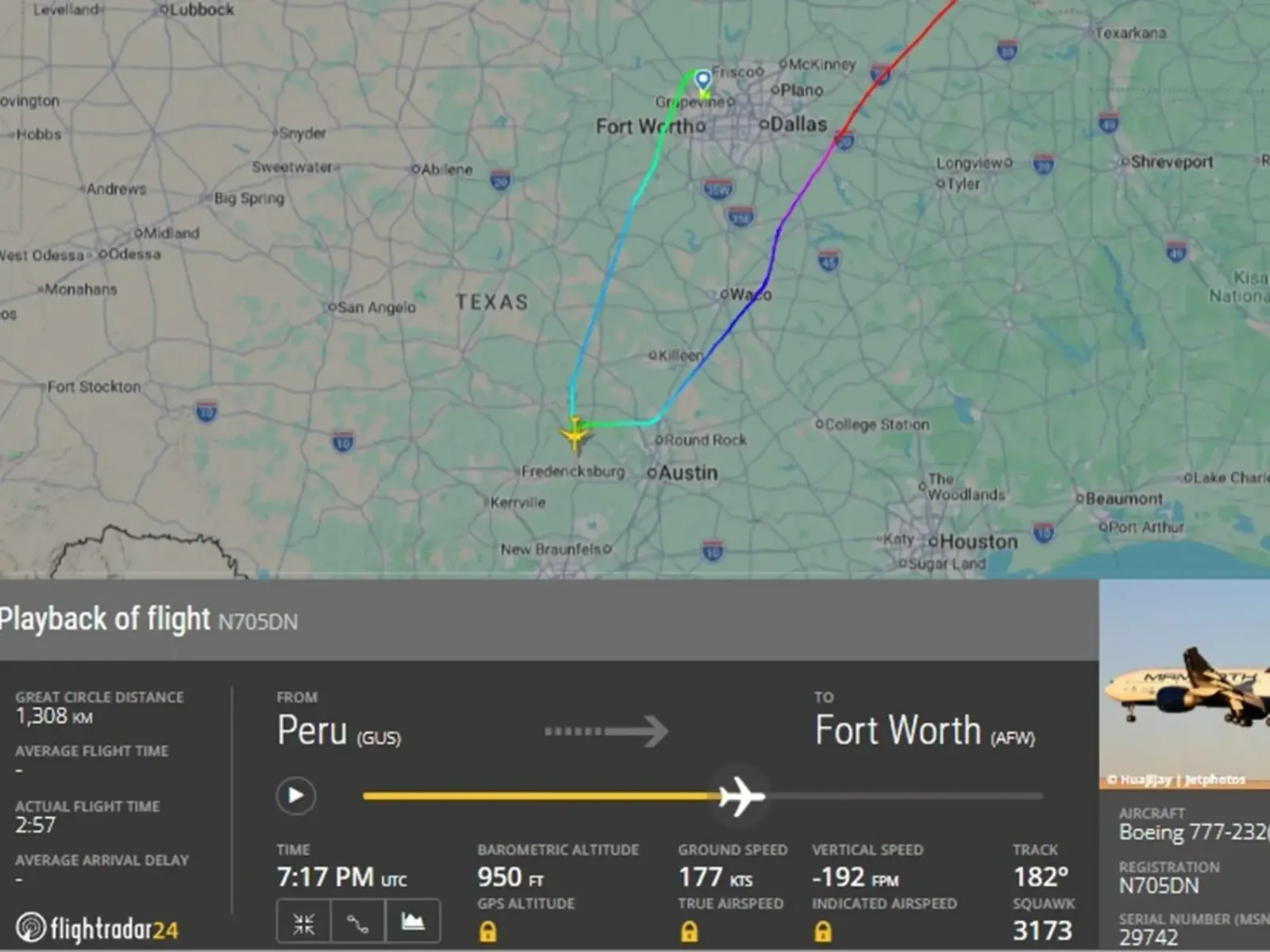
An extremely low pass by a Qatar Airways-liveried Boeing 777 freighter over Horseshoe Bay Resort Jet Center in Texas is now under review, with the FAA “looking into it” and Jetran LLC calling the maneuver not aligned with “operational standards.” For decision-makers, it is a reminder that test flights, delivery timelines, and regulatory exposure can collide instantly.
On Wednesday, a Boeing 777 freighter appeared to come within feet of the ground over Texas, enough that bystanders and veteran pilots reacted as if it could have turned into disaster. Flightradar24 tracked the aircraft, a former Delta jet registered as N705DN, as it performed an extremely low detour over Horseshoe Bay Resort Jet Center near Austin. Radar and video both support that the plane’s lowest point was between 0 and 25 feet after adjusting for airfield elevation and local air pressure. The owner, Jetran LLC, said the maneuver does not “reflect operational standards,” and expects relevant parties and authorities to investigate.
This is also the kind of incident regulators do not ignore. The Federal Aviation Administration told Business Insider it is “aware” of the extremely low pass and is “looking into it.” In other words, what looks like a stunt in a viral clip is now a compliance problem. And because this particular 777 is tied to a planned delivery to Qatar Airways Cargo, the freight side of a Doha-based airline, the stakes extend beyond one pilot, one operator, and one airport. If there are violations, the fallout can land on individuals through civil penalties and potential license action, and on companies through larger operator-related fines.
Jetran is a privately held company specializing in aircraft leasing and passenger-to-freighter conversions, with a few dozen employees and involvement in cargo aircraft programs for about 45 years. In a Thursday statement, it framed the flyover as part of a test flight ahead of the 777’s planned delivery to Qatar Airways Cargo. The company emphasized that the aircraft was not owned by Qatar Airways and that Qatar Airways pilots were not flying. Qatar Airways, for its part, referred Business Insider to Jetran’s statement, effectively pointing back to the owner and test operator for answers.
The video is what pushed this from an internal test detail into public scrutiny. Bystanders stood yards away, and the wingtip looked dangerously close to the pavement. Pilot reactions followed quickly, and the technical reason is simple. The 777’s wingspan is 200 feet across. Retired Delta Air Lines captain Mark Stephens told Business Insider that if a pilot clipped a wing, the plane could very likely tumble. He called it reckless and potentially a huge disaster. That framing matters because it turns a “low flyover” into a risk scenario involving loss of control, structural damage, and immediate safety outcomes.
Stephens also explained why this is unusual, even in aviation where low passes happen. Aircraft can perform low passes during tests and air shows, but those operations typically sit inside strict parameters. He noted that the US Navy’s Blue Angels, for example, have a lowest stunt at 50 feet. Stephens said pilots must be specially trained with specific licenses, and operators and crew must work within federal rules, including the lowest altitude at which they can fly. He added that while he conducted special delivery, ferry, and demo flights during decades of civil and military flying, they were never going down to the levels shown in the Texas video. He said he demoed an F-4 for troops in Quantico and only went down to 1,000 feet.
There is also a timeline and a market backdrop here. These freighters are in high demand as Boeing winds down its 777F program by the end of 2027, in part because its engines do not meet carbon-emissions standards. The International Bureau of Aviation estimated that a converted 777 will likely cost upward of $80 million, and extra engine work could put it closer to $100 million. That kind of capital intensity changes how everyone in the chain thinks about schedules: test flights are not just operational steps, they are milestones that can unlock or delay high-value delivery work. If the FAA investigation leads to findings of noncompliance, it can create downstream friction for delivery readiness, certification, and stakeholder confidence.
Where this gets even more complicated is accountability around conversion work. The aircraft involved is a 777-200LR(F) in the process of preparation for delivery for Qatar. The source states that Mammoth Freighters, the company that completed the conversion, said it was not involved in the flight. So the question regulators and insurers will care about becomes narrower and sharper: not “what airplane,” but “what operational permissions, what flight profile, and who authorized what on the day.” Veteran test and ferry pilot Steve Giordano called the idea “insanely bad” on X, writing “Inches from disaster and for what? Stupid stupid stupid.” Retired TAP Air Portugal pilot and CNN Portugal commentator José Correia Guedes also posted on X that the owner is “in a fine mess with the FAA knocking on his door any day now.”
The legal and financial tail risks are real even without guessing outcomes. In the event of a violation, the FAA could impose a civil fine of a few thousand dollars on a pilot and potentially revoke their license. Regulatory violation fines against the operator could total hundreds of thousands of dollars or more. That matters for any executive overseeing aircraft programs because one viral clip can become an evidentiary exhibit, and an exhibit can turn into compliance action. For boards, the strategic implication is that delivery pressure and high-stakes conversion programs need a safety-and-authorization backbone as strong as the business case. In aviation, the economics do not pause for investigations, and neither does reputational risk.
This story's Key Insights and Take-aways are locked.
Create a free account to unlock Executive Actions for one credit.
Register to UnlockAlways free for Executives Club members. Join the Club
More in Business

Bungie cuts most Destiny 2 staff as Sony says Marathon still matters
Herman Hulst confirms layoffs affecting most Destiny and some Marathon teams after Bungie admits Destiny fell short.

SK Hynix jumps 11% after seeking up to $29.4B in Nasdaq listing
The chip giant filed for a Nasdaq listing plan that could raise $29.4 billion, instantly reshaping investor expectations.

Micron revenue hits nearly $42B as AI memory lifts gross margins above 81%
Fiscal Q3 results crush estimates, prove AI memory is rewriting Micron's margins, and change the momentum math for the whole chip stack.