
Falcon 9 booster B 1067 hits 35 missions at 5 years, setting SpaceX reuse record
A five-year-old first stage just ran its 35th launch landing on A Shortfall of Gravitas, reinforcing Starlink’s cost curve.
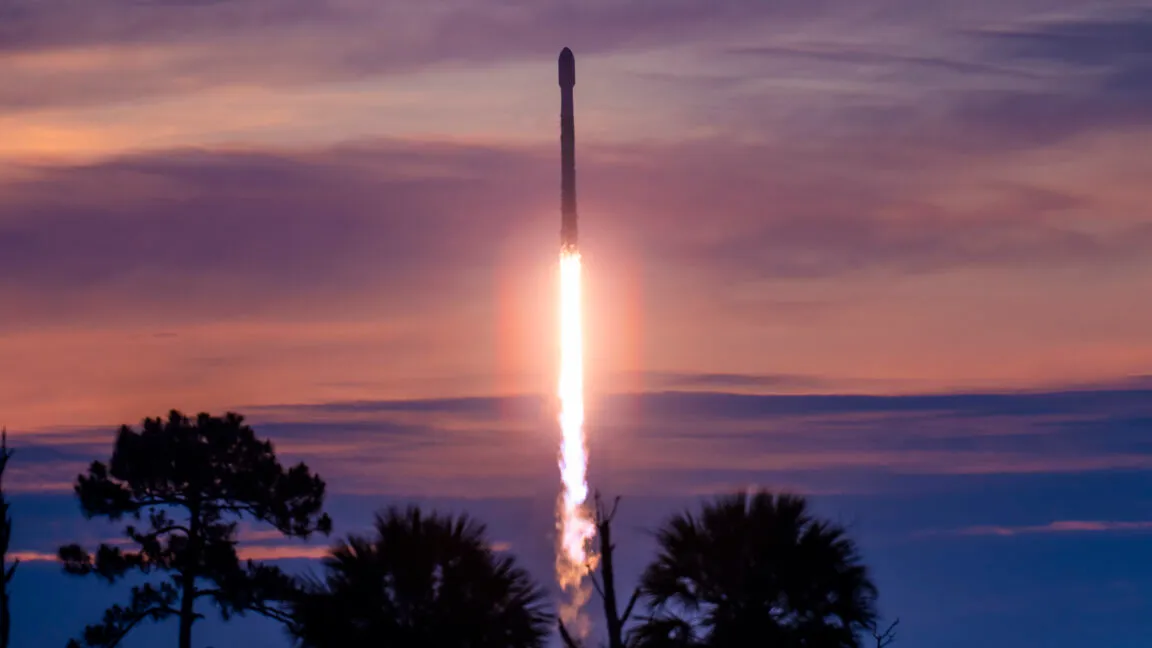
SpaceX first stage booster B 1067, launched just over five years ago, has now completed 35 missions, mostly supporting Starlink launches. For decision-makers, the milestone is a tangible signal that reuse is compounding, not stalling, as Starlink throughput keeps climbing.
A Falcon 9 booster that is just over five years old just proved reuse is still accelerating. SpaceX’s designated first stage booster, B 1067, completed its 35th mission on Monday morning after launching 29 Starlink Internet satellites into low-Earth orbit from Florida.
The kicker is where it landed and what it had already done. B 1067 touched down on the A Shortfall of Gravitas drone ship in the Atlantic Ocean, keeping its status as fleet leader for SpaceX. This was not a one-off “good day” flight. The same booster has been repeatedly refurbished and flown again and again, with sometimes two flights in a single month, since its debut more than five years ago.
To understand why this matters beyond the space-nerd joy, you need to remember what Falcon 9 originally was meant to solve. The rocket is built around a reusable first stage, and the business model only works if reuse turns into predictability. The point is not that rockets can land. It is that they can land, get refurbished, and fly again frequently enough that the cost and scheduling benefits become operationally real.
Ars Technica’s timeline underscores that this booster did not just rack up flights while sitting in the background. After its shiny white debut a little more than five years ago, boosting a Cargo Dragon spacecraft to the International Space Station, the booster quickly moved through different early mission types. Over the next year, it supported a pair of astronaut missions and a handful of commercial spacecraft. But since then, B 1067 has mostly flown Starlink missions, launching them one after another, always returning safely before refurbishment and reuse.
That sequencing is important because Starlink is not just “another customer payload.” It is a steady stream of satellite deployment that benefits from fast turnaround and high launch cadence. In practical terms, reuse becomes a lever for throughput. When a single booster can repeatedly return, be serviced, and then be committed to the next batch of satellite deployments, it reduces the operational friction that normally sits between “we have the rocket” and “we can launch again.”
There is also an incentive alignment piece. SpaceX’s long-run economics depend on lowering marginal launch costs while increasing the reliability and cadence of launches. A booster that becomes a fleet leader is not simply a badge. It is evidence that the refurbishment process and mission planning can sustain a high reuse tempo without the system falling apart. A record like 35 missions does not automatically translate into a specific dollar figure, but it does translate into something boards and finance teams care about: utilization.
If you are an executive in a space-adjacent business, the second-order effect is that reuse progress is now measurable in the flight cadence itself. Historically, you could treat reusability as a technical promise with uncertain operational payoff. Here, the operational payoff is showing up in mission counts and the fact that B 1067 has sometimes flown twice in a single month. That matters for partners too. Satellite operators and downstream service providers care about consistent deployment schedules because their timelines and market expectations are built around the pace at which satellites reach low-Earth orbit.
Regulatory framing is not front and center in the Ars Technica account, but it is part of the background reality for Starlink-like deployments. Governments and regulators authorize satellite operations, and launch activity sits inside that broader compliance environment. Faster and more dependable launch cycles can make regulatory timelines feel tighter and more strategic. When deployment pace improves, it compresses the window between authorization and operational coverage, which can raise competitive pressure across the entire satellite internet ecosystem.
For SpaceX’s peers and partners, the strategic stake is straightforward: reuse performance increasingly determines who can scale faster, with fewer delays, and with fewer “single booster” bottlenecks. B 1067’s 35th mission, launched 29 Starlink Internet satellites from Florida and landed back on the A Shortfall of Gravitas drone ship, is a reminder that this is not a science fair experiment anymore. It is fleet operations, at scale, with a booster that keeps earning the right to lead.
This story's Key Insights and Take-aways are locked.
Create a free account to unlock Executive Actions for one credit.
Register to UnlockAlways free for Executives Club members. Join the Club
More in Technology

OpenAI says 10,000 agents cracked a 90-year math problem in 88 hours
The company's claim is audacious, but one mathematician is pushing back. Here's what it means for AI-driven discovery.

Meta still serves child sexual abuse ads on Instagram in India - BBC report
A new report following the BBC Eye investigation says the ads are still there - what it signals for every platform with a self-serve ad engine.

White House yanks 'Build the Wall' game after Tetris Company copyright warning
The administration's arcade game vanished in hours - and the takedown playbook every brand can learn from.