

Far-Right Win in Eastern Germany Leaves Migrants Facing a New Reality
The AfD's state election victory signals a political shift with direct consequences for migrants, businesses, and investors watching Germany's economic stability.
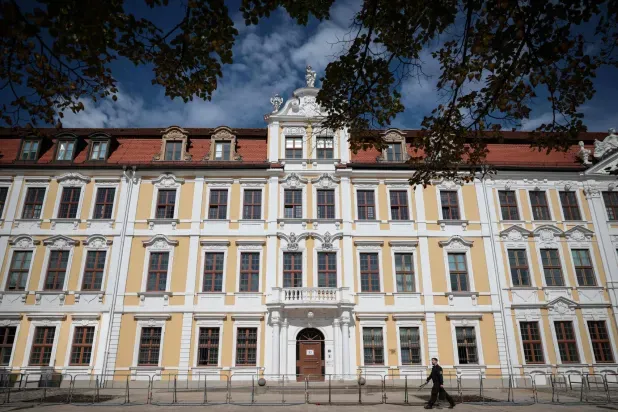
The far-right AfD's triumph in eastern Germany has left migrants questioning their future in the region. This political shift signals growing polarization that could affect labor markets, investment decisions, and social cohesion across Germany.
The far-right Alternative for Germany (AfD) has secured a landmark victory in eastern Germany, a political earthquake that is already reshaping the calculus for migrants who built lives and businesses in the region. The election result, reported by Asharq Al-Awsat, has left many foreign-born residents questioning whether they still have a future in a place they had come to call home. For executives and investors, the signal is unmistakable: one of Europe's largest economies is entering a period of political fragmentation with direct consequences for labor supply, social stability, and the investment climate.
For the migrants themselves, the stakes are intensely personal. Many came to eastern Germany during the 2015 refugee wave or as skilled workers drawn by regional labor shortages, and they now face a hostile political environment that threatens their sense of belonging. The AfD's success is not an isolated event but part of a broader pattern of far-right gains across the former East German states, where economic grievances, demographic decline, and cultural anxiety have converged. The result has prompted some migrants to consider leaving, a prospect that would deepen the region's labor shortages and undermine its economic recovery.
The business community is watching with particular concern. Eastern Germany has attracted significant investment in recent years, from semiconductor plants to electric vehicle battery factories, much of it reliant on a workforce that includes a growing share of foreign-born employees. Companies in the region have already reported difficulties filling technical and engineering positions, and an exodus of migrant workers would exacerbate a problem that threatens to slow production and deter future investment. The AfD's anti-immigration platform, if translated into policy, could also complicate the recruitment of international talent at a time when Germany as a whole faces a demographic crunch.
The political implications extend far beyond the eastern states. Germany's federal government, already strained by coalition tensions, now faces a far-right opposition emboldened by electoral success and a center-right that may feel pressure to harden its own stance on migration. For the European Union, the result adds to a growing list of populist challenges, from Italy to the Netherlands, that have complicated efforts to forge a common asylum policy and a unified approach to labor mobility. The AfD's victory is therefore not merely a regional story but a bellwether for the political trajectory of the continent's largest economy.
For investors, the key question is whether political polarization will translate into economic instability. Historically, far-right electoral gains have been associated with increased uncertainty, which can raise risk premiums and dampen capital flows. Germany's reputation as a stable anchor of the European economy has already been tested by energy shocks, supply chain disruptions, and fiscal debates, and a sustained period of political fragmentation could further erode that reputation. Companies with operations in eastern Germany, in particular, may need to reassess their exposure to a region where the political climate is shifting beneath their feet.
The human dimension, however, is what gives the story its urgency. Migrants who arrived with hopes of building new lives now speak of a future that feels uncertain, and their anxiety reflects a broader societal fracture that no economic indicator can fully capture. The AfD's rise has been fueled by a narrative that casts immigrants as a threat to German identity and prosperity, and that narrative has now received the validation of an electoral majority in parts of the east. For the migrants themselves, the question is no longer whether they are welcome but whether they can afford to stay.
The strategic stakes for business leaders are clear. A region that loses its migrant workforce will find it harder to sustain the industrial projects that have been its economic lifeline, and a Germany that appears less welcoming to foreign talent will struggle to compete in the global race for skilled labor. The AfD's victory is a warning that political risk is no longer confined to emerging markets; it is now a live factor in the heart of Europe. For executives, the lesson is to monitor not just economic indicators but also the political currents that shape them, and to plan for scenarios in which the labor market becomes tighter, the social climate more contentious, and the investment environment less predictable.
In the end, the far-right triumph in eastern Germany is a story about the collision of demography, economics, and identity, and its consequences will be felt far beyond the region's borders. For migrants, it is a moment of reckoning; for businesses, a signal to adapt; for policymakers, a challenge to address the grievances that fuel extremism. The future of eastern Germany, and perhaps of Germany itself, will depend on how these forces are reconciled.
This story's Key Insights and Take-aways are locked.
Create a free account to unlock Executive Actions for one credit.
Register to UnlockAlways free for Executives Club members. Join the Club
More in Business

Amazon Prime Air 767 overshoots Miami runway, killing at least 5
The Boeing 767 freighter from San Juan struck vehicles and erupted in flames, prompting a ground stop and a fresh NTSB investigation into Amazon's air cargo network.

Death sentence for TV presenter Sarah Khalifa: Egypt's drug case hits media
The sentencing of Sarah Khalifa and 11 others underscores the severity of Egypt's anti-drug laws and the exposure of public figures to capital punishment.

Tim Cook steps down as Apple CEO, stays on as chair with $45M equity
The 'Trump whisperer' keeps his White House and Beijing access as Apple navigates tariffs and a $4.6 trillion market cap.