
Faraday Future's $2,490 robot launch is the opening act of a $200M robotics sale
The EV maker's new FF Nova targets developers and schools, but the bigger story is FFR's all-stock purchase of its robotics business.
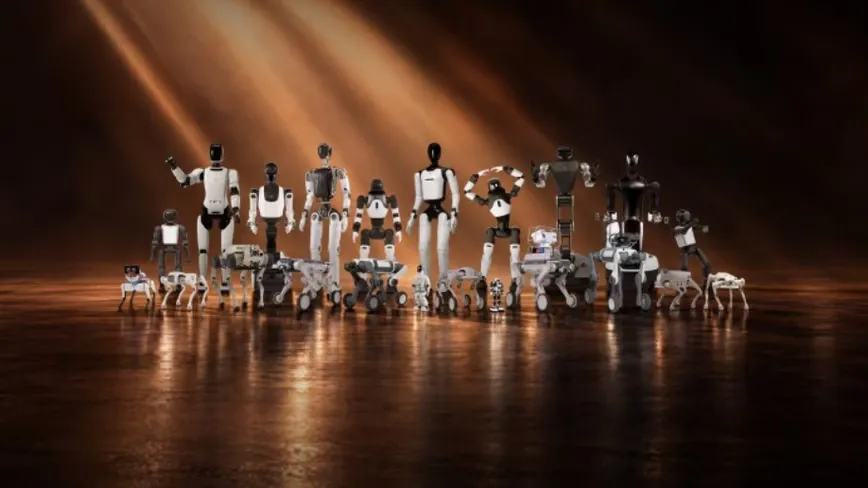
Faraday Future and FF EAI Robotics Ecosystem launched the $2,490 FF Nova and the $299 FF Nova Mini on 15 October, just after FFR agreed to buy Faraday Future's robotics business in a $200M all-stock deal. For decision-makers, the launch is a signal that the company is seeding a developer ecosystem before shifting the asset to a related buyer.
Faraday Future is not just selling cars anymore. On 15 October, the electric-vehicle maker and FF EAI Robotics Ecosystem launched two humanoid robots: the $2,490 FF Nova for developers and schools, and the $299 FF Nova Mini for children. The first 100 Nova units are invitation-only. The launch is the opening act of a bigger financial move: FFR, the robotics ecosystem entity, has agreed to buy Faraday Future's robotics business in a $200M all-stock deal.
The timing matters more than the product specs. By putting a developer-grade robot into classrooms and labs before the deal closes, Faraday Future is trying to build a community of users who will write software, create use cases, and generate demand for the platform FFR is about to own. The $2,490 price point is deliberately accessible for schools and independent developers, while the invitation-only first 100 units create scarcity and a sense of early access. For executives watching the deal, this is a textbook example of how to seed an ecosystem before a spin-off or asset sale: make the product visible, make it useful, and let the market start pricing the potential before the ownership change.
Faraday Future is best known as an electric-vehicle maker, and this robot launch broadens its product line beyond cars. The company has spent years navigating the brutal economics of EV manufacturing, where capital intensity is high and timelines are long. Robotics offers a different kind of story: lower capital requirements, faster iteration cycles, and a direct line to the education and developer markets that are hungry for hands-on artificial intelligence and automation tools. The Nova line is not a replacement for the car business, but it gives Faraday Future a second narrative to offer investors and partners at a moment when the EV market is crowded and expensive.
The two products are aimed at different audiences. The FF Nova, at $2,490, is positioned as a tool for developers and schools, which suggests a programmable platform rather than a toy. The FF Nova Mini, at $299, is positioned for children, which puts it in the consumer and educational-toy space. The company did not disclose detailed technical specifications in the announcement, but the pricing and positioning are clear: Faraday Future is trying to establish a foothold in the low-cost humanoid segment, a category that has historically been dominated by research platforms and high-end industrial machines. For context, commercial humanoid robots have typically been priced well above this level, so the $2,490 price tag is an attempt to lower the barrier to entry.
The structure of the deal adds another layer of intrigue. FFR is not just a customer or a distributor; it is the buyer of Faraday Future's robotics business in an all-stock transaction valued at $200M. That means Faraday Future is taking equity in FFR instead of cash, a bet that the robotics business will be worth more as part of FFR's ecosystem than it would be inside the EV company. For board members and CFOs, this is a reminder that related-party transactions can be a strategic tool, but they also create a web of incentives that investors will scrutinize. The launch of the Nova and Nova Mini just before the deal signals that both companies want to show momentum, not just a contract on paper.
The all-stock structure also means the value Faraday Future receives depends on FFR's future performance. If FFR shares rise as the robotics ecosystem gains traction, Faraday Future benefits beyond the headline $200M figure. If FFR struggles, the deal could look less attractive in hindsight. This is a common dynamic in spin-off and divestiture strategies: the seller becomes a shareholder in the buyer, aligning long-term interests but exposing the seller to the buyer's execution risk. For decision-makers, the lesson is to model not just the headline valuation but the post-deal equity position and what it says about confidence in the combined entity.
For founders and operators in robotics, education technology, and adjacent hardware spaces, the launch is a signal that humanoid platforms are moving downmarket. A $2,490 developer robot is not an industrial automation solution; it is an experimentation platform. Schools and developers who buy the FF Nova are effectively doing unpaid research and development for the ecosystem, building skills and content that will make the platform more valuable. The invitation-only first 100 units are a clever way to curate the earliest users and ensure the initial feedback loop is high quality. Other companies in the space should watch how this community develops, because the playbook is transferable to any hardware company trying to create a developer moat.
The broader strategic stakes are clear. Faraday Future is using a consumer-facing product launch to build enthusiasm for a corporate transaction that would otherwise be a footnote in a press release. By pairing the robot launch with the $200M all-stock sale, the company is telling the market that its robotics division has standalone value and a real ecosystem behind it. For peers in similar roles, the takeaway is to think about every product launch as a potential valuation event, not just a revenue event. The same energy that goes into a keynote can be aimed at a balance sheet, and the Nova launch shows how a relatively small product can be used to anchor a much larger financial narrative.
This story's Key Insights and Take-aways are locked.
Create a free account to unlock Executive Actions for one credit.
Register to UnlockAlways free for Executives Club members. Join the Club
More in Business

Elon Musk unveils a flying car, and SpaceX helped build it
The Tesla CEO's showcase at a SpaceX facility signals a future where road and rocket engineering converge.

Apple's $2,000 iPhone Duo opens preorders, taking on Samsung and Google
Apple's first foldable hits the market at a premium price, reshaping a category Samsung and Google have led.

Pope Leo XIV, first American pope, diagnosed with lung cancer
The 71-year-old Chicago-born pontiff underwent successful surgery on his right lung, and his diagnosis raises new questions about his AI-focused papacy and the Vatican's future.