

Female baristas in Mogadishu turn coffee shops into jobs and peace spaces
In Mogadishu, Cplus Cafe’s early female baristas are reshaping Somalia’s cafe scene as fear eases.
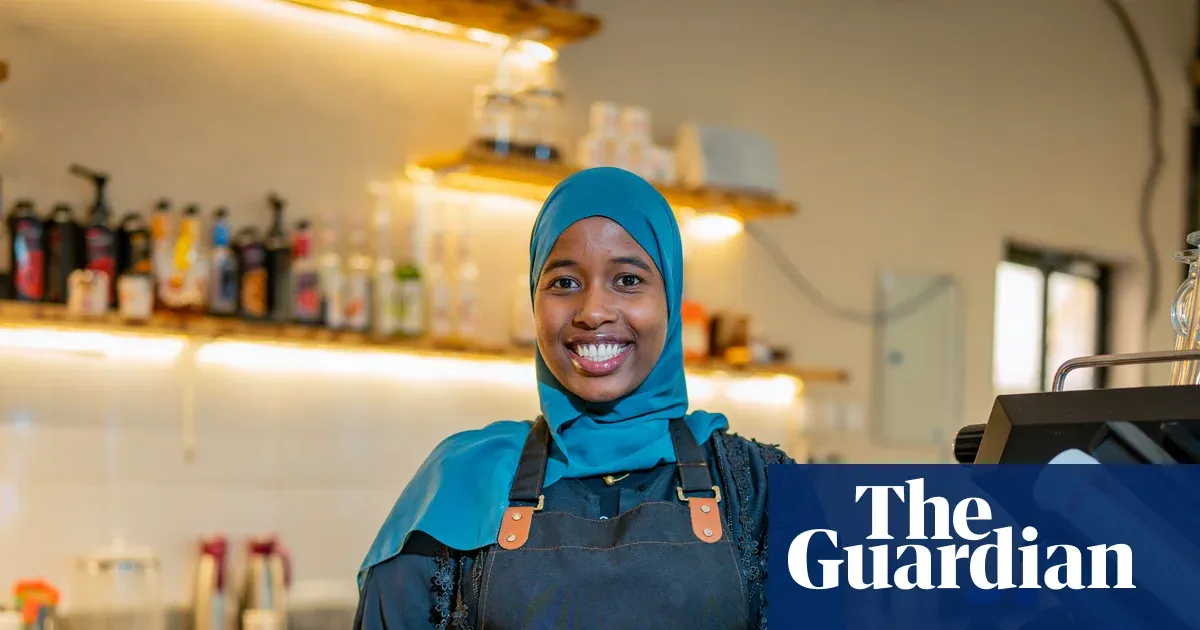
Saabiriin Hassan works behind the counter at Cplus Cafe in Mogadishu, helping grow one of Somalia’s first female barista roles. For decision-makers, the shift signals how everyday commerce can unlock jobs, public social life, and stability incentives.
At 6 a.m. in Mogadishu, Saabiriin Hassan slips on her apron and takes her place behind the counter at Cplus Cafe. The Guardian describes the moment as more than a morning routine: the aroma of freshly brewed coffee is in the air, but Hassan’s ever-present smile draws attention first. She is grinding beans, steaming milk, and chatting with customers, moving through tasks that are ordinary elsewhere but culturally consequential here. In a capital city once primarily known for conflict, she is among the first female baristas in Somalia. And the cafe is becoming a small but real pivot point for how people live together.
The reason coffee shops matter in Mogadishu right now is as blunt as it is hopeful. As fear and fighting ease in the city, coffee shops are acting as catalysts for change. They are creating jobs for women and building much-needed social spaces at street level. Hassan is one of the people making that possible, and her role is both practical and symbolic: serving coffee while helping a new cafe culture take root in a place where public life has often been constrained. The story’s core claim is not abstract. It is that a booming cafe scene is emerging in Mogadishu, and female baristas are at the center of it.
To understand the second-order implications, it helps to map how cafe culture works like an economic platform, even when it looks like a neighborhood hangout. A cafe is a repeat-transaction business: every day brings new customers, and each transaction depends on trust, punctuality, and reliable service. When that rhythm is staffed by women in visible roles, the business does two things at once. It hires and trains, then it normalizes. Hassan’s morning shifts show the training loop in motion, from grinding beans to steaming milk, then moving into customer interaction. That matters because employment is not just income. It is access. It brings women into public-facing work where social networks, customer familiarity, and daily routine can expand beyond the home.
There is also an incentive alignment story hiding under the foam. When fear eases and fighting becomes less dominant, foot traffic and evening activity often rebound first, and hospitality businesses tend to capture that early demand. That means cafes can become among the fastest ways to monetize returning urban life. But they also become fragile. If security deteriorates again, foot traffic goes with it, and staffing becomes harder. So female baristas and cafe owners face a risk that is operational, not theoretical. The Guardian frames the cafe scene as “booming,” but the condition behind that boom is changing peace dynamics in Mogadishu. Businesses built on public movement are always balancing opportunity with volatility.
Regulatory background is not spelled out in the source, but the practical compliance challenge is visible in the business model itself. Cafes require basic licensing and standards in most jurisdictions, plus food and hygiene expectations that customers assume and regulators enforce. In a city rebuilding social infrastructure, the barista role becomes an interface between consumer expectations and day-to-day standards. Hassan’s work behind the counter is a lived example of service quality and hygiene discipline. That can also be a pathway for governments and aid actors to support normalization, because they can focus on the basics that keep public spaces safe and credible. The coffee shop becomes an anchor where rule-of-thumb standards and consumer trust reinforce each other.
For investors, founders, and operators watching from safer markets, the bigger lesson is about how commerce can accelerate social change without a dramatic press release. The Guardian’s story links cafes to two specific outcomes: jobs for women and much-needed social spaces. Those outcomes feed back into the business, too. More social space means more reasons to show up. More jobs means more workers with stake in the neighborhood economy. And as cafe culture spreads, the city gains a new kind of public arena, one where conversation happens around everyday products instead of conflict.
The strategic stakes for decision-makers are clear: when security conditions improve, the fastest sustainable growth often comes from consumer-facing businesses that create recurring demand and visible community benefit. Hassan and Cplus Cafe are an early signal of that pattern in Mogadishu. But it is also a reminder that this is not only a feel-good narrative. It is a human-powered operating system for stability, built by hiring, training, and welcoming customers in a city where those acts previously carried heavier constraints.
If you are leading a company in regions where peace is uneven, this is the playbook staring you in the face: tie growth to resilience. Build systems that can keep working when conditions shift. Invest in roles that deepen community ties. And treat the public-facing parts of your business as infrastructure, because in Mogadishu, a cafe is not just where people buy coffee. It is where a new version of the city learns to show up for itself.
This story's Key Insights and Take-aways are locked.
Create a free account to unlock Executive Actions for one credit.
Register to UnlockAlways free for Executives Club members. Join the Club
More in Business

Anthropic’s Levant Alpöge cracks the Jacobian conjecture after 87 years
A Harvard valedictorian used Claude to hit a 1939 breakthrough, but the missing “why” is the real problem.

Uber buys Delivery Hero for nearly $15B, vaulting to top food delivery outside China
The deal doubles Uber's dual-services footprint and pushes a ride-and-eats bundling play into 50 more markets.

Epic and Google drop settlement bid, forcing rival Android app stores by July 22
Google told the court it is ready to carry third-party app stores starting Wednesday, July 22.