
FIFA’s U-15 World Cup expands access as Russia’s return path opens
The rules update in October matters because it could reshape participation expectations before Russia’s World Cup future is settled.

FIFA’s inaugural U-15 World Cup in October is opened to all of its member associates, paving way for Russia’s return. For decision-makers, this signals how FIFA is tightening tournament governance and managing politically sensitive participation pathways.
FIFA is setting a tone ahead of the World Cup cycle by quietly changing who can take part in youth competition. Al Jazeera reports that FIFA’s inaugural U-15 World Cup in October is opened to all of its member associates, which “paves way for Russia’s return.” In other words: the door is wider now, and the knock-on effects are bigger than a youth tournament sounds.
Here is why the timing matters. FIFA is staging its inaugural U-15 World Cup in October, and opening it to all member associates builds a formal participation route that Russia can potentially use, once eligibility questions are resolved. That is not a small operational detail. Youth tournaments are where national systems scout, coach, and build pipelines, so changes to eligibility influence long-term football competitiveness and how federations prioritize resources.
On the senior side, the World Cup 2026 group-stage picture is also tightening, with multiple teams booking their round of 32 spots. The Socceroos finished second in Group D with four points and are through to the 2026 FIFA World Cup round of 32. In Group F, the Netherlands topped the group with seven points, setting up a round-of-32 clash against Morocco in Monterrey on Monday. The matchups show a recurring theme in tournament soccer: finishing first or second does not just decide who you play. It affects travel logistics, rest, scouting access, and how confidently teams plan the next match week.
The scoreboard is only half the story. Al Jazeera highlights Hossam Hassan invoking FIFA’s “respect and fair play” rules amid US restrictions on Iran, whom Egypt face in Seattle. That framing is important for executives because it shows how sport regulators and tournament administrators can become the battleground when politics creates eligibility constraints. When national teams and sponsors operate under sanctions or cross-border restrictions, the practical question becomes: can you comply while still meeting competition requirements? Even without getting into the policy specifics, the invocation of “respect and fair play” signals FIFA is positioning itself as the compliance referee, not just the match organizer.
The article also flags controversy around cultural football perceptions. Former German player comments that “African football” is “a bit unorthodox sometimes, a bit wild” sparked controversy. Why executives should care: cultural narratives affect everything from coaching staffing decisions to how media rights are negotiated and how clubs and federations manage reputational risk. In a tournament business, optics and governance are paired like socks. One gets pulled into the other.
On qualification mechanics, Al Jazeera delivers a clean set of round-of-32 confirmations. Daizen Maeda and Anthony Elanga scored goals that were enough to send both teams through to the Round of 32. The West Africans will face the second-place finisher between France and Norway in Group I on Tuesday in Texas. Germany finish top of Group E, with Ivory Coast second and Ecuador in position to have a chance of qualifying on third place. This is the kind of ladder that makes tournament modeling a real discipline. Teams, broadcasters, and commercial partners do not just plan for “qualification.” They plan for which specific opponent arrives, when, and under what pressure.
There is also a reminder that fan behavior and venue selection matter at scale. Netherlands supporters got the party going in Kansas City, US ahead of their final group stage game against Tunisia. In tournament operations, the lead time between match weeks is where crowd-control planning, hospitality logistics, and brand activations either run smoothly or turn into expensive chaos. Those are second-order effects that show up long after the scoreboard is final.
Finally, the competitive and commercial stakes extend beyond the World Cup itself. Past winners Uruguay and Spain face off in Guadalajara, battling for top spot in Group H and a kinder knockout draw. In World Cup terms, “kinder” is a euphemism for a different probability distribution. The bracket is a financial instrument as much as it is a sports outcome: fewer difficult matches can mean deeper runs, more exposure, and better sponsorship conversion.
Put all of this together and you get a clear message for decision-makers in football governance and adjacent industries. FIFA is not only running matches; it is shaping access rules for youth development while simultaneously managing eligibility and conduct narratives at senior level. If you are a federation executive, broadcaster, investor, or tournament operator, the strategic takeaway is straightforward: governance changes and geopolitical eligibility pathways can move faster than team form, and they will affect talent pipelines, compliance planning, and commercial certainty across the next cycle.
This story's Key Insights and Take-aways are locked.
Create a free account to unlock Executive Actions for one credit.
Register to UnlockAlways free for Executives Club members. Join the Club
More in Entertainment

Luis de la Rosa dies at 34 after Annecy train accident, festival confirms Sunday tribute
The Spider-Verse animator’s death is already reshaping Annecy’s closing ceremony and spotlighting track-side risks near festival roads.
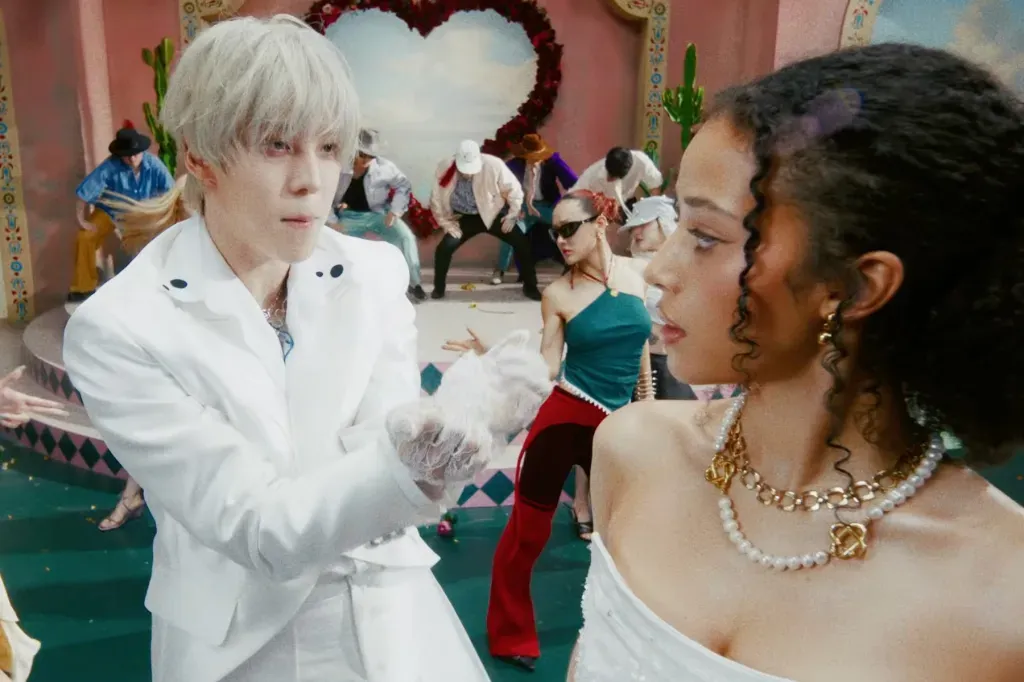
ATEEZ’s “BAD” video turns Chase Infiniti’s wedding into a courtroom power play
The K-pop crew tries to win over Chase Infiniti in the “BAD” visual, then watches her choreography flip the verdict.

Genndy Tartakovsky and Adult Swim greenlight Adults-only crime series after Primal wrap
The Primal creator's next adult-animated pivot finally lands, reshaping how studios bet on mature animation.