

"Fireball" meteorite from Hillsborough contained life ingredients, study says July 15
A 2024 New Jersey fall helped scientists trace preserved prebiotic molecules to ancient salty brines in a primitive body.
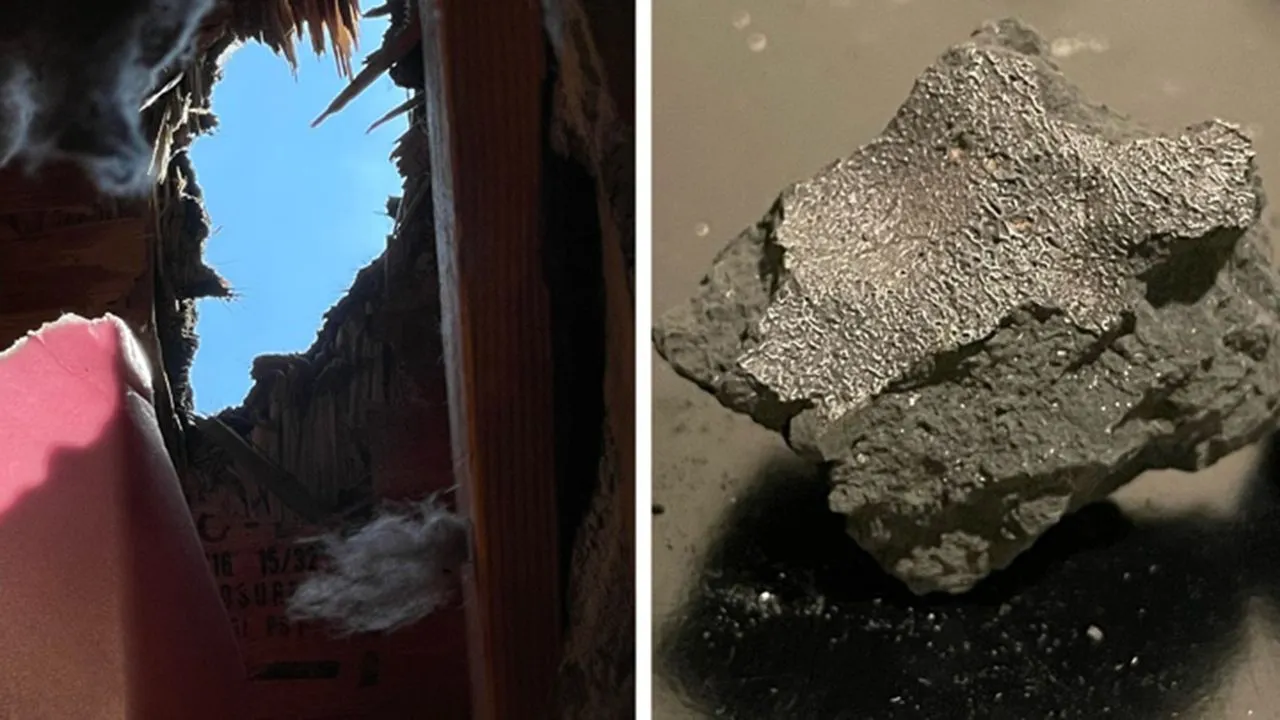
Peter Jenniskens, a meteor astronomer affiliated with the SETI Institute and NASA's Ames Research Center, led a study using the Hillsborough meteorite recovered after a July 16, 2024 crash. The research, published July 15 in Science Advances, reports amino acids and other prebiotic molecules plus a path back to the asteroid belt.
A “fireball” meteorite that crashed through a New Jersey home in 2024 did more than make a loud night. A study published July 15 in Science Advances says the Hillsborough meteorite contains amino acids, carbon compounds, and other “pre-biotic” molecules that resemble chemistry thought to have helped kick-start life on Earth.
The timing matters, too. The meteor was spotted July 16, 2024, and fragments were recovered from only one meteorite, called Hillsborough, after the rock broke apart in midair. Now scientists have put those fragments under the microscope and concluded the material preserved bits from near the surface of a small primitive asteroid where it experienced concentrated salty fluids, a process described as not previously known from this type of protoplanet world.
If you are wondering why this is a big deal beyond the cosmic wow-factor, it comes down to how messy “life’s origins” have always been. The idea that space can deliver organics to a planet is not new, but the specific mix and the preservation story are what sharpen the science. In this case, investigators reported that a forensic study of Hillsborough fragments found preserved chemistry from a setting with salty fluids, essentially a chemical environment that could concentrate reactions instead of letting them dilute away.
The human side is also very real. The study team praised the homeowner in Hillsborough, N.J. for quickly preserving the meteorite after it fell through the roof on July 16, 2024, despite the adverse circumstances. In the SETI Institute statement, the homeowner said he heard a loud crash, found a hole in the ceiling of the master bedroom, smelled a strong sulfur-like odor, and saw many black fragments and debris and black dust covering the bed, carpet, and surrounding areas. His handling included using disposable gloves and aluminum foil to place pieces of the meteorite fragments into glass jars. Those details matter because contamination control is the difference between chemistry you can trust and chemistry you have to throw away.
Then there is the question of origin, which the study addressed with an evidence chain. Earlier on July 16, 2024, at least 60 observers in New York, New Jersey, and other Northeastern states spotted a meteor that was later confirmed to be traveling at 32,000 mph (51,500 km/h). At least 16 people reported feeling the meteor’s shock wave. The rock broke apart in midair, and observer reports stopped when it reached 22 miles (35 kilometers) in altitude. Newark Liberty International Airport briefly tracked pebbles falling from the sky with Doppler weather radar after that.
To connect the dots from “something fell” to “this came from the asteroid belt,” the American Meteor Society used cameras in Northford, Connecticut, and Douglassville, Pennsylvania, along with a doorbell camera in Wayne, New Jersey. Mike Hankey, an operations manager at the American Meteor Society and co-author of the study, said the path traced back to “low in the asteroid belt.” That tracking is crucial for executives and investors watching the broader “space science meets data meets industry” pipeline, because it turns a one-off event into a reusable process: observe, confirm speed and fragmentation, recover samples, classify them, then match them back to where in the solar system they likely formed.
On the sample science side, Hillsborough was classified as a type of stony space rock called a carbonaceous chondrite. The study says later analysis showed the meteorite is full of ancient brines or salt. The research team also plans to compare the salt minerals to samples from asteroids Ryugu and Bennu. Both contain ingredients of life and come from another carbonaceous chondrite type that formed earlier than Hillsborough. The implication is straightforward: if the salt minerals and chemistry line up with what has already been found in those mission samples, scientists can further trace the origins of life-friendly chemistry in the early solar system.
For decision-makers, the second-order story is about capability and validation. Meteorite falls are rare, and this one is described as the second stony meteorite of its type ever spotted in a fall. That scarcity makes it more valuable for scientific follow-through, but it also highlights why partnerships and preparedness matter. When a rare sample lands, the fastest route to real insights is a chain of custody that preserves integrity, plus coordinated observation networks that can reconstruct the meteor’s path. In other words, this study is not just about ancient chemistry. It is about how modern science turns a brief streak of light into evidence that holds up in a peer-reviewed journal.
And for anyone tracking the broader “how did life start?” question, the stakes are the same ones that show up in tech, finance, and policy: better inputs lead to better models. If concentrated salty fluids in a primitive asteroid environment truly connect to preserved prebiotic molecules like amino acids, it narrows the plausible pathways for how life’s building blocks could have arrived and persisted. That is the cosmic version of lowering uncertainty. In an industry where the long-term prize is massive and the data are scarce, that is what moves the field.
This story's Key Insights and Take-aways are locked.
Create a free account to unlock Executive Actions for one credit.
Register to UnlockAlways free for Executives Club members. Join the Club
More in Science

Alaska's 1,580-foot tsunami had warning signs. Scientists just found them.
Rapid glacier retreat, heavy rainfall, and thousands of tiny tremors preceded Alaska's 1,580-foot tsunami, a warning for every coastal community in a warming world.

The rare mutation that lets high-risk brains dodge Alzheimer's
Scientists found a natural defense against protein buildup, opening a new path to preventive treatments.

3,000 steps a day may halve Alzheimer's decline, study finds
New research links a modest daily walk to less tau buildup and nearly half the cognitive and functional decline, even for those with early signs.