

First confirmed atmosphere on an Earth-like exoplanet sits 49 light-years away
Researchers report an atmosphere on a rocky, habitable-zone planet that could host liquid water, tightening the search for life beyond Earth.

Scientists have discovered an atmosphere around an Earth-like rocky exoplanet 49 light-years away, in the star’s habitable zone. For decision-makers, the result shifts the evidence bar for life-search technology and funding by moving from hints to confirmation.
The search for life beyond our solar system just got a lot more real. Researchers have revealed the first confirmed atmosphere around an Earth-like, rocky exoplanet that sits 49 light-years away, and crucially, it lies within its star’s habitable zone where liquid water could exist on the planet’s surface.
That 49 light-years figure is not just trivia for space people. It places this discovery close enough, in astronomical terms, to matter for the next wave of observation campaigns. For investors, operators, and science-adjacent leaders tracking the “how do we detect life elsewhere” pipeline, this is the move from speculation to a measurable target: an atmosphere on a rocky world inside the habitable zone.
To understand why this matters, it helps to know what astronomers typically find when they look at atmospheres. Atmospheres have previously been found around gas giant exoplanets and also around “sub-Neptunes.” Those categories are different from Earth-like rocky planets in both composition and what they imply about habitability. Gas giants are not places you expect standing oceans. Sub-Neptunes can be intriguing, but they complicate the question of what “surface conditions” even mean, since thick envelopes and varied interiors can obscure the classic Earth-style picture.
What makes this discovery stand out is that earlier work has also shown signs of atmospheric envelopes around rocky exoplanets, but those were not the same as confirmation for an Earth-like world in the habitable zone. In other words, there has been a long runway of “possible” atmospheres on rocky planets. Now researchers are reporting a confirmed atmosphere on a planet that matches the key habitability requirement in the source: it is within the habitable zone, the region where liquid water could exist on the planet’s surface, and hence potentially support life.
That distinction carries real second-order implications for how the scientific ecosystem allocates attention. When the evidence is probabilistic or indirect, teams spread efforts across a wider universe of candidates. Once you have confirmed conditions that align with habitability basics, the search can concentrate. The detection challenge shifts from “can we see atmospheric signatures at all?” to “what is inside the atmosphere, and what does it imply about surface and chemistry over time?” Even without more detail in the source, the directional change is clear: confirmed atmosphere on a habitable-zone rocky planet is the kind of result that lets follow-up be more targeted.
There is also a technology and systems angle. Observing an atmosphere means extracting faint signals from distant light, then separating that signal from noise introduced by instruments and the star itself. Better confirmation tends to raise the bar for data quality and reproducibility. For boards and funders supporting instrumentation, this kind of milestone often changes the narrative. Instead of backing exploratory surveys alone, stakeholders increasingly want capacity for deeper characterization on the best targets. The discovery described here does not replace engineering work; it increases the urgency of it.
Regulatory framing may sound out of place for astronomy, but it is not. In practice, decisions about budgets and programs often hinge on whether a field can produce results that are “decision grade.” Confirmed findings matter because they reduce the ambiguity that slows procurement, program expansion, and partnerships. When researchers can point to a confirmed atmosphere on an Earth-like planet 49 light-years away, it strengthens the justification for long-duration observation commitments, collaborations, and the continued refinement of measurement pipelines.
The broader strategic stake is straightforward: life detection is a chain. Habitability constraints come first, atmosphere confirmation comes next, and then the hunt for biosignatures follows. This report advances the chain at a critical link. If atmospheres have been found around gas giants and sub-Neptunes, and if there were previously signs around rocky planets outside the habitable zone, this new step is a tighter alignment of conditions. It brings atmosphere science onto the kind of rocky, potentially water-bearing stage where the “could support life” question stops being purely theoretical.
Peers across the exoplanet space, and the organizations that support them, will treat this as a reset point for prioritization. A confirmed atmosphere around an Earth-like world in the habitable zone suggests that the next set of targets can be engineered around confirmation, not hope. And for executives watching science as a frontier of measurement, it is a reminder that the biggest breakthroughs are often not new technology by itself, but the moment it delivers a clearer answer to a fundamental question.
This story's Key Insights and Take-aways are locked.
Create a free account to unlock Executive Actions for one credit.
Register to UnlockAlways free for Executives Club members. Join the Club
More in Science
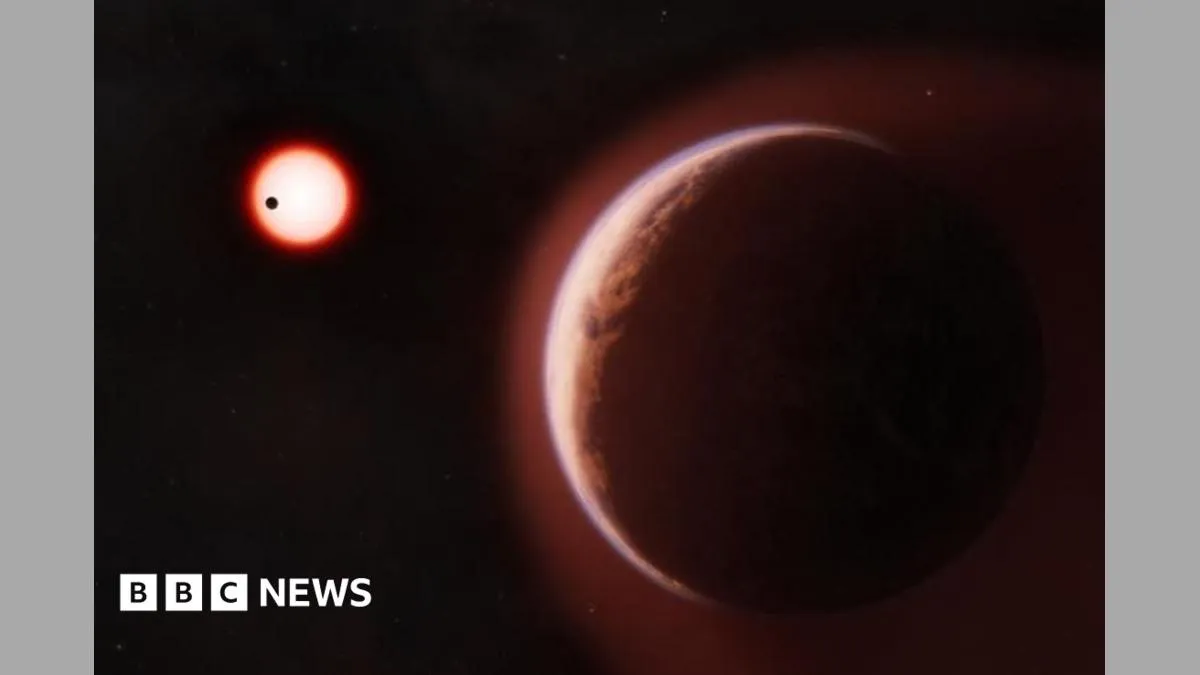
Scientists confirm a habitable-zone, rocky exoplanet atmosphere like Earth’s
A new Earth-like discovery sharpens the roadmap for future telescopes, funding, and standards for what “habitable” really means.

A card game teaches Filipino healing plants and organic chemistry
Herbularyo turns traditional medicinal plants like tawa-tawa and aloe vera into gameplay, tying folklore to science.

NASA opens media accreditation for Roman launch on Aug 30 at 7:20 a.m. ET
Decision-makers have hard deadlines to cover Nancy Grace Roman's Falcon Heavy liftoff from Kennedy.