

Ford rehires human engineers after AI quality checks fall short of veteran technicians
The automaker rolled out AI for quality checks, then quietly reversed course because it did not match human skill.
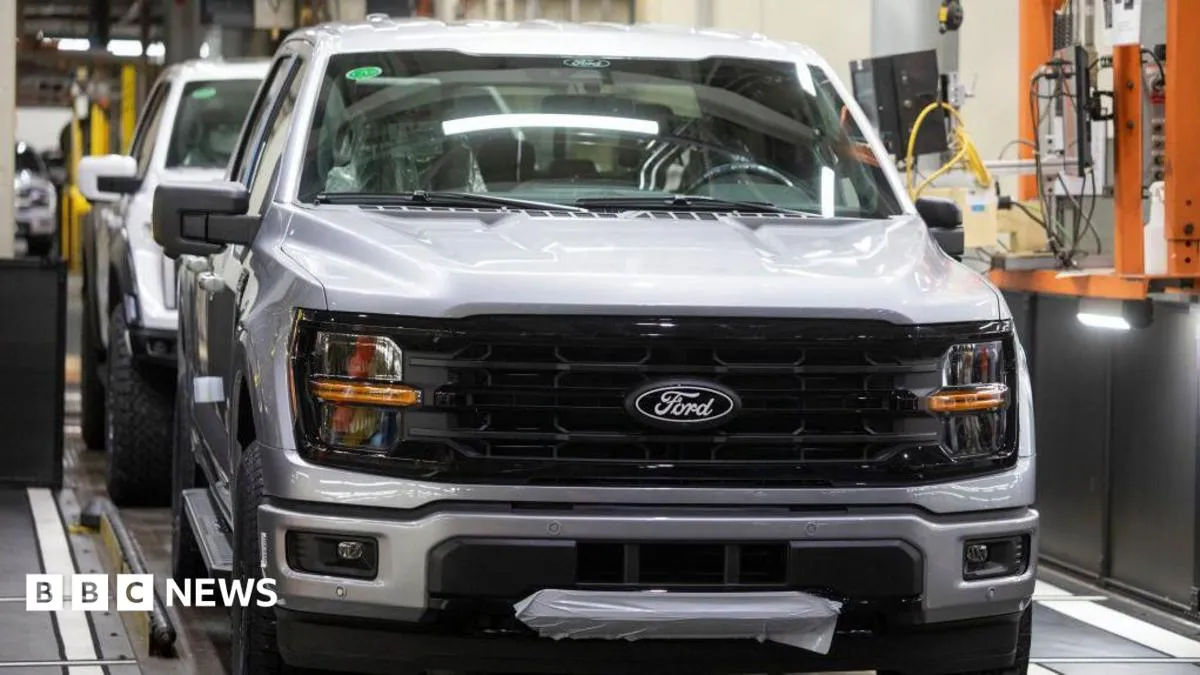
Ford rehires human engineers for quality inspection after finding its AI checks failed to match the standard of veteran technicians. For decision-makers, it is a practical warning: when safety and quality are on the line, “automation first” can backfire fast.
Ford has rehires human engineers for quality checks after discovering that its AI system was not delivering the same quality standard as veteran technicians. In other words, the AI did not just “underperform a bit.” It failed to match the skill of the people Ford relies on for making sure cars meet the quality bar.
That reversal matters because it signals something deeper than a software patch. Quality inspection is one of those unglamorous but critical parts of manufacturing where errors are expensive, customer-visible, and often safety-adjacent. If AI cannot reliably replicate the judgment and consistency of experienced technicians, the risk is not theoretical. It shows up on the line, in the rework rate, in defect leakage, and ultimately in the trust consumers and regulators place in the product.
This is also a moment that will resonate through the automotive industry, and beyond it. Across manufacturing, companies have been experimenting with AI for inspection tasks because vision models and automated classifiers promise faster throughput and lower marginal cost per check. But inspection is not only about “seeing” defects. It is also about interpreting context, deciding when a variation is acceptable, and escalating edge cases. Veteran technicians do that through experience, pattern recognition, and tacit knowledge that is hard to encode, even when the AI is technically functioning.
When Ford found that AI quality checks did not match veteran skill, it basically ran the most important test any industrial AI system can face: real-world performance against the benchmark humans set. That benchmark is rarely written down as a single metric. It is embedded in how technicians evaluate tolerances, how they respond to ambiguity, and how they handle exceptions. AI can be trained on datasets, but it still has to generalize to the messiness of production conditions: variation across parts, equipment drift, changes in lighting or materials, and new defect modes that show up as production evolves.
There is also a governance angle here, especially for executives and boards. AI rollouts tend to come with internal pressure for efficiency and modernization, particularly when leadership is selling a narrative of “industrial transformation.” Yet boards and audit committees usually want evidence that controls are staying strong, not just that costs are going down. The Ford move suggests the company prioritized quality assurance over the allure of full automation. Rehiring human engineers is not a symbolic gesture. It is operational, staffing, and cost realignment, which implies the company is treating inspection reliability as a control that cannot be compromised.
Regulators and lawmakers add another layer. While the details vary by jurisdiction and by product category, the general direction globally is that product quality and safety obligations remain on the manufacturer. That means if automation reduces the reliability of quality checks, manufacturers do not get to hand-wave the problem away as a model issue. The responsibility still sits with the company. In practical terms, that makes “AI works in a lab” less persuasive than “AI works on the factory floor under pressure,” and it makes rollback decisions more likely when performance falls short.
Second-order implications for peers are immediate. If Ford is rebalancing toward human inspection after AI missed the mark, other automakers and manufacturers will re-examine their own deployment thresholds. They may tighten validation requirements, expand human review during early rollouts, or demand proof that AI accuracy holds across shifts and across production lots. Even companies not in automotive will feel the pressure, because the same pattern applies wherever there is high consequence quality work, from electronics manufacturing to aerospace components.
For executives, the strategic stake is simple: the best AI adoption plan is not “adopt fast.” It is “adopt in a way that preserves the control system that protects customers.” Ford’s decision to rehire human engineers because AI quality checks failed to match veteran technicians underscores that in high-stakes environments, human expertise is not merely legacy. It is a reference standard that the AI must beat, not just approximate.
This story's Key Insights and Take-aways are locked.
Create a free account to unlock Executive Actions for one credit.
Register to UnlockAlways free for Executives Club members. Join the Club
More in Technology

Nvidia's $89B data center quarter: the 9 companies cashing in
The AI buildout is minting fortunes beyond GPUs, and memory, cloud, and cooling suppliers are riding the same wave.

Google quietly links your phone number to every Android account on your SIM
Adding a SIM now ties your phone number to all Google accounts - and future accounts inherit it. Here's the security and privacy stakes.

Hijacker AI 'Skynet mode' runs 100,000 attack steps against exposed models
Symantec caught a criminal AI agent that borrows other models, steals data, and mines crypto; the only relief is no confirmed victims yet.