

Fortune spills the 3-Rule playbook to avoid IPO day hype, after SpaceX’s $2T debut
Skip the first-day frenzy, follow revenue, and read the S-1, before chasing Anthropic and OpenAI’s next trillion.
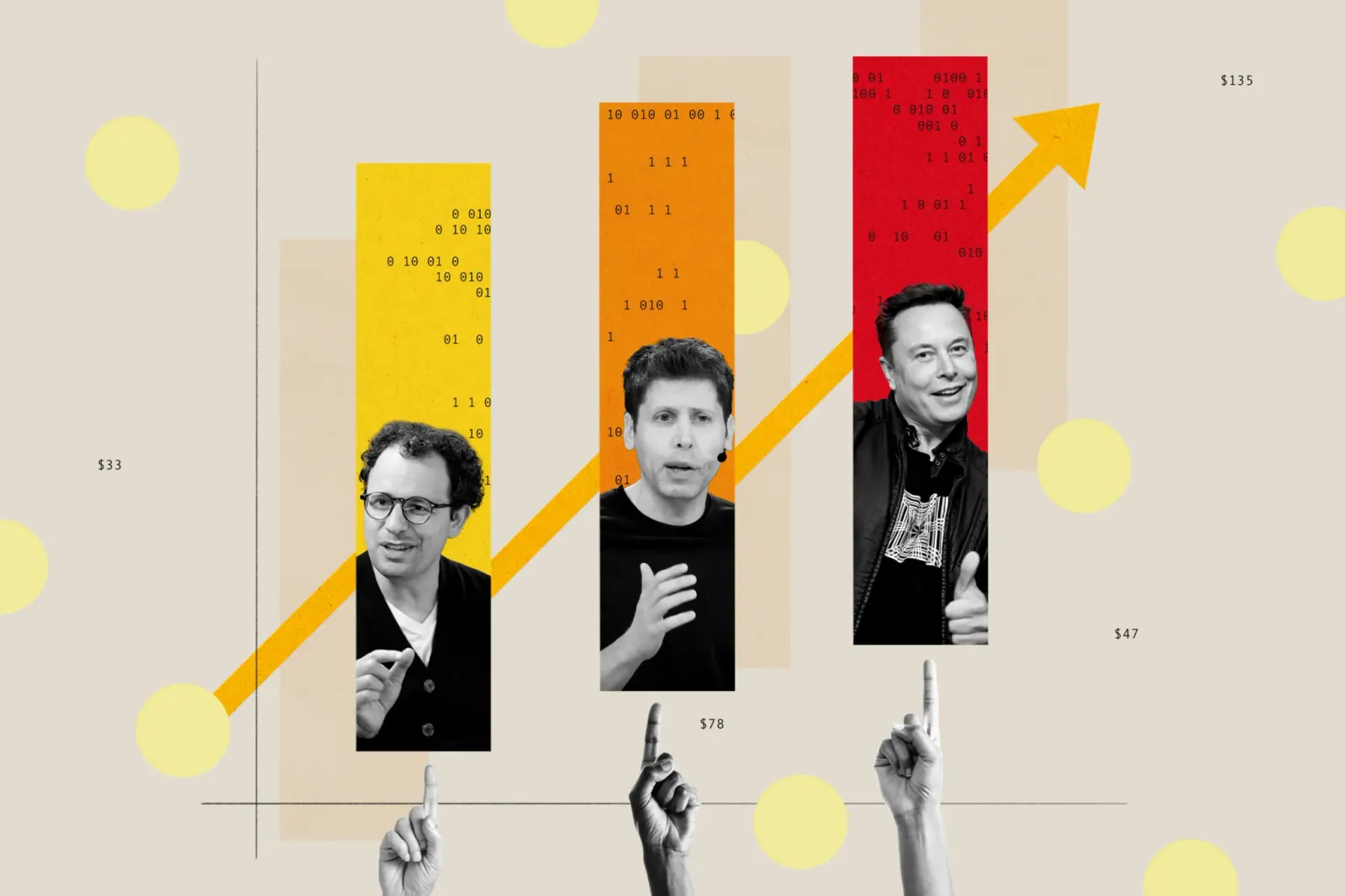
Fortune reports on investor Jeff Barnett’s approach to buying after SpaceX’s IPO on June 12, alongside market experts Matt Witheiler, Avery Marquez, and Bryan Wong. For decision-makers eyeing the “new Magnificent Three” of SpaceX, Anthropic, and eventually OpenAI, the consequence is a repeatable way to reduce hype risk during IPO season.
SpaceX’s IPO on June 12 lit a very specific fuse: the “new Magnificent Three” is now the setup investors are publicly dreaming about. Fortune ties that dream to the next trillion-dollar IPOs, with investors eyeing Anthropic and eventually OpenAI, the AI names that could represent the same on-ramp feeling traders had for Nvidia. The stakes are emotional and expensive. The article’s anchor example: $10,000 invested in Nvidia a decade ago would be worth roughly $1.8 million today. When your brain feels that math, “I should have bought earlier” becomes a market force.
But the practical counterpoint in the piece is almost rude in its simplicity. If you missed day one after SpaceX’s debut, history suggests you might be better off waiting for a less crowded entry. Fortune leans on a portfolio-operator story: one of financial advisor Jeff Barnett’s clients called him when SpaceX went public and asked if they could buy shares even after the headlines. Barnett says his client bought because SpaceX did not meet the client’s preset valuation and governance criteria, but the “lottery ticket” framing won. Barnett likens it to buying a small bet when the jackpot hits a billion dollars, knowing the odds are slim, but the small stake buys a share of the buzz without jeopardizing the whole portfolio. That mindset sets up the article’s three rules, which are basically an antidote to IPO mania.
Why these rules matter right now is because SpaceX’s first day was not subtle. More than 500 million shares traded on the opening session, marking the second-heaviest first-day IPO volume in Nasdaq history, behind only Facebook’s 580 million in 2012. SpaceX priced its shares at $135, opened at $150, and ended its first day on a 19% surge at $160.95. At the same time, Fortune highlights how fast the numbers can become a trap. Using SpaceX’s $18.7 billion in 2025 revenue and its $1.77 trillion IPO valuation, the stock is described as trading at about 95 times trailing annual sales. That’s the kind of pricing that can make even a great company a risky entry.
Rule No. 1 is therefore blunt: don’t buy the first day. Barnett’s perspective is echoed by market structure and execution timing. Fortune explains that early privileged investors already hold 12.5 billion shares at an average cost of $6.48, and if the stock is easy to get on day one, it likely means less privileged buyers were not early enough to get the best terms. More importantly, newly public stocks typically stay “unseasoned” for about three years, with those years often being the most volatile and transformative period, according to Avery Marquez, director of investment strategies at Renaissance Capital. The practical takeaway is not “never buy IPOs,” it’s “don’t assume day one equals best value.” The article gives a concrete example: SpaceX spiked to $225 within days of the IPO and then fell back to $160. Missing the IPO does not necessarily mean missing the opportunity.
Rule No. 2 is the classic we-don’t-care-about-the-dream-without-the-books test: follow the revenue. Matt Witheiler, a portfolio manager at Wellington Management, puts it in plain English. He says the difference between a lasting company and a good story is whether the numbers prove it is “obviously real or not.” Fortune points to annualized run rate figures: by early 2026, OpenAI’s run rate crossed $25 billion; by May, Anthropic’s had reached roughly $47 billion and publicly guided to more than $50 billion. That kind of paying-customer scale matters because it signals the company’s product is not just viewed, it is funded. The article contrasts this with the dotcom era, when investors bought companies that looked cheap on an “eyeball basis” but had no sales underneath.
Still, revenue alone is not enough. Witheiler adds a second layer: the addressable market has to be “absolutely unbounded,” with the orbital data centers analogy offered as context for how SpaceX-style infrastructure could translate into massive data center demand. The takeaway for executives and board members is the same, even if you are not personally buying shares: revenue is the hard evidence, but the market opportunity must be big enough to justify whatever valuation multiple the market is pricing.
Rule No. 3 takes the hype out of the headlines entirely: read the prospectus. For public-company investing, Fortune describes the S-1 as the disclosure document every company files with the Securities and Exchange Commission before going public. Marquez says it’s free, easy to read, and retail investors often don’t. They read the headlines. The article uses SpaceX to prove the point by contrasting a headline narrative with what the prospectus says. Headlines tell you Elon Musk aims to build a human colony on Mars with 1 million inhabitants, and that if he does, it could help make $1 trillion. The prospectus, Fortune reports, says SpaceX does not think that will ever happen and it hasn’t set aside a penny of that $1 trillion, even though it is giving him the shares underlying the pay package before he sends a speck of dust to Mars. Governance details also matter. The prospectus is where you learn control resides with Musk via billions of Class B super-voting shares that convert to Class A if he ever sells.
The prospectus also forces you to look beyond “growth story” marketing toward execution assumptions. Fortune emphasizes that post-IPO, the plan matters: a five- or 10-year growth story will detail how management intends to achieve it. That is exactly what boards and executives should care about, because the prospectus becomes a baseline for future accountability. If you cannot explain the pathway from products to customers to margins, the market will eventually demand receipts.
Finally, Fortune adds one last tip that’s less about IPO mechanics and more about strategy: look for the picks and shovels. Bryan Wong, a portfolio manager at Osterweis Capital Management who manages its small-cap growth strategy, argues that infrastructure and tooling companies offer a much bigger field to pick a winner from. That could mean a better shot at owning the next Nvidia instead of the next Enzo Biochem. For decision-makers, the second-order implication is clear: even if the headline names are SpaceX, Anthropic, and eventually OpenAI, the ecosystem investing logic can shift who wins when markets get crowded.
Fortune’s central thesis is not that investors are wrong to dream big. It is that the market punishes sloppy entry and headline-reading during IPO season. If you want to participate in the next trillion-dollar wave, the article’s three rules offer a way to separate “buzz” from balance sheet reality, and to do it before volatility and governance complexity turn opportunity into regret.
This story's Key Insights and Take-aways are locked.
Create a free account to unlock Executive Actions for one credit.
Register to UnlockAlways free for Executives Club members. Join the Club
More in Business

Anthropic’s Levant Alpöge cracks the Jacobian conjecture after 87 years
A Harvard valedictorian used Claude to hit a 1939 breakthrough, but the missing “why” is the real problem.

Uber buys Delivery Hero for nearly $15B, vaulting to top food delivery outside China
The deal doubles Uber's dual-services footprint and pushes a ride-and-eats bundling play into 50 more markets.

Epic and Google drop settlement bid, forcing rival Android app stores by July 22
Google told the court it is ready to carry third-party app stores starting Wednesday, July 22.