

France’s Golfech reactor shut down June 22 after river-water hit nuclear cooling limits
A heat wave forces EDF to cut nuclear output, stressing the grid even as regulators cap how warm river water can be.
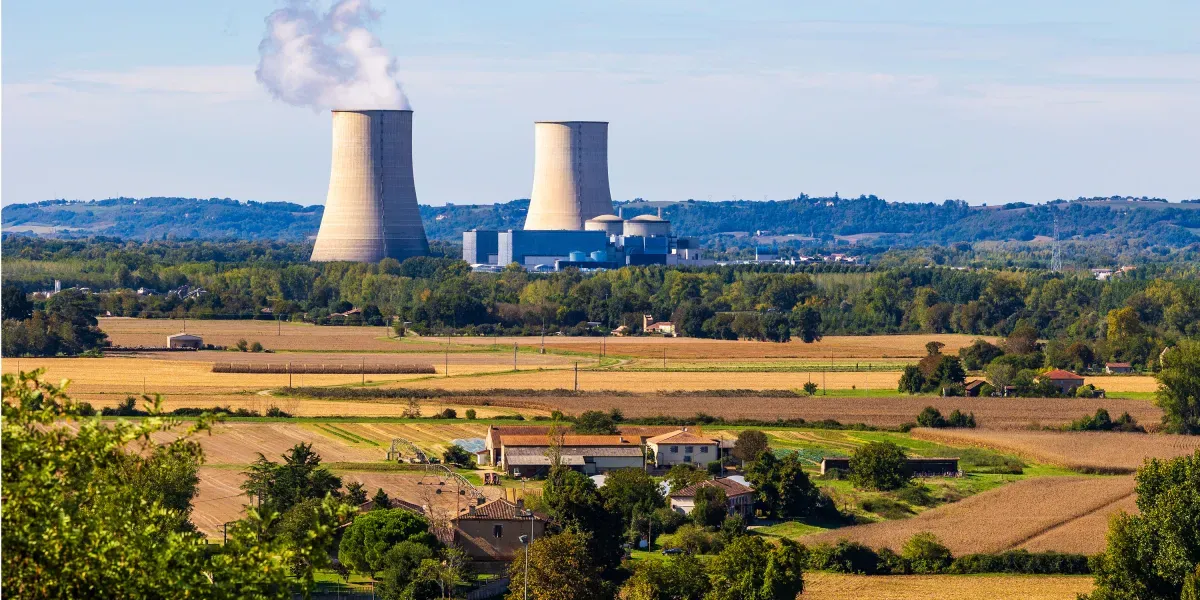
EDF’s Golfech nuclear unit two shut down at about 11:45 p.m. on June 22 after the Garonne River used for cooling got too hot. Decision-makers now have to plan around a two-front squeeze: rising cooling demand and heat-driven limits on generation.
Europe’s record-breaking heat is not just making people sweat. It is actively taking power plants offline, and in France that reality showed up on June 22: Unit two at the Golfech nuclear power plant shut down at about 11:45 p.m. when the river used to cool the plant got too hot.
The problem is mechanical and regulated at the same time. EDF takes in water from the Garonne River, uses it to cool equipment, then returns most of it to the river at slightly higher temperatures. French regulations limit the temperature of that return stream, so the warm water was expected to reach 28 °C (around 82 °F), forcing a precautionary shutdown, according to Brid Nelligan, a spokesperson for EDF. EDF operates France’s entire nuclear fleet, and it is also limiting the output of other reactors across the country, with one reactor at the Nogent-sur-Seine power plant ramped down as of Tuesday and more expected later in the week, Nelligan says.
Put that next to the headline heat itself and the stakes get real fast. On June 23, France saw its hottest day since record-keeping began in 1947, with temperatures climbed to over 44 °C (111 °F) and overnight temperatures staying unusually high. That prolonged hot weather warmed up rivers across the country, which is a cooling-water choke point for nuclear plants. When ambient heat pushes river temperatures up, the margin for legally compliant cooling shrinks. The result is generation that cannot simply “run harder” through the peak demand moment.
This matters for the grid because demand is rising while supply reliability is being constrained by physical limits. Increased demand, driven largely by cooling, is the main factor stressing Europe’s power grid, says Jean-Paul Harreman, director of Montel, an energy intelligence provider, via email. As heat drives the use of fans and air-conditioning, the load profile changes. Some countries that did not historically lean on cooling technologies are now getting pulled into the problem. The number of UK homes that use air-conditioning has roughly doubled since 2022.
The punchline for executives is that power plants do not all fail in the same way under heat stress. Hydropower is sensitive to water availability, and dry conditions lower the water available to generate electricity. In the first five months of 2025, high temperatures and low water conditions cut hydropower supplies in Europe by 13% compared with the year before. Coal and natural gas face different constraints: hot weather can stress equipment and reduce the efficiency of cooling towers. In the UK, five gas plants reported output reductions due to conditions, cutting a total of about 2.5 gigawatts from the power supply.
Nuclear, though, is where the regulatory detail becomes a board-level risk, not a footnote. Extreme heat has affected France’s nuclear industry before. At least seven gigawatts’ worth of nuclear energy was forced to shut down across the country during a heat wave in July 2025, according to data from Ember Energy. This time, outages and limitations are not expected to be drastic enough to affect the ability to meet demand in France, according to RTE, operator of the national electric grid. Still, “not drastic enough” is not the same thing as “no impact.” It signals narrower operational space during peaks, with ripple effects for scheduling, system margins, and the cost of balancing.
And the money question is unavoidable: adaptation costs. Earlier this year, EDF shared a climate-change vulnerability assessment for its business, including nuclear and hydropower operations across France. Upgrades are expected to cost about €600 million per year (about $680 million) over the next 15 years. Simone Tagliapietra, senior fellow at Bruegel, an economic and policy think tank, said via email that utilities can adapt by planning for summer peaks, making cooling demand more flexible, reinforcing grids for high temperatures, deploying batteries and demand response, and climate-proofing power plants’ cooling systems. But those changes can be expensive, and the heat does not wait for projects to finish.
With high temperatures expected to continue across much of Europe through the end of the week, the immediate lesson for executives is less about any single plant and more about the coupling between climate, regulation, and reliability. Heat is simultaneously pushing up demand and shrinking the operating envelopes for generation. For leaders responsible for energy systems, infrastructure, or industrial resilience, this is a governance test: do plans assume stable weather, or do they budget for the new reality where the grid’s constraints are triggered by both thermostats and river temperature limits?
This story's Key Insights and Take-aways are locked.
Create a free account to unlock Executive Actions for one credit.
Register to UnlockAlways free for Executives Club members. Join the Club
More in Business

A flaw in PHP just forced governments to pull their own sites offline
European agencies from Belgium to Germany took websites dark to patch a critical weakness in the language behind almost 70% of the web, and the blast radius extends far beyond government portals.

BioWare shuts down, Mass Effect 5 dead after $55B EA buyout
The legendary RPG studio's closure lands months after a $55 billion investment group buyout of EA, raising tough questions for gaming's biggest acquirers.

Musk barred from the room as Tesla, SpaceX boards weigh $3.5 trillion merger
The CEO of both companies is a 'conflicted party' watching independent directors negotiate a tie-up that would create a $3.5 trillion giant he would own about a third of.