

Free diver Iesetyn Morgan dives with purpose, using social footage to “give back”
A 21-year-old free diver turns marine-life reels into a practical mission, and it raises real questions for brands and regulators.
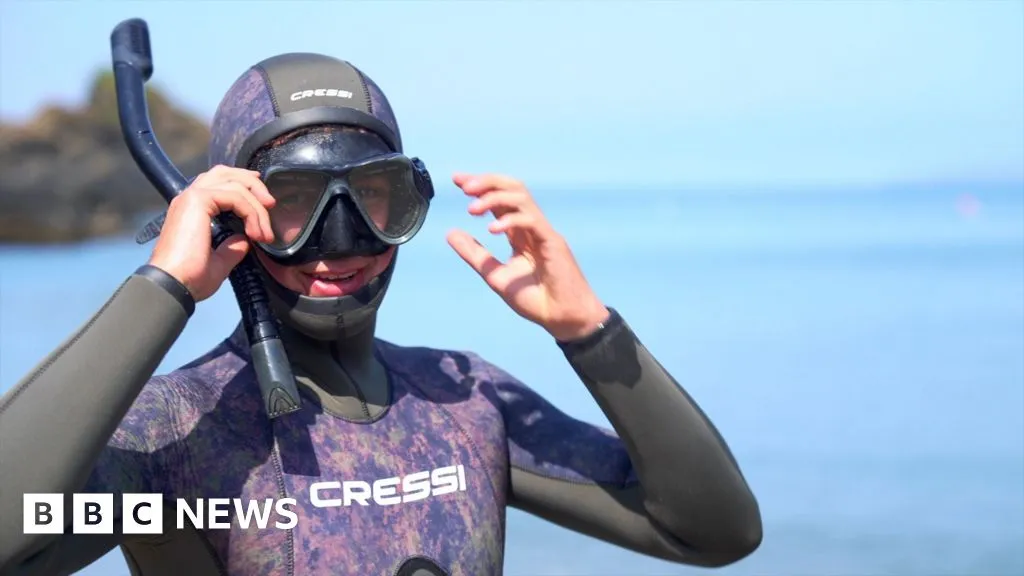
Iesetyn Morgan, a 21-year-old free diver, regularly free dives and shares footage of marine life on social media. His “give back” framing offers decision-makers a fresh look at how ocean storytelling, incentives, and oversight collide.
Iesetyn Morgan, a 21-year-old free diver, is using the ocean not just for sport, but for outreach. He regularly free dives and shares footage of marine life on social media, with a stated aim to “give back” to the ocean that has helped him.
That is the pivot worth watching: the activity is extreme and visually compelling, but the intent is social. Morgan is building an audience around what he sees underwater, turning personal participation into a public-facing narrative. For executives and stakeholders, that matters because attention is now a distribution channel, not an afterthought. Social platforms can amplify ocean awareness quickly, but they also compress context. Viewers may remember the spectacle, while regulators and partners are left to manage the implications that follow.
To understand the second-order impact, it helps to zoom out on how ocean content functions today. Free diving footage is inherently dramatic. Motion under low visibility, close proximity to marine life, and the raw “realness” of underwater video create a kind of immediacy that traditional reporting often struggles to match. When someone like Morgan posts regularly, the feed becomes a recurring briefing on ocean life, habits, and conditions. The message can be pro-environment, conservation-adjacent, and community-building.
But attention also attracts scrutiny. When individuals document wildlife in natural settings, questions arise about what is being done in the water, not just what is being filmed. For organizations thinking about partnerships, sponsorships, or media collaborations, there is a practical due-diligence challenge: ensuring that content does not inadvertently encourage harmful interactions with wildlife or degrade protected habitats. Even when the intent is positive, the behavior around filming can be the difference between education and disruption.
This is where regulatory background becomes relevant, even for a story that starts with a diver’s personal mission. Oceans are governed by layers of rules: fisheries management, protected areas, and wildlife protection laws that often vary by location. In many jurisdictions, activities that affect marine ecosystems can trigger permitting requirements or enforcement. Social media can move faster than bureaucracy, which means the gap between what creators do and what authorities expect can widen if safeguards are not considered upfront.
Morgan’s approach, as described in the source, is grounded in consistent free diving and sharing marine-life footage. The missing piece in the public narrative is not the visuals; it is the operational framework around them. For boards and decision-makers, this is an important reminder: when you greenlight or scale an initiative tied to the natural world, you need governance that matches the speed of publishing. That does not mean killing creativity. It means building guardrails so “give back” is not just branding, it is behavior.
There is also a reputational angle. Ocean activism and marine conservation are crowded spaces, and audiences can be quick to detect when content is performative rather than responsible. Morgan’s stated goal to give back is the kind of language that implies more than posting. It invites audiences, partners, and potentially regulators to ask what concrete support follows: education programs, donations, advocacy, or measurable habitat impact. Executives should treat that as a governance and measurement problem, not a marketing problem. If the mission is real, it will survive scrutiny beyond likes and views.
For peers in adjacent roles, the strategic takeaway is straightforward: creators can function as quasi-media outlets, and their outputs can influence public perception and stakeholder priorities. An individual diver with a consistent posting rhythm can shape what a young audience thinks is normal in the ocean. That makes the creator ecosystem a meaningful partner and a meaningful risk. If your organization touches ocean-focused initiatives, assume that social distribution will become part of the operating environment, not just the promotional layer.
Morgan’s story is, at its core, human. A 21-year-old free diver dives, records what he finds, and frames it as gratitude. But for decision-makers, the deeper story is about systems: how attention travels, how wildlife and habitat protections intersect with media, and how “give back” language becomes accountable in the real world.
This story's Key Insights and Take-aways are locked.
Create a free account to unlock Executive Actions for one credit.
Register to UnlockAlways free for Executives Club members. Join the Club
More in Science

Celtic women likely fought, but evidence is Britain-heavy and scholarship is split
Weapons in women’s burials, matrilineal power signals, and Boudica point to fighters, with a big European caveat.

El Niño’s 63% warning meets SpaceAI, but the real blocker is government action
SpaceAI could turn Southeast Asia’s climate data into decisions fast enough to prevent cascading damage, if leaders actually use it.

IIT Gandhinagar and biotech center build faster fluorescent probes for plant xylem
A new staining method lets researchers see xylem more quickly and specifically, sharpening work on vascular biology and crop resilience.