

Futurama body-swapping math proof shows why you cannot “switch back” the same way
A cartoon plotline turns into a real math lesson: constraints force smarter reasoning, not wishful reversals.
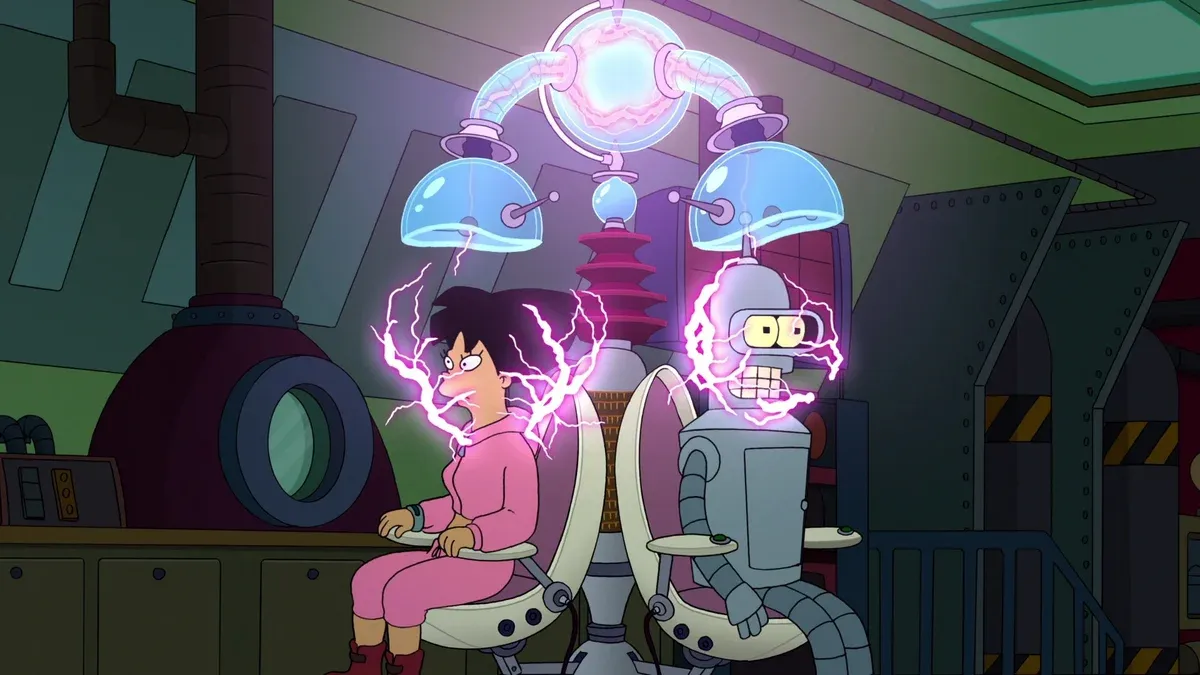
Scientific American connects a Futurama episode where characters swap bodies with a math proof that lets them return to their originals. For decision-makers, the takeaway is how hard constraints turn into solvable structure, not dead ends.
A Futurama episode drops a deceptively simple rule: a machine lets characters swap bodies, but they cannot switch back with the same person. That one limitation is the whole engine of the story, and it also becomes the math problem. Scientific American points to how the plotline leads to a totally new math proof that explains how all the characters can still return to their original bodies, even though the “easy” swap back is forbidden.
In other words, the cartoon premise is an explicit constraint problem. The machine allows body swapping, but it forbids the specific kind of reversal that would normally feel natural: switching back with the same person. The proof’s job is to show that the characters do not need that exact reversal to get home. With the right reasoning, the characters can be guided through a sequence of allowed swaps that ultimately restores their original bodies.
Why does this matter beyond trivia night? Because constraint-driven reasoning is the same pattern that runs through real systems: teams, markets, and even compliance regimes rarely let you “undo” actions exactly the way you expect. In business, you might be unable to reverse a decision due to lock-in, contracts, data retention rules, audit trails, or simply because multiple parties are involved. In technology, “switch back” can be blocked by design, by architecture boundaries, or by safety constraints. The Futurama machine is basically that worldview in a single rule: the rollback path you want is not the one you are allowed to take.
Scientific American’s point is that math can make this kind of puzzle precise. When an action is restricted, you learn something uncomfortable right away: if you keep thinking in terms of the forbidden reversal, you will keep getting stuck. The proof changes the question from “how do we undo the last move?” to “how do we structure a sequence of allowed moves so the end state still matches the starting state?” That shift is more than clever. It is a framework for solving problems where the naive approach fails.
There is also a governance angle hiding under the humor. In any organization, when a constraint is introduced, the question becomes who benefits from the interpretation and who bears the cost of failing to adapt. Boards often push for clarity on decision processes because constraints can look like arbitrary barriers until someone shows the path through them. In a puzzle like this, the machine rule is fixed. In real life, constraints can change too, but the general lesson holds: the right mathematical or procedural model can turn a “cannot” into a “can, but differently.”
The second-order implication is about resilience. If your ability to recover depends on one specific reverse operation, your system is brittle. Futurama avoids brittleness by showing that even with the restriction on switching back with the same person, recovery is still possible. Translating that to decision-making, the goal for executives is not just to eliminate failures, but to design recovery routes that do not rely on a single privileged undo action. That can mean building operational redundancy, diversifying options within regulatory boundaries, or creating decision protocols that assume not every step can be reversed.
Finally, there is the cultural signal: the scientific story is using a familiar pop-culture scenario to explain a real math idea, which helps underline how accessible constraint logic can be. When Scientific American takes a cartoon plotline and ties it to a “totally new math proof,” it is demonstrating that deep structure can be hiding in plain sight. For executives, creators, and investors watching how new tools and rules reshape industries, the meta-message is useful: when a system tells you what you cannot do, that is not the end of the story. It is often the beginning of a proof that tells you what you still can do, and how.
So the hook resolves cleanly. The characters cannot switch back with the same person, exactly as the plot says. Yet they still return to their original bodies, and the proof explains why. That is the bridge between cartoon chaos and mathematical certainty, and it is a reminder that constraints do not only block. They also define the route you must learn to take.
This story's Key Insights and Take-aways are locked.
Create a free account to unlock Executive Actions for one credit.
Register to UnlockAlways free for Executives Club members. Join the Club
More in Entertainment

The Incident at Galley House weaponizes a tactile mixing machine into psychic mystery
A clicky, lever-driven device becomes the whole game loop, turning deduction into crackling, haunted visions.

Harry Styles cancels Brazil show hours before stage time due to health issue
The São Paulo Morumbi concert was pulled last-minute, refunds issued, and Friday's show is set to proceed.

Trim goes from shy Charleston kid to Young Thug stage guest in one year
Her debut run is moving fast, remixing fame, and treating consistency like a business model.