

Garth Brooks could test a $2 billion catalog sale
The country giant is openly entertaining offers for his fully owned music rights, and a record-breaking deal could reshape streaming access and bidding math.
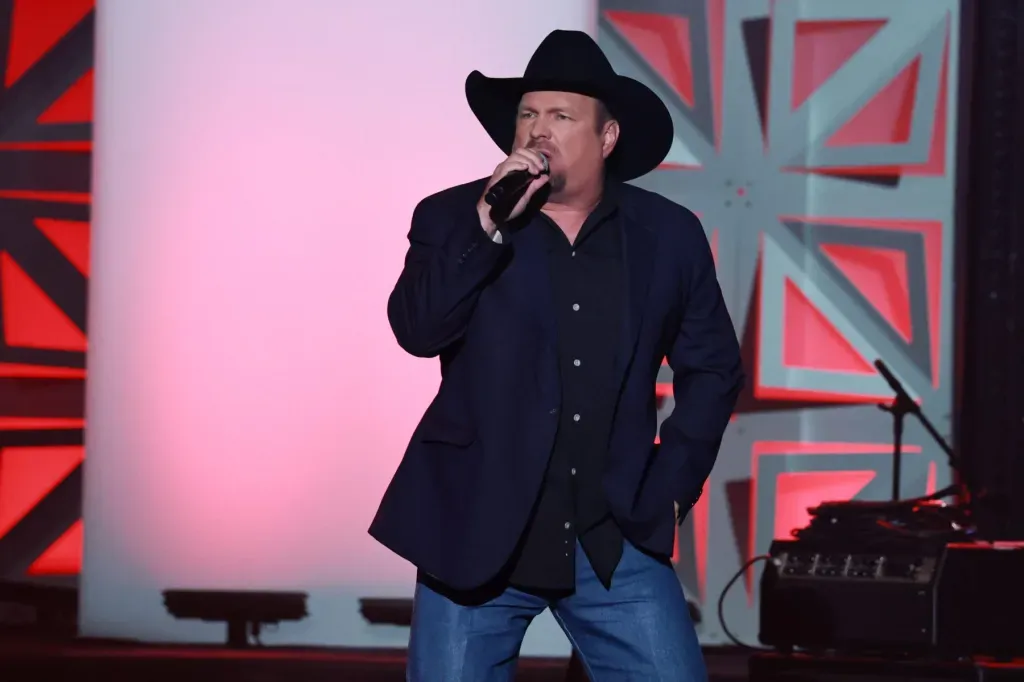
Garth Brooks is once again being linked to a potential sale of his fully owned publishing and recorded music catalog, with The Wall Street Journal reporting the price could reach as high as $2 billion. For labels, investors, and artists watching the catalog market, the real story is not just valuation, but how one of country music's biggest assets could finally hit streaming platforms.
Garth Brooks is back at the center of a catalog-market frenzy, and the number attached to it is eye-popping: up to $2 billion, according to a Wall Street Journal report published Tuesday night, June 2. That would be a record for a music catalog sale. Brooks owns both his publishing and recorded music catalog outright, and a source with knowledge of the situation told Billboard that he has continued having ongoing discussions with multiple companies about a sale for the past few years.
The timing is what gave the speculation fresh oxygen. Brooks, 64, is set to be honored Wednesday night, June 3, by the Recording Industry Association of America in Washington, D.C., for being the only artist in RIAA history with 10 Diamond albums, meaning 10 million equivalent sales each. The conversation also reportedly picked up after a private fireside chat in May with a foundation, where Brooks was asked about the next chapter of his career and reaffirmed that he was open to entertaining offers. In other words, this is not a random internet rumor. It is a long-running possibility that resurfaced because Brooks said, again, that he is open to hearing what the market will pay.
For context, the market has been paying a lot. Investor demand for hit musicians' masters and publishing rights has grown over the past decade, turning catalogs into one of music's hottest asset classes. The comparison points in the source show how aggressive the bidding environment has become. In 2024, Sony Music bought Queen's catalog for a reported $1.27 billion, and Sony also purchased a 50% stake in Michael Jackson's publishing and recorded music catalog for $600 million. Against that backdrop, sources cited by Billboard said bidding for Brooks' catalog would likely start at at least $1.5 billion. If a deal really reached $2 billion, it would not just set a record. It would push the ceiling for what investors think a superstar catalog can command when the owner is alive, the hits are enduring, and the fanbase is still active.
Brooks' portfolio has an extra twist that matters for whoever would buy it: his music is not broadly available on streaming platforms like Spotify or Apple. Instead, he has long preferred an exclusive deal with Amazon Music, which has limited discovery for newer fans trying to find songs such as Friends in New Places, The Dance and The River. That matters because a buyer of the catalog would likely want to get the music onto streaming services as fast as possible. The source says that could create a potential motherlode, which is the nice way of saying a well-timed streaming rollout could unlock a huge new wave of listening, catalog value, and algorithmic discovery.
That streaming angle is not theoretical. Brooks has kept his catalog active in other ways, including steady CD compilations through his Anthology book/CD series, which have mixed previously released material with new songs. His last full album of new material was 2023's Time Traveler, which first came out as part of a seven-disc box set sold exclusively through Bass Pro Shops before later becoming available to stream on Amazon Music. So the playbook has been consistent: control the distribution, keep scarcity intact, and use exclusivity as leverage. A buyer, however, may see the opposite opportunity. If the rights change hands, the whole point would be broader availability, bigger streaming reach, and a chance to monetize decades of demand that have been gated off from the biggest platforms.
That is where the broader industry implication gets interesting for operators and executives. In April, Big Loud CEO Seth England told Billboard's Kristin Robinson on her On The Record podcast that if Brooks' music became widely available on all streaming platforms, the impact on country streaming would be immense and could affect the genre for three to four years. England said, 'There's a certain someone out there in our genre whose music is not on all platforms.' He added, 'If and when he decides to [make the music widely available], it's going to change our genre again for three to four years because of the impact of his music. And, therefore, any artists who are also inspired by him, being that [the streamers] work off of algorithms so much, their music will lead to recommendations of other artists. So it may not be that one person's responsibility, but I do think it is their opportunity. In the next few years, I really hope to see Garth come back online and re-permeate his music everywhere because I think the genre will take a massive lift.' Whether or not Brooks sells, that logic explains why the catalog matters beyond one balance sheet. One decision about rights and distribution could ripple through country streaming, recommendation engines, and discovery for adjacent artists.
Brooks' scale makes the stakes even bigger. According to the RIAA, he is the No. 1-selling album artist in the U.S. with sales of 200 million albums, ahead of the Beatles at 183 million. That means any buyer would not just be acquiring a familiar legacy act. They would be acquiring one of the most commercially powerful bodies of work in American music, with a fanbase broad enough to matter in streaming, licensing, and long-tail consumption. Representatives for Brooks declined to comment, which leaves the market exactly where it has been for years: watching, waiting, and doing the math on how much a fully owned superstar catalog is really worth when the owner is still alive, still famous, and still able to say yes or no.
This story's Key Insights and Take-aways are locked.
Create a free account to unlock Executive Actions for one credit.
Register to UnlockAlways free for Executives Club members. Join the Club
More in Business

Anthropic’s Levant Alpöge cracks the Jacobian conjecture after 87 years
A Harvard valedictorian used Claude to hit a 1939 breakthrough, but the missing “why” is the real problem.

Uber buys Delivery Hero for nearly $15B, vaulting to top food delivery outside China
The deal doubles Uber's dual-services footprint and pushes a ride-and-eats bundling play into 50 more markets.

Epic and Google drop settlement bid, forcing rival Android app stores by July 22
Google told the court it is ready to carry third-party app stores starting Wednesday, July 22.