
GM’s Rashed Haq hires rivals for “millions” of customers, targeting eyes-off by 2028
GM is building personal-car autonomy at scale, pulling engineers from Tesla, Waymo, Zoox, and Cruise to chase a deadline nobody has nailed.
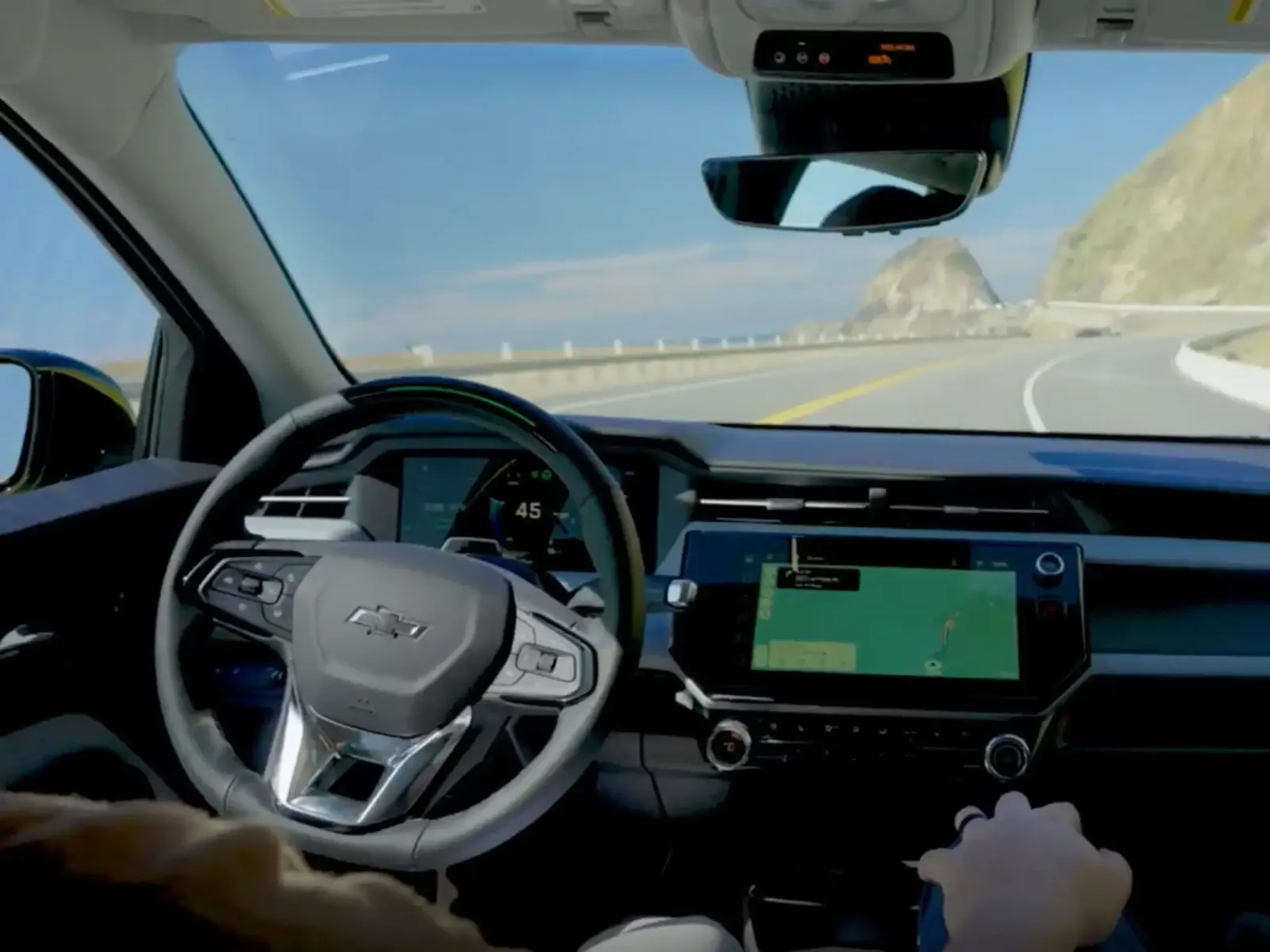
GM VP of autonomous vehicles Rashed Haq says GM is hiring talent from top autonomous driving competitors to build self-driving tech for “millions” of GM customers. The near-term objective is eyes-off highway driving for the Cadillac Escalade IQ by 2028, starting highway, expanding after.
Rashed Haq, GM’s VP of autonomous vehicles, wants self-driving tech that works for “millions” of customers. And the company’s strategy to get there is painfully specific: he says GM is hiring engineers from competing AV companies, including Tesla, Waymo, Zoox, and Cruise, to build autonomy for personal cars at a scale that the industry has not solved.
Haq frames the challenge as both technical and brutally economic. He points out that Tesla’s Full Self-Driving requires constant human supervision, and Waymo’s robotaxis operate in limited geographies with a costly sensor suite. Then he lands the key line: “Nobody has solved millions of cars all across the US roads at, let's say, $10,000 worth of hardware.” GM’s counter is to aim for a different product shape, with a different sensor and data strategy, and a different talent pipeline.
The near-term milestone Haq is chasing is eyes-off driving on the highway for the Cadillac Escalade IQ by 2028, starting with highway driving. After that, GM says it will “expand from there.” This matters because “eyes-off” is not just a marketing phrase. It implies the system can handle more of the driving task than today’s driver-assistance, with safety and edge-case coverage strong enough that the car can reasonably expect driver non-attention on defined roads and conditions.
The hiring ramp is also GM’s second attempt at momentum in autonomous driving after a course correction. In 2024, GM shut down Cruise’s robotaxi venture and folded talent and resources back into the parent company to focus on self-driving in personal cars. Since that shift, Haq says the team has been attracting engineers from top AV competitors with GM’s pitch anchored on scale. In his words, GM has a large customer base, its own manufacturing footprint, a growing autonomy team, and data from Super Cruise, GM’s hands-free driver-assistance system.
GM also leans hard into what it says is a differentiator in sensors. Haq said that unlike Tesla, GM plans to use lidar for eyes-off driving, calling it a “material advantage.” That is a high-stakes commitment because lidar has historically been associated with higher costs and more complex integration. But if GM believes it can engineer hardware and software together so a lidar-based approach becomes deployable, the reward is straightforward: a path to autonomy in customer-owned vehicles that scales beyond the economics of a limited robotaxi footprint. Haq also argues that the combination of scale and strategy gives GM an edge over robotaxi companies and smaller startups.
GM’s scale story is not just aspirational. Haq points to Super Cruise data, and GM has said Super Cruise has logged more than 1 billion miles of hands-free driving. GM aims for Super Cruise to go eyes-off by 2028 as well. Those data points matter to executives because in autonomy, the feedback loop is everything: more driving miles, more edge cases, better training and validation, and faster iteration. It is not a guarantee of success, but it is how you buy down uncertainty.
The talent bench GM is assembling since 2025 includes several names Haq’s story depends on. The company has made hires including Haq itself, Ronalee Mann, described as a Cruise alum and ex-Aptiv executive, and Sterling Anderson, a former Tesla Autopilot leader who joined GM as chief product officer. Earlier this year, GM also brought on Sean Harris, who spent two years at Wayve as director of autonomy; Jean-Yves Bouguet, a principal software engineer at Zoox; and ZJ Jia, who spent a year at Uber before joining GM as a senior engineer. The source notes that the latter three hires were also Cruise alums.
A GM spokesperson added that the company has been hiring from Cruise and its competitors as it continues to build out its “autonomous-driving bench.” The spokesperson said GM “has already nearly doubled last year’s external hires,” is filling roles faster than it was in 2025, and applications from external AV talent have doubled. They did not provide specific figures, and Haq declined to share the size of GM’s autonomy organization, saying only that it’s “appropriately sized” for what GM is trying to build.
All of this is happening under competitive pressure and tight timelines. GM is racing alongside automakers and AV players targeting eyes-off driving by 2028, with Ford targeting a 2028 launch date for similar technology. Rivian moved up the date, targeting 2027. Since announcing GM’s new autonomy stack last year, Haq said the team ran the stack in simulation in January, on a closed course in February, and on public roads in March. The remaining work is not cosmetic: Haq said GM has to finish building and fully testing the driving system, including ensuring safety, handling edge cases, and providing a smooth customer experience.
There is also an organizational lesson in the background. GM is trying to draw lessons from both Super Cruise and Cruise, the failed robotaxi project. Anderson, GM’s chief product officer, previously told Business Insider that GM’s personal autonomy work could eventually lead to a robotaxi service, though the company’s top priority is privately-owned vehicles. In the end, Haq’s pitch to the industry is a bet that data, talent, the right architecture, sensors, and manufacturing scale can solve autonomy on a scale that has so far eluded the AV industry.
For executives, the second-order takeaway is simple and uncomfortable: the autonomy race is no longer just a model-quality contest. It is a recruiting war, a data-collection race, and a manufacturing feasibility fight happening on a public schedule. If GM can make “eyes-off” work by 2028 on the highway in customer-owned vehicles, the competitive baseline for everyone else moves. And if it cannot, the industry will learn, again, that scaling autonomy across “millions” without expensive hardware and constant human supervision is an unsolved problem for a reason.
This story's Key Insights and Take-aways are locked.
Create a free account to unlock Executive Actions for one credit.
Register to UnlockAlways free for Executives Club members. Join the Club
More in Business

Bungie cuts most Destiny 2 staff as Sony says Marathon still matters
Herman Hulst confirms layoffs affecting most Destiny and some Marathon teams after Bungie admits Destiny fell short.

SK Hynix jumps 11% after seeking up to $29.4B in Nasdaq listing
The chip giant filed for a Nasdaq listing plan that could raise $29.4 billion, instantly reshaping investor expectations.
Micron revenue hits nearly $42B as AI memory lifts gross margins above 81%
Fiscal Q3 results crush estimates, prove AI memory is rewriting Micron's margins, and change the momentum math for the whole chip stack.