

Goldman traders are on pace for a record year, and equities explains how
A CNBC exec walkthrough connects stock drivers, market direction, and the equities desk’s growth engine.
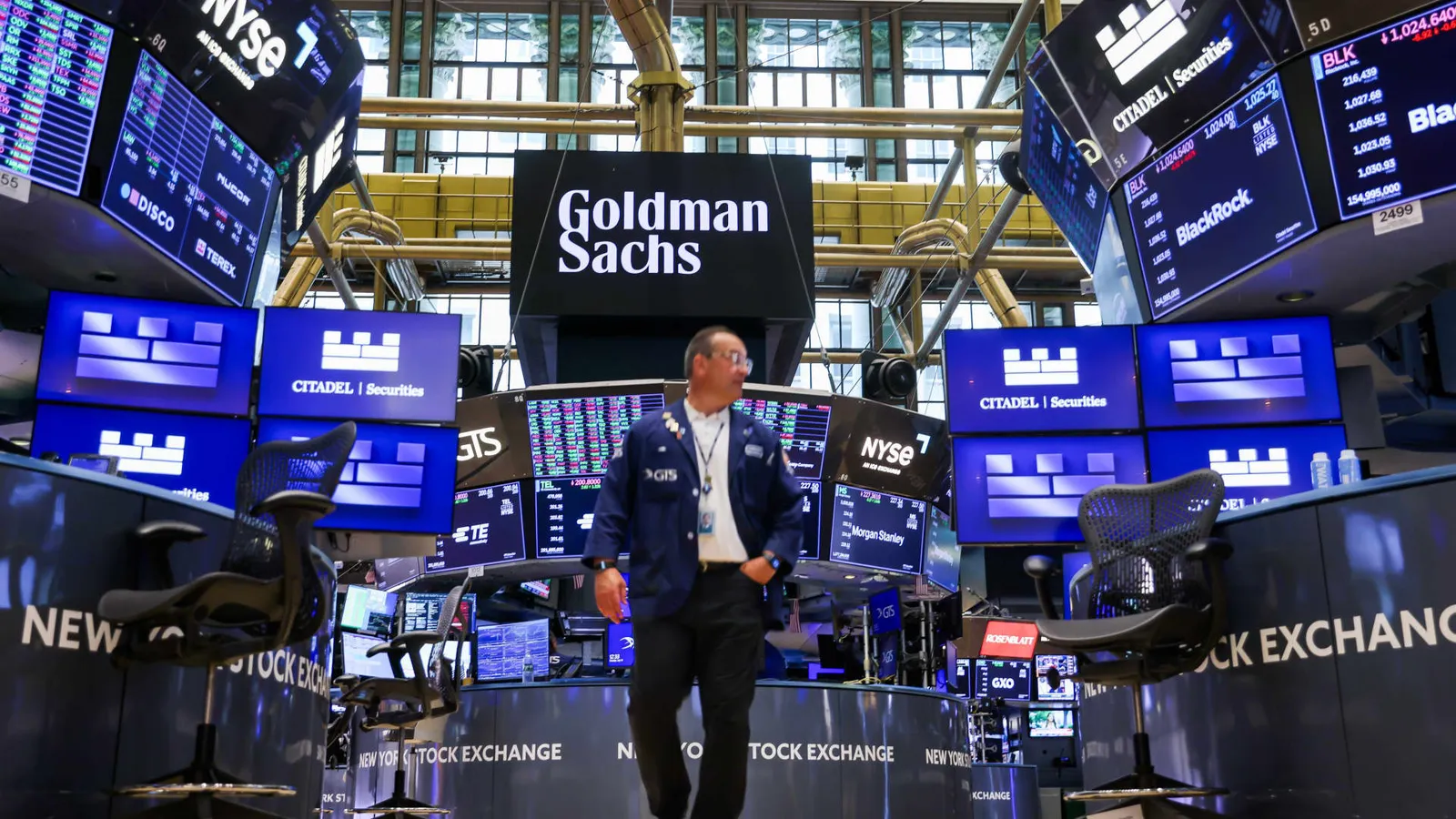
In a CNBC interview, a Goldman executive breaks down what is driving stocks, where markets may be headed, and how the bank’s equities desk fuels growth. The implication for leadership teams is clear: understanding the desk’s playbook helps peers gauge what performance levers matter most in public-market trading.
Goldman traders are reportedly on pace for a record year, and the “how” is less mystery than machinery. In a CNBC interview, a Goldman executive lays out what’s driving stocks, where markets are headed, and how the bank’s equities desk is positioned to turn market activity into sustained growth. For decision-makers, this matters because equities performance is not just about forecasting. It is about being structurally set up to make money when volatility rises, correlations shift, and clients constantly rebalance.
The core message from the interview is that markets move for specific reasons, and Goldman’s equities platform is built to harvest those moves. The executive focuses on the factors driving stocks and the broader trajectory of markets, and then connects those market dynamics to how the desk operates day to day. In other words: record-year performance is presented as an outcome of matching the bank’s trading strengths to the real-time needs of clients and the evolving conditions of public markets.
To understand why this kind of breakdown is important, it helps to zoom out on what a top equities desk actually does. The desk’s job is to interact with a broad set of counterparties across different client segments, often at the same time those clients are trying to manage risk and reposition portfolios. When the market regime changes, the “right” trades change with it. That is where an equities desk earns its keep. It is not only taking directional bets, it is facilitating client activity, managing inventory risk, and building flow patterns that can compound over time when the environment stays favorable.
There is also an incentive layer that sits underneath the trading floor logic. When a firm is on pace for something like a record year, performance tends to concentrate attention across the organization. Management wants to preserve the conditions that are working, but they also have to manage risk tightly enough that short-term good days do not become long-term damage. That tension is exactly why an interview that explicitly ties “what’s driving stocks” to “how the desk fuels growth” is more than trivia. It signals that the bank is framing results as repeatable process, not a one-off streak.
Regulatory context adds another dimension, even when it is not the headline focus. In public-market businesses, rules around capital, liquidity, leverage, and risk management shape how much exposure desks can carry and how they structure their activities. Even without pulling in specific policy details from the CNBC piece itself, the second-order implication for executives is that a record pace has to be compatible with the constraints banks operate under. The leadership lens becomes: Are we growing because the market is moving, or because our risk and capital posture is letting us participate efficiently? An equities desk that can explain its role in growth is implicitly answering that question.
The “where markets are headed” part of the interview also matters for anyone responsible for planning at an investment bank, asset manager, or exchange-adjacent business. Market direction drives client behavior. When markets look stable, some flows slow down and clients focus more on hedging and tactical adjustments. When markets get more turbulent, rebalancing accelerates, and trading activity can increase. If Goldman’s executive is linking market direction to the desk’s performance engine, the practical takeaway is that markets are not a backdrop. They are the input.
For boards and senior executives at peer firms, the story is a reminder that equities strategy is an ecosystem. Trading results reflect not just market moves, but the firm’s talent, infrastructure, client relationships, product reach, and risk management discipline. Goldman being on pace for a record year, as presented in the interview, is a signal to competitors that the bank’s equities desk is aligned with current conditions. Peers who assume results are purely market-driven might miss what can be adjusted internally: how the desk allocates capital, how it manages inventory and risk, and how effectively it translates market drivers into actionable opportunities for clients.
If you are leading in capital markets, the most actionable way to read this is simple. The interview frames record-year performance as a direct chain from market drivers to desk operations to growth. That is the kind of narrative leaders need because it points to controllable levers. Market direction may be partly out of your control, but preparedness, risk posture, and execution are not. And those are exactly what decide whether “on pace for a record year” becomes a sustained outcome or a brief headline.
This story's Key Insights and Take-aways are locked.
Create a free account to unlock Executive Actions for one credit.
Register to UnlockAlways free for Executives Club members. Join the Club
More in Business

Anthropic’s Levant Alpöge cracks the Jacobian conjecture after 87 years
A Harvard valedictorian used Claude to hit a 1939 breakthrough, but the missing “why” is the real problem.

Uber buys Delivery Hero for nearly $15B, vaulting to top food delivery outside China
The deal doubles Uber's dual-services footprint and pushes a ride-and-eats bundling play into 50 more markets.

Epic and Google drop settlement bid, forcing rival Android app stores by July 22
Google told the court it is ready to carry third-party app stores starting Wednesday, July 22.