

Google Is Sending an A.I. Data Center to Space Next Thursday
An experimental satellite with enough computing power for simple A.I. queries launches next week, testing a new frontier for cloud infrastructure.

Google is launching an experimental satellite into orbit next Thursday with enough onboard computing power to answer simple A.I. queries from space. The mission tests whether space-based data centers can extend cloud computing beyond terrestrial limits, with implications for latency, connectivity, and infrastructure strategy.
Next Thursday, Google is sending an experimental satellite into orbit with enough computing power to answer simple A.I. queries from space. The mission, reported by The New York Times, marks the first time a major cloud provider is testing A.I. compute in orbit, a step toward a future where data centers are not anchored to land. For executives watching the cloud infrastructure race, the launch is a signal that the next frontier of computing may not be a new region in Iowa or Singapore, but low-Earth orbit itself.
The satellite is not a full data center, but it is a meaningful proof of concept. Google says the onboard system can handle simple A.I. queries, meaning the satellite can process data in space rather than beaming it back to Earth for a ground-based model to interpret. That distinction matters: it cuts the round-trip latency that plagues satellite communications and opens the door to real-time decision-making in orbit. For industries that depend on remote sensing, maritime tracking, disaster response, or defense, the ability to run A.I. at the edge of space could be transformative.
The launch is part of a broader push by Google to embed A.I. into every layer of its infrastructure. The company has spent years building custom tensor processing units (TPUs) for A.I. workloads, and it has invested heavily in undersea cables and edge computing nodes to bring its cloud closer to users. A satellite with A.I. capabilities is a logical, if ambitious, extension of that strategy. It also aligns with Google's parent company Alphabet, which has a history of moonshot projects that take years to become commercially viable.
For the cloud industry, the implications are significant. Amazon Web Services and Microsoft Azure have both explored space-based connectivity, but Google's satellite is different because it is not just about bandwidth; it is about compute. If the experiment succeeds, it could pressure competitors to rethink their own infrastructure roadmaps. The economics of space-based computing are still unproven, but the strategic value of being first is clear. A cloud provider that can offer A.I. processing from orbit would have a unique selling point for government and enterprise customers with operations in remote or contested environments.
Regulatory and geopolitical factors also come into play. Space is increasingly crowded, and the rules governing orbital infrastructure are still evolving. Google will need to navigate spectrum allocations, orbital debris guidelines, and international agreements that were never designed for A.I. data centers. The company's willingness to launch an experimental satellite suggests it believes the regulatory environment will eventually accommodate space-based computing, or that it wants to shape those rules before they are written.
The mission also raises questions about the future of data sovereignty. If A.I. models can run in space, they are not subject to the same data residency laws that govern terrestrial data centers. That could be a feature for multinational companies trying to avoid cross-border data transfer restrictions, or a concern for regulators who want to know where data is processed. Google has not said how it will handle those issues, but the satellite is a testbed for more than just technology.
For decision-makers, the launch is a reminder that infrastructure advantage is no longer just about land, power, and fiber. The next competitive battleground may be orbital. Companies that rely on cloud providers should watch the results of this experiment closely, because it could signal a shift in how and where A.I. workloads are processed. If space-based compute becomes viable, it could change the economics of latency-sensitive applications and open new markets that are currently underserved by terrestrial infrastructure.
Google's satellite is a small step, but it is a deliberate one. The company is not just sending hardware into orbit; it is testing a thesis about the future of computing. For everyone else, the question is not whether space-based A.I. will happen, but when it becomes a commercial reality and who will be left behind.
This story's Key Insights and Take-aways are locked.
Create a free account to unlock Executive Actions for one credit.
Register to UnlockAlways free for Executives Club members. Join the Club
More in Technology
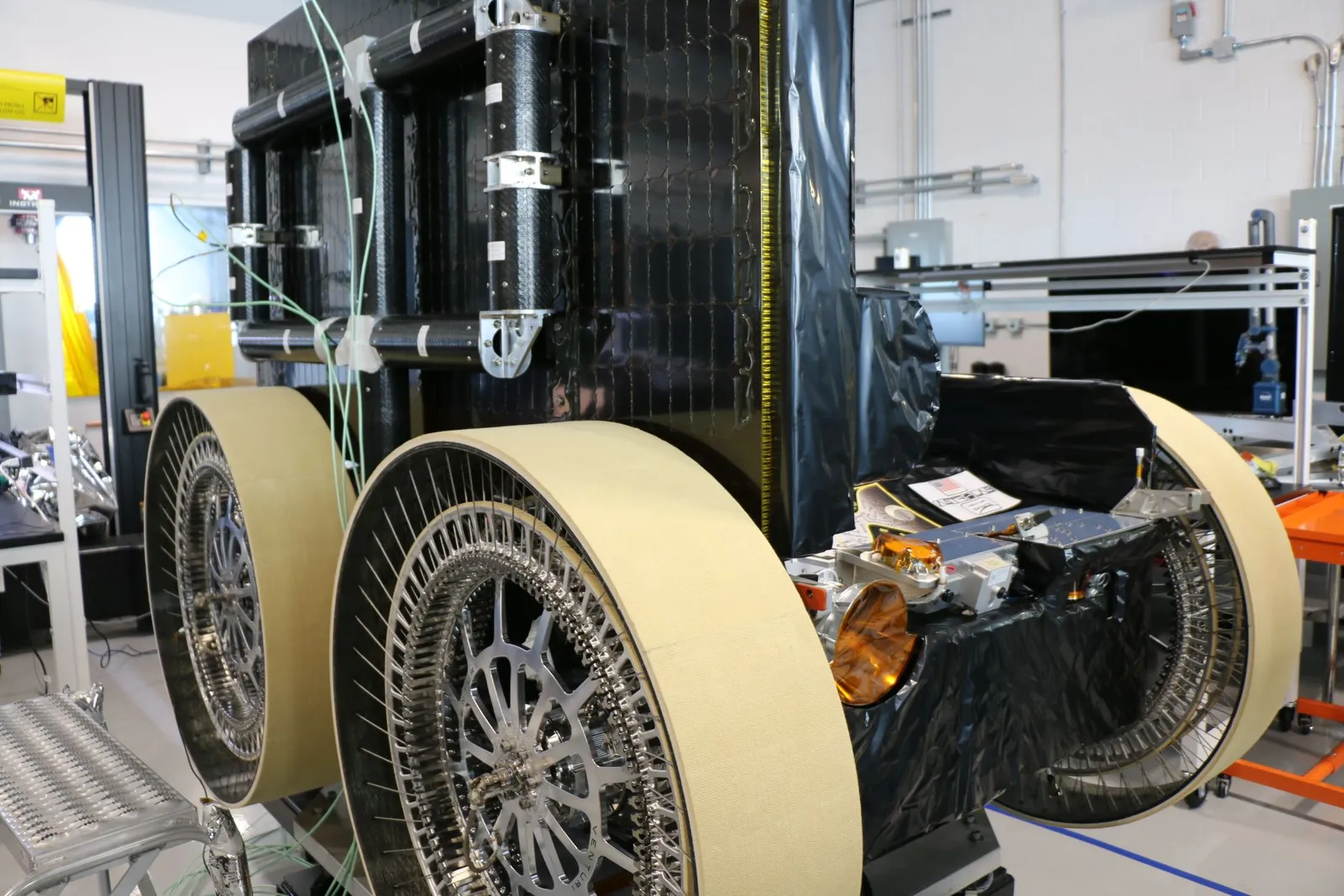
The moon's first supercomputer launches this year with AI aboard
Astrolab's FLIP rover will test HPE's Spaceborne Computer-4 at the lunar south pole, a milestone for edge computing, autonomous navigation and the commercial moon economy.

Meta's Muse hits 10M downloads in 40 days, beating AI rivals on retention
Muse's fast start puts it in rare company - and early data shows users stick around longer than ChatGPT or Gemini.

Google's $899 Googlebook laptops are 'woefully underbaked,' review finds
Google's premium ChromeOS-Android hybrid starts at $899, but the first major review says the software can't match the hardware. A risky debut against the MacBook Air and Surface Laptop.