

Google lets big creators claim Search profiles, but only if they are already huge
Google is turning Search into a personal branding layer for a limited class of creators and publishers, raising the stakes for attention, identity, and discovery.
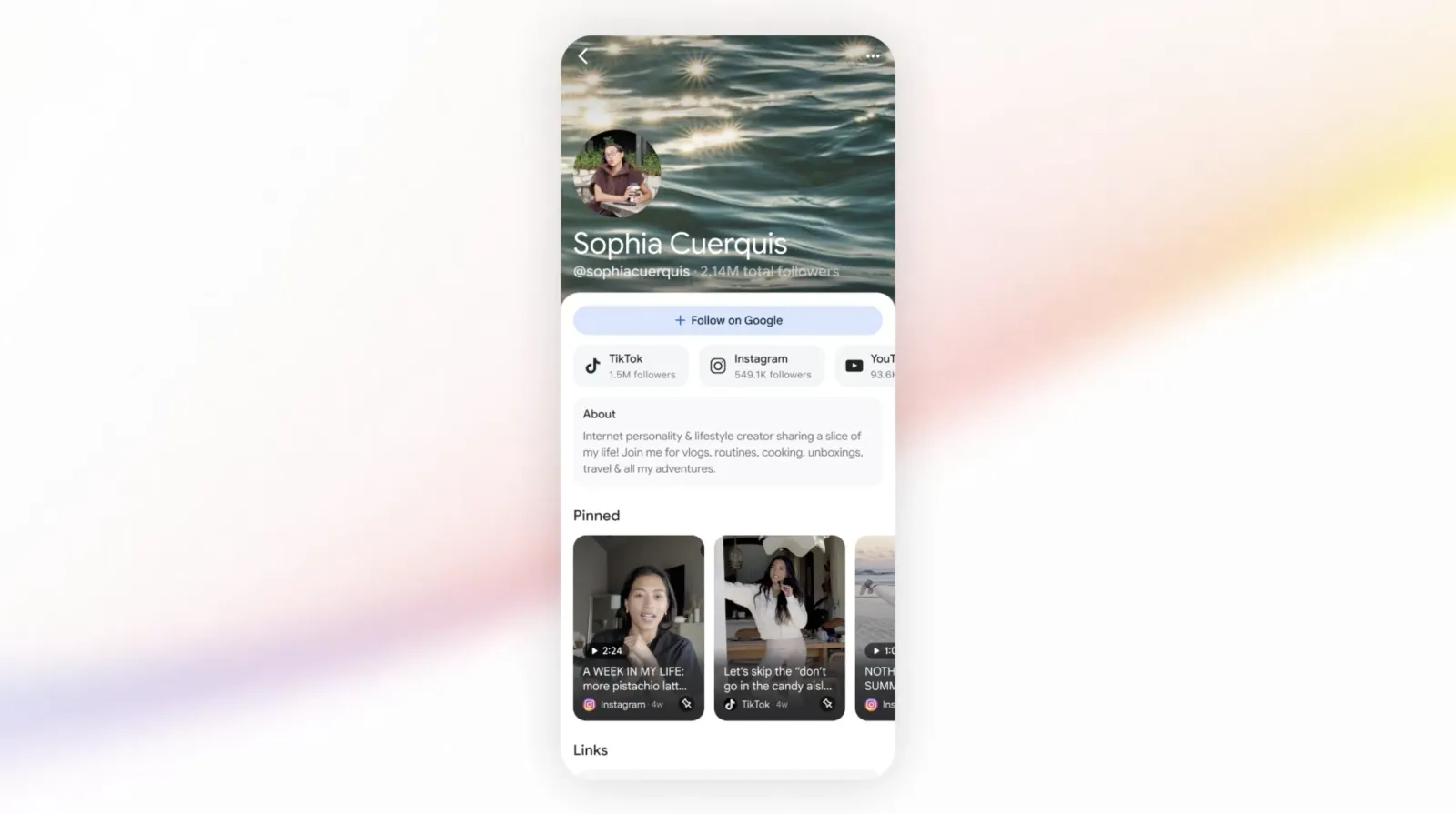
Google is now letting large creators and publishers in the US claim dedicated profiles in Search, with access limited to people who already meet major follower thresholds on YouTube, Instagram, X, or TikTok. For decision-makers, that means Search is becoming a more controlled reputation surface, one that rewards existing reach and could change how audiences find videos, articles, and other online profiles.
Google is giving big creators and publishers a new way to show up in Search, but the gate is tight enough to keep almost everyone out. In the US, eligible people can now claim dedicated Search profiles that highlight videos, articles, and other profiles online. This is not a universal feature for the internet at large. Google is limiting access to people with at least 100,000 YouTube subscribers, 100,000 followers on Instagram or X, or 300,000 followers on TikTok, and users must also be at least 18 years old to make a Search profile.
That threshold tells you almost everything about what Google thinks this product is for. This is not about helping every small business, freelancer, or local creator polish their Search presence. It is for people and publishers who already have scale, and who now want that scale translated into something more durable inside Google's own ecosystem. In practical terms, Google is turning Search into a kind of identity hub, where a creator's own content, web presence, and social accounts can be presented together rather than scattered across the open web.
The Verge says Google shows this off in demo videos with a Search profile that can feature links to websites and other platforms, a short summary of the person or brand, pinned media, and related material. That matters because Search is still one of the most important discovery surfaces on the internet. If someone types a creator's name into Google, the company is now making it easier for that creator to control the first impression. For creators, that is a branding win. For publishers and businesses that operate in the attention economy, it is also a reminder that discovery increasingly depends on how well you are packaged inside platform rules you do not control.
The bigger strategic point is that Google is not just indexing the web here. It is shaping how the web appears. Search has long been the place where users sort signal from noise, but the launch of dedicated profiles gives Google a more direct role in presentation and reputation management. That can help big names organize their presence in a cleaner way, but it also reinforces a familiar internet reality: the biggest accounts get the most sophisticated tools. The smallest players still have to compete for attention the hard way, one search result at a time.
There is also a useful incentive structure hiding in the fine print. By requiring huge follower counts on YouTube, Instagram, X, or TikTok, Google is effectively using third-party platforms as proof of identity and influence. That is a very platform-native way to decide who matters. It privileges accounts that can already demonstrate audience size, which likely keeps spam, impersonation, and low-quality listings down. It also means the feature is designed less like an open publishing tool and more like a verification-plus-distribution layer for people who have already crossed a visibility bar. In a world where creators build businesses across several platforms at once, that kind of consolidation is valuable.
For executives, the second-order implication is straightforward: the battle for attention is becoming even more multi-surface. If your company depends on talent, creator partnerships, or brand trust, the person at the center of the story may increasingly want a Search presence that looks as curated as a company homepage. That could matter for creator-led brands, media companies, agencies, and anyone whose revenue relies on a public figure's ability to be found quickly and credibly. It also raises the question of where audience relationships are actually being owned. When Google, not just the creator, helps decide how that identity is framed, Search becomes part marketing channel, part reputation layer, and part gatekeeper.
The limit to the US for now suggests Google is still testing how much control users want, and how much control it is comfortable granting. But the strategic direction is clear. Search is no longer just about links. It is becoming a more curated surface for people who have already won the follower game elsewhere. For leaders in media, brand, and creator businesses, that means the competition is not only about making content. It is also about owning the digital storefront where that content is first introduced to the world.
This story's Key Insights and Take-aways are locked.
Create a free account to unlock Executive Actions for one credit.
Register to UnlockAlways free for Executives Club members. Join the Club
More in Technology

OpenAI says 10,000 agents cracked a 90-year math problem in 88 hours
The company's claim is audacious, but one mathematician is pushing back. Here's what it means for AI-driven discovery.

Meta still serves child sexual abuse ads on Instagram in India - BBC report
A new report following the BBC Eye investigation says the ads are still there - what it signals for every platform with a self-serve ad engine.

White House yanks 'Build the Wall' game after Tetris Company copyright warning
The administration's arcade game vanished in hours - and the takedown playbook every brand can learn from.