
Google Maps now shows 'Lake America' for US users after Trump's rename order
Google Maps has adopted 'Lake America' for US users following Trump's executive order, while Canadian users still see 'Lake Ontario' - and MapQuest is refusing to comply.

Google Maps has renamed Lake Ontario to 'Lake America' for US users after Trump's executive order and the US Geographic Names Information System update. The move creates a split-screen reality for cross-border users and highlights how tech platforms navigate political pressure.
Google Maps now displays 'Lake America' for US users, replacing the long-standing 'Lake Ontario' label on the body of water that borders northern New York and southern Ontario. The change, visible as of Sunday, follows President Trump's executive order signed Thursday, which directed the US Geographic Names Information System (GNIS) to update the official federal name. Google confirmed in a blog post that it updates its maps to reflect official government sources, so US users now see 'Lake America' while Canadian users continue to see 'Lake Ontario' - and users in other countries see both names depending on their location.
The executive order is part of a broader push by the Trump administration to assert American naming conventions, including the earlier rename of the Gulf of Mexico to the 'Gulf of America.' Canadian officials have said they will not recognize the new name, and the split-screen effect on Google Maps underscores the diplomatic friction. The move also comes amid escalating trade tensions: the Trump administration imposed an additional 50% tariff on many Canadian goods on August 22, Canada responded with retaliatory tariffs, and Trump has since threatened 50% tariffs on auto and steel imports from Canada. Ontario Premier Doug Ford called the tariffs 'devastating on the US' in an ABC News interview, adding that 'a tariff on Canada is nothing more than a tax on the American people.'
MapQuest, the older mapping service that Google largely eclipsed, has refused to adopt the new name. In a post that has gone viral, the company said 'We're not changing it' and invited users to name the lake 'whatever you want.' The post has amassed more than 5 million views on X, a striking contrast to the account's usual engagement - none of its 24 posts in July received more than two likes. Apple Maps, meanwhile, still shows 'Lake Ontario' for all users, and the company has not responded to requests for comment. The divergence among major tech platforms highlights the lack of a coordinated approach to politically sensitive geographic names.
The naming dispute is not just symbolic. It reflects a deeper struggle over how digital platforms handle government mandates that conflict with international recognition or local sentiment. For Google, the decision to follow the US GNIS is consistent with its stated policy of using official sources, but it creates a practical problem: users crossing the border or viewing the same map from different countries will see different names for the same body of water. That inconsistency could confuse travelers, logistics operators, and anyone relying on maps for navigation or business decisions.
Mark Carney, the Canadian prime minister who recently bowed out of trade negotiations after accusing the United States of introducing 'unfair' last-minute changes, weighed in on the rename. In a post on X, he wrote that 'naming reality means calling it Lake Ontario,' a pointed rebuke that ties the naming dispute to the broader trade conflict. Carney's comment underscores how geographic names have become a proxy for national pride and economic leverage, especially as the two countries remain locked in a tariff standoff that shows no signs of easing.
For executives at tech companies, the Lake America episode is a case study in the risks of aligning with political directives. Google's policy of deferring to official sources is defensible, but it exposes the company to criticism from users and governments that view the move as capitulation to political pressure. The viral success of MapQuest's refusal suggests there is consumer appetite for brands that take a stand, even if that stand is symbolic. At the same time, Apple's silence and continued use of 'Lake Ontario' shows that inaction is also a choice, one that may avoid short-term backlash but leaves the company vulnerable to accusations of ignoring US policy.
The strategic stakes extend beyond mapping. As governments increasingly use naming and other symbolic measures to assert sovereignty, companies must decide whether to follow official sources, maintain neutral labels, or actively resist. The choice carries reputational, legal, and operational consequences. For CEOs and boards, the lesson is to establish clear policies for handling politically sensitive data before a crisis hits, and to communicate those policies transparently to users and regulators. The Lake America split is a reminder that in a connected world, a single map can become a battleground - and every company with a global user base will eventually have to pick a side.
This story's Key Insights and Take-aways are locked.
Create a free account to unlock Executive Actions for one credit.
Register to UnlockAlways free for Executives Club members. Join the Club
More in Business
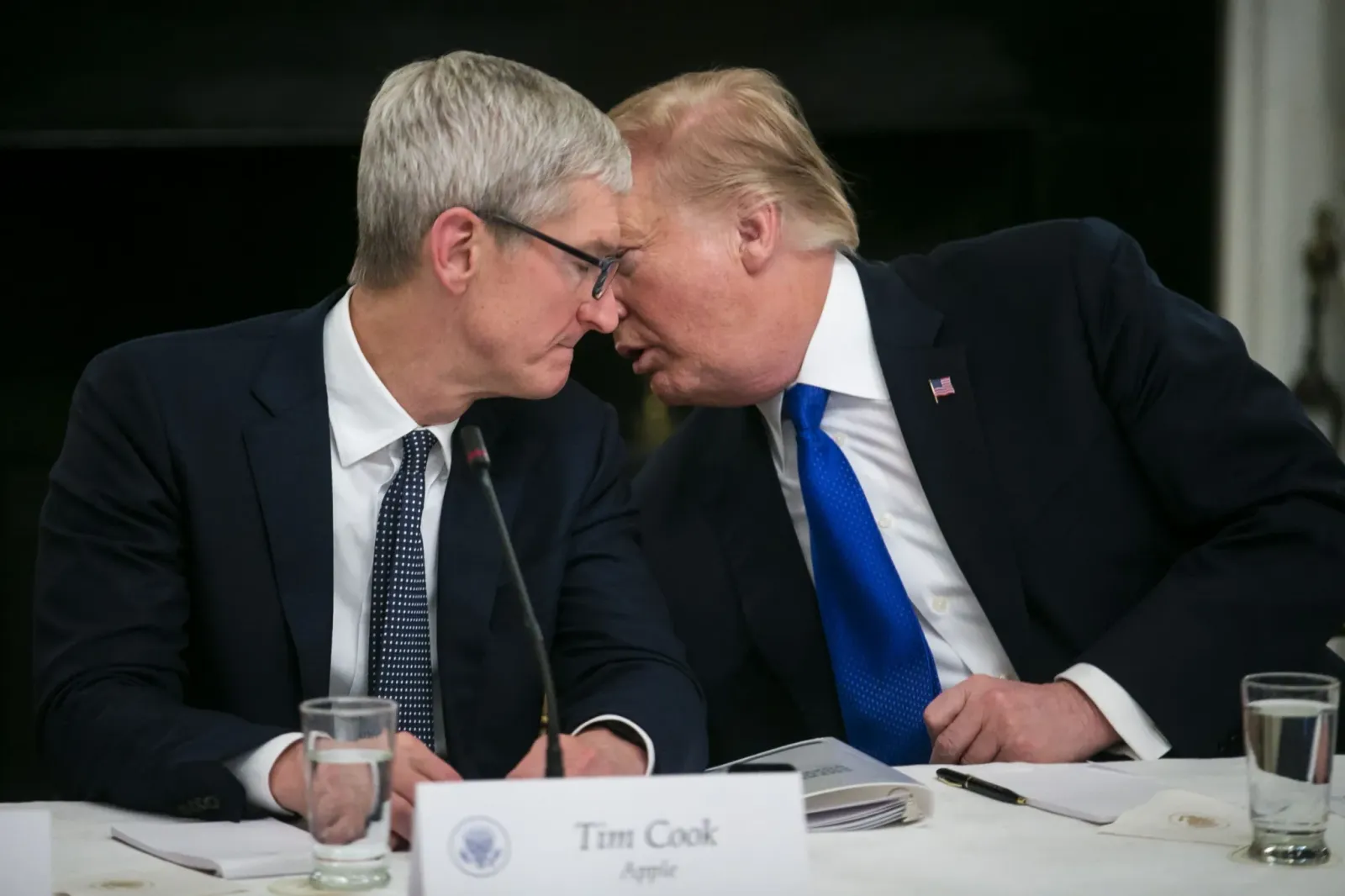
Tim Cook steps down as Apple CEO, stays on as chair with $45M equity
The 'Trump whisperer' keeps his White House and Beijing access as Apple navigates tariffs and a $4.6 trillion market cap.

Snowflake shares surge as AI data demand crushes estimates, lifting full-year forecast
Stocks jumped on stronger-than-expected guidance, signaling enterprise AI workloads are accelerating faster than Wall Street priced in.
Tim Cook's 15-year Apple CEO run ends: 3 lessons for any successor
After 15 years, Tim Cook hands Apple to John Ternus - here's how he turned a $350B company into a $4.6T juggernaut.