
Google reportedly pre-books 3M Intel TPU chips for 2028 as TSMC stays sold out
The TPU order signals AI chip supply stress and gives Intel Foundry a real shot at the biggest platform buyers.
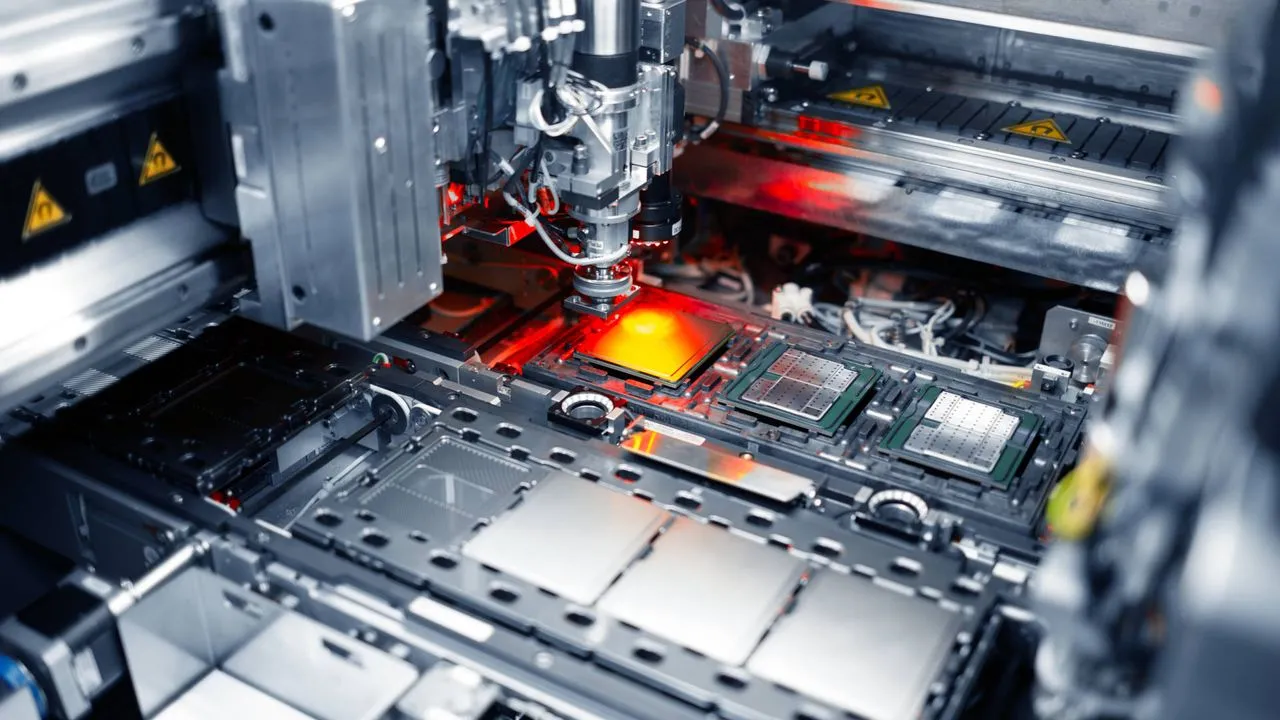
Google has reportedly ordered at least three million TPUs from Intel to arrive in 2028, according to two people familiar with the company, as reported by The Information. For decision-makers, it is a concrete supply-chain pivot that tests whether Intel Foundry can keep up with the AI boom alongside an overstretched TSMC.
Google is reportedly lining up at least three million Intel TPUs for delivery in 2028, according to The Information, citing two people familiar with the company. These are TPUs, or Tensor Processing Units, a Google-designed chip specifically created for use in neural network machines. In plain English: Google is not just “thinking about AI hardware,” it is effectively booking future compute capacity from a second major supplier.
And the “why now” matters. The same report frames this as a response to TSMC struggling to keep up with AI demand. TSMC is described as sold out until at least 2028, with its Arizona fab fully booked before it is even built. If you are a board member or finance leader at any company that depends on AI compute, that is a supply problem with a timeline, not a generic industry headache.
The deal cuts in a few directions at once. Google is expected to make more than six million TPUs between 2027 and 2028, which means it will need both TSMC and Intel to provide the facilities to produce those chips. The order therefore does not read like a one-off experiment. It looks like Google is spreading risk and capacity as the AI boom keeps demand high and manufacturing constrained.
Intel, meanwhile, has been through a rough couple of years, so this kind of order is the kind of “turnaround signal” Foundry businesses dream about. The source connects the dots by noting that the AI boom has squeezed supply at the semiconductor leader TSMC, which is Intel's biggest competition. If TSMC had been able to meet demand on its own, Intel might not have been able to win a deal on this scale. In other words, Intel is benefiting from an industry bottleneck that is forcing large customers to diversify.
TPUs are not only for Google’s internal AI services. The report adds that TPUs will also be sold to companies like Apple and Meta. That matters because it expands Intel’s relevance beyond just one tech titan consuming its own infrastructure. When Google-designed chips end up in other companies' ecosystems, the supply chain has more gravity, and the manufacturing partner has more exposure to ongoing procurement decisions.
There is another angle executives will care about: how this intersects with Nvidia and the broader compute stack. The source says Nvidia is reportedly testing Intel to see if its chips can be used in Nvidia’s next major project, seemingly its next GPU architecture. The project is currently codenamed Feynman and is described as combining four graphics chips into one unit. If that testing turns into adoption, Intel’s Foundry foothold would expand further, and it could gain momentum not just as a manufacturing option, but as an enabling partner in the GPU roadmap conversation.
Now zoom out to the capital and capacity race. The source references TSMC’s $100 billion investment plan into three US-based fabs announced last year. It also notes other expansion moves in parallel, including Intel seemingly targeting a $3.3 billion factory in India just last week. This is the second-order truth behind the TPU order: chip supply is not only about contracts, it is about capex timing, ramp schedules, and whether capacity can be delivered when customers demand it. If production can be stabilized sooner, the pressure on leading-edge AI chips eases. If not, customers will keep hedging across suppliers.
The stakes for companies in adjacent markets are immediate. Nvidia is described as TSMC’s biggest buyer, beating out Apple, which used to be at the top of the list and provides chips in all of its phones, laptops, and tablets. That lineup tells you something about concentration: when top buyers are lined up and TSMC is “sold out until at least 2028,” the entire industry feels it. For gaming and creator tech ecosystems, for AI startups, and for enterprise teams buying accelerators, capacity constraints can become timeline constraints. And timeline constraints can become product and revenue constraints.
So while this story may look like a behind-the-scenes supply whisper, it is actually a procurement signal with strategic weight. Google’s reported three million TPU order for 2028 is a concrete example of how the AI boom is reshaping who gets capacity, when, and from whom. If Intel’s Foundry efforts truly translate into dependable output, it could lock in more customer confidence, more production priority, and more long-term contracts. If Intel stumbles, customers will keep diversifying again and again. Either way, the era of assuming the “default” manufacturer can handle everything is over.
This story's Key Insights and Take-aways are locked.
Create a free account to unlock Executive Actions for one credit.
Register to UnlockAlways free for Executives Club members. Join the Club
More in Business

Anthropic’s Levant Alpöge cracks the Jacobian conjecture after 87 years
A Harvard valedictorian used Claude to hit a 1939 breakthrough, but the missing “why” is the real problem.

Uber buys Delivery Hero for nearly $15B, vaulting to top food delivery outside China
The deal doubles Uber's dual-services footprint and pushes a ride-and-eats bundling play into 50 more markets.

Epic and Google drop settlement bid, forcing rival Android app stores by July 22
Google told the court it is ready to carry third-party app stores starting Wednesday, July 22.