

Google's Willow cuts quantum errors 40x, unlocking smaller machines
A new Google Quantum AI experiment proves 'magic state cultivation' works, potentially slashing the qubit count needed for useful quantum computers.
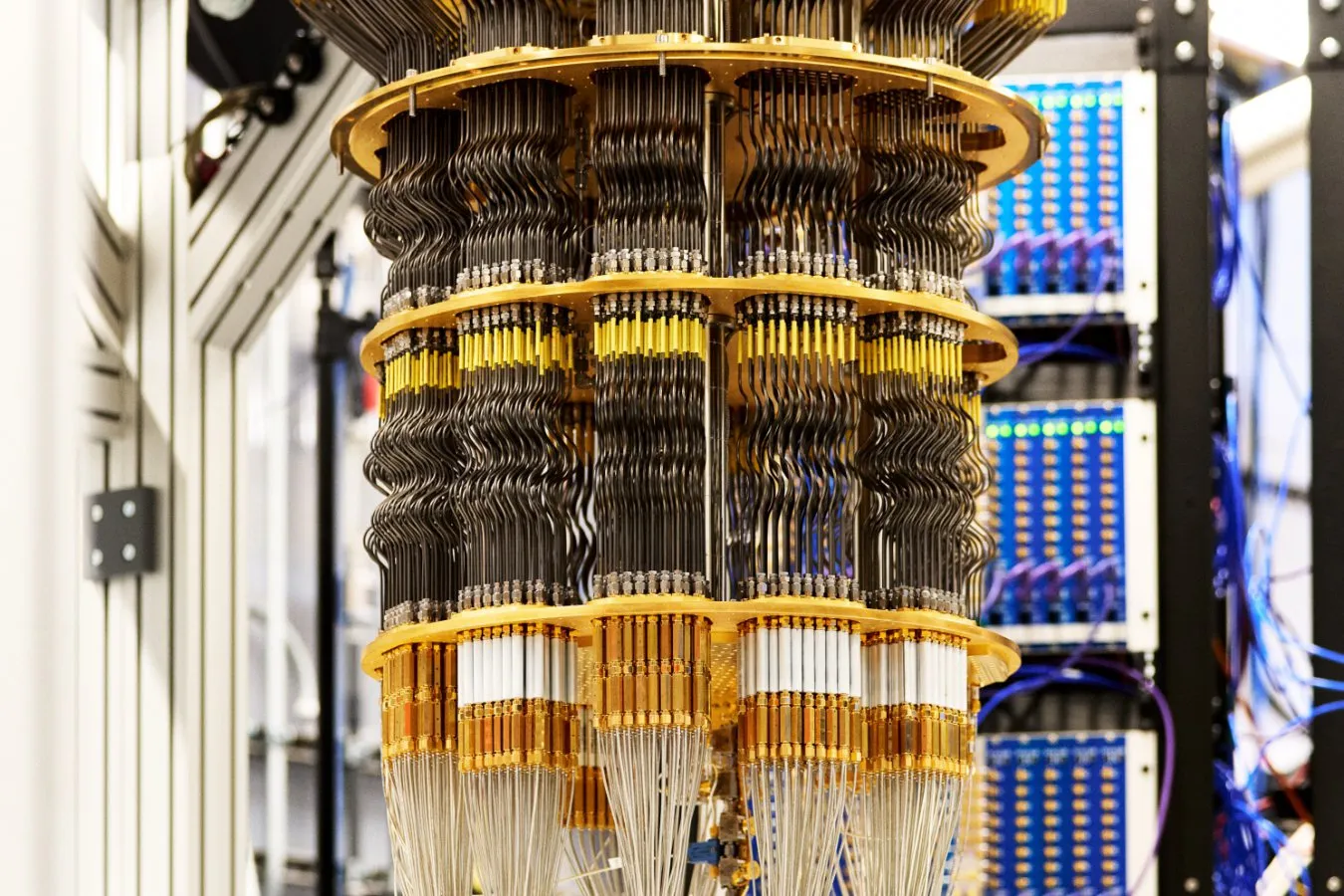
Emma Rosenfeld and colleagues at Google Quantum AI demonstrated on the Willow chip that 'magic state cultivation' can cut quantum errors 40 times. The result suggests mid-sized quantum computers could arrive sooner and cheaper than expected, reshaping the timeline for quantum advantage.
Google Quantum AI researchers have demonstrated a way to make quantum computers dramatically more reliable, cutting errors on the company's Willow chip by a factor of 40. The experiment, led by Emma Rosenfeld, is the first practical proof of a technique called 'magic state cultivation' that could let smaller quantum computers do far more than their size suggests.
The advance matters because error correction has been the biggest bottleneck in quantum computing. Quantum computers run mathematical operations that conventional computers cannot, but their building blocks, called qubits, are highly error-prone. To execute operations reliably, qubits must be encoded into special groups called logical qubits. The most important operations, known as non-Clifford gates, are the key ingredients for algorithms that go beyond conventional computation, but error-correcting them has required large numbers of qubits, forcing engineers to build very large machines. The new result suggests that machines with hundreds of logical qubits, not thousands, might be enough, meaning the smaller quantum computers expected in the next few years could be more impactful than previously thought.
At the center of the advance is the 'magic state,' a special quantum state that qubits must assume before the computer can run error-corrected non-Clifford operations. Creating these states has been a real bottleneck, says Rosenfeld. 'It eats up a lot of qubits and a lot of time.' In 2024, her colleagues at Google Quantum AI proposed a more efficient method called magic state cultivation. Instead of combining many imperfect qubits repeatedly, the magic state is 'grown' within a smaller patch of qubits. The theory suggested this could enable quantum computers to run consequential programs with just one-tenth the number of qubits previously expected.
The new experiment proves that cultivation works in practice. Willow, whose qubits are based on tiny superconducting circuits, achieved error rates similar to those seen in past experiments using ion-based qubits, but Rosenfeld says Willow works more quickly, potentially reducing the overall runtime of a quantum computer. That speed advantage could matter as the field races toward machines that can solve problems considered unsolvable, including those that underpin cryptography. Atom-based quantum computers are catching up in the race to usefulness, but Google's superconducting approach now has a concrete efficiency edge.
Still, the result comes with caveats. In the experiment, Willow generated good magic states for only a fraction of its computational runs: only 8 percent of computations produced high-quality magic states that could be put into further use. Rosenfeld says that percentage ought to increase as the team refines the technique and improves Willow's hardware, and that it was also affected by a very careful benchmarking technique that may not be used in future applications. 'This is the first demonstration that the concepts work. We're not done.'
External researchers are watching closely. Isaac Kim at the University of California, Davis, calls it 'an impressive demonstration of a promising recent idea pioneered by Google' and says the approach 'can make fault-tolerant quantum computing substantially cheaper.' Dominik Hangleiter at ETH Zurich says the work demonstrates one of the building blocks necessary for universal quantum computing and could be a 'gamechanger' for building intermediately sized quantum computers with hundreds of logical qubits. Zhenyu Cai at Imperial College London cautions that Willow's errors will need to be reduced further before it can tackle truly useful problems.
For executives, the strategic stakes are clear. If magic state cultivation continues to improve, the qubit threshold for useful quantum computers drops, which could compress the timeline for quantum advantage and force earlier attention to post-quantum cryptography and quantum-ready infrastructure. The competition between superconducting and atom-based qubits is also heating up: atom-based machines are catching up in error correction, but Google's speed advantage on superconducting hardware could tip investment decisions. The 8 percent yield is a reminder that the technology is still early, but the direction of travel is unmistakable. Companies that track error-correction efficiency, not just raw qubit counts, will be better positioned to spot the moment quantum computing shifts from experimental to commercially relevant.
This story's Key Insights and Take-aways are locked.
Create a free account to unlock Executive Actions for one credit.
Register to UnlockAlways free for Executives Club members. Join the Club
More in Technology

Cop fired after sharing Flock login with ICE husband: 983 searches
A Savannah officer's shared credential let an ICE agent run hundreds of plate searches on Hispanic drivers, exposing a surveillance backdoor.

Elizabeth Holmes doc 'You Can See Everything' posts second-biggest doc debut ever
The true-crime draw shows fraud narratives still sell - a signal for media execs and a caution for founders.

She blocked an Uber delivery robot to save jobs. Police arrested her.
Carolyn Marvin's disorderly conduct arrest turns a sidewalk standoff into a test case for how cities police the automation-versus-workforce debate.