
GoPro and Roomba U.S. pioneers lost to Chinese consumer tech dominance
A new wave of Chinese hardware is outpacing legacy American brands, reshaping what boards should track in devices.
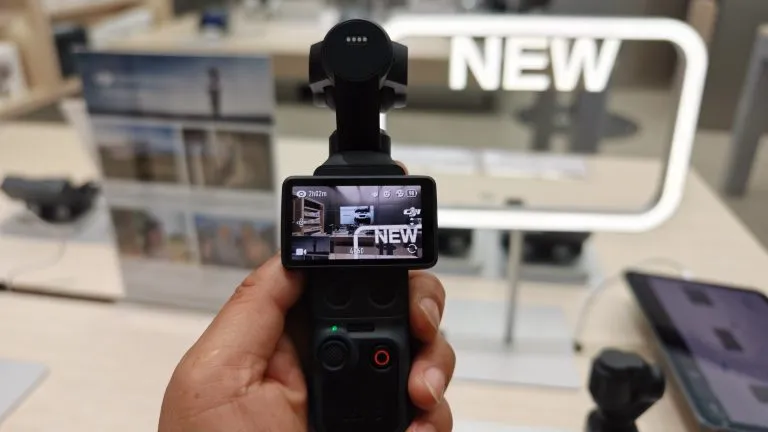
GoPro and iRobot's Roomba were once U.S. consumer-tech pioneers, but Chinese rivals have gained the upper hand. For decision-makers, the shift is a reminder that hardware markets can flip fast when scale, supply chains, and product cycles align.
GoPro and Roomba were U.S. pioneers. Now Chinese consumer-tech brands are dominating the category, turning once-familiar names into background noise for shoppers.
That is not just a trivia takeaway. It changes how executives should think about competitive threat in consumer hardware, where the buyer is often a non-expert and the switching cost is low. In stories like this, the important part is the direction of travel: Chinese brands keep gaining ground, and the old playbook of “strong American brand plus early mover advantage” starts to look less like a moat and more like a head start that other people eventually catch.
To understand why this happens, you have to remember what consumer-tech competition usually rewards. Customers do not wake up asking for a specific chipset architecture or a particular sensor pipeline. They want a device that works, at a price that feels reasonable, and with a steady stream of improvements. Chinese brands have been particularly effective at turning manufacturing scale into faster iteration. When the production side is efficient and design cycles are tight, features that were once “premium” can become table stakes across the market.
There is also a regulatory and trade dimension, and it matters even when the product looks identical on a shelf. In many cases, regulators are scrutinizing supply chains, data handling, and even energy or safety standards. Consumer devices are especially exposed because they connect to networks, collect signals, and often sit in the home. That means boards have to think beyond unit economics and into compliance readiness. A company can have a great product, but if it struggles to meet shifting requirements across markets, competitors with stronger compliance infrastructure can take share while the legacy player is still clearing paperwork.
The other second-order effect is how competition reshapes distribution. Hardware used to be dominated by traditional retailers and long-established consumer brands. Over the last several years, e-commerce and marketplaces have made discovery and pricing more dynamic. If a Chinese competitor can offer a strong spec and a compelling price, it can win visibility. Once that happens, demand and ad budgets reinforce each other, creating a loop that is hard for an older brand to break. For executives, this means the “sales channel” is not just where you sell. It is part of the product strategy.
Second, boards should notice that consumer-tech momentum can be silent. The best defenders assume that early leadership is self-sustaining: customers know you, retailers trust you, and the product category is familiar. But when a wave of competitors gains ground, the shift can show up first in reviews, then in search trends, then in retailer shelf allocation, and only later in reported revenue. By the time the numbers hit the spreadsheet, the competitor may already have moved on to the next iteration cycle.
And that is the crux of why GoPro and Roomba are a case study worth reading. If you have an American legacy in a consumer hardware category, the risk is not that customers suddenly “forget” you. The risk is that Chinese rivals make the market feel cheaper, more modern, and more convenient without asking permission. For decision-makers, the strategic stake is clear: treat competitive intelligence as continuous, not episodic, and connect it directly to product roadmaps, supply chain resilience, and compliance plans.
If your job is to protect a franchise in devices, the takeaway is uncomfortable but practical. Dominance can move to whoever combines manufacturing execution with product iteration and distribution leverage. The U.S. pioneers did not disappear overnight, but the market is now signaling a new reality: Chinese consumer-tech brands keep gaining ground, and the board should assume that trend can accelerate, not reverse, without deliberate action.
This story's Key Insights and Take-aways are locked.
Create a free account to unlock Executive Actions for one credit.
Register to UnlockAlways free for Executives Club members. Join the Club
More in Technology

Nvidia's $89B data center quarter: the 9 companies cashing in
The AI buildout is minting fortunes beyond GPUs, and memory, cloud, and cooling suppliers are riding the same wave.

Google quietly links your phone number to every Android account on your SIM
Adding a SIM now ties your phone number to all Google accounts - and future accounts inherit it. Here's the security and privacy stakes.

Hijacker AI 'Skynet mode' runs 100,000 attack steps against exposed models
Symantec caught a criminal AI agent that borrows other models, steals data, and mines crypto; the only relief is no confirmed victims yet.