

Graham Platner’s Senate run implodes as allies pull endorsements after assault allegation
A sexual assault allegation triggers rescinded support from Sanders, Warren, Ro Khanna, and Jon Favreau, despite past scandals.

Graham Platner, the Democratic nominee in Maine, denied a Politico-reported sexual assault allegation and signaled his campaign would explore “the best way forward.” In the 48 hours after the report, prominent Democrats and influencers rescinded endorsements, raising the accountability question: why did earlier red flags not end support?
The Senate race in Maine looks dramatically different than it did 48 hours ago. Politico reported a credible allegation of sexual assault against Democratic nominee Graham Platner, and in a video posted after the story broke, Platner denied the accusation while saying his campaign would explore “the best way forward.” The practical consequence was immediate: voices that had previously defended him or championed his folksy progressivism began withdrawing endorsements, one after another.
Among those who reversed course were Senators Bernie Sanders and Elizabeth Warren, Representative Ro Khanna, and Pod Save America’s Jon Favreau. The article frames this as more than a normal political recalibration. It argues the allegation was not an unexpected new crack in an otherwise solid candidacy, but the latest development in a steady drumbeat of “disqualifying revelations.” In other words, the question now facing Democratic leaders, party influencers, and voters is not only what happens to Platner, but what it took for anyone to admit they had been wrong.
That timing matters because it suggests something structurally uncomfortable: the threshold for public moral and political judgment appears to have shifted. The piece takes aim at the defenders who had kept backing Platner through earlier controversies, insisting there were already indicators that “Platner lacked the character to be a senator.” It spotlights his Nazi tattoo, which the article suggests should have been a sufficient warning sign long before the sexual assault allegation. It also points to the claim that maintaining the SS logo for two decades and covering it up only when politically inconvenient demonstrated a lack of judgment for national office.
The article goes further than single-issue outrage. It argues that the tattoo was not the lone indicator, describing a multiyear history of alleged abhorrent views about women and minorities, plus posts “for the world to see.” It also references other allegations and incidents, including a multistage record of what it calls “bad behavior and bad judgment” in personal life, including alleged emotional and physical abuse. A conservative woman, Lyndsey Fifield, is named as having alleged abuse and was also denied by Platner. The piece also notes that Platner’s “admited substance abuse” and “offensive Reddit posts” were among the prior, publicly reported concerns, even before the June 9 primary.
Why does this matter beyond Maine’s ballot math? Because political endorsement is a form of governance-by-proxy. When major national figures and prominent platforms back a candidate, they influence how party apparatuses triage risk, how media framing works, and how voters decide what counts as disqualifying. In corporate terms, it is like approving a board member without sufficient due diligence, then later treating the first true failure as an unforeseeable event. The article’s core complaint is that many defenders either did not know what they should have known, or chose not to treat it as decisive until a later allegation forced their hand.
The article also draws attention to the asymmetry in enforcement of “standards,” especially around credibility and whose experience gets treated as valid. It criticizes attacks on Platner’s accusers, specifically Fifield, and frames it as a failure of the principle “Believe women.” In that framing, the defenders did not extend the same level of support to victims who, as the article puts it, committed “the unforgivable sin of having voted for Republicans.” The point is not only moral, but strategic: in a high-stakes political environment, selective belief undermines legitimacy and makes future accusations harder to evaluate fairly.
There is another second-order theme here: the party dynamics that let a candidate survive repeated scrutiny. The article describes Platner’s rise after he emerged last year as a “shiny new object” for Democrats, paired with descriptors about working-class clothing and “DSA sensibilities.” It says many rallied behind him and that he managed to defeat Democratic centrism, aided by Governor Janet Mills suspending her campaign before votes were cast. That history matters because it highlights incentives. When a party wants a particular type of candidate to win, it can rationalize red flags as “nuanced,” “explainable,” or part of the bargain of finding an insurgent who appeals to voters.
Finally, the piece argues that delaying rescissions is not just personally embarrassing for supporters, it is democratically dangerous. It questions why the Jews targeted by the organization whose logo Platner bore were not treated as worthy of the same support. It questions why some political figures acted as if earlier indicators did not warrant withdrawal. And it emphasizes that the voters themselves are part of the system too, stating that even though most of Platner’s behavior had been widely reported prior to the June 9 primary, an overwhelming majority of Democratic voters in Maine still selected him. The postmortem, the author warns, should be about those who gave support and attacked accusers, not about Platner alone.
This is where the strategic stakes land for anyone who leads institutions. The article suggests that when allies and influencers back candidates without enough specificity, they end up lying to voters, either by vouching for virtue they cannot verify or by claiming a candidate who is “detestable” is not. Whether Platner withdraws or not, the article predicts the end of his run as the “ignominious end” of a candidacy shaped by defenders who waited for the “horrific allegation” before conceding what earlier signs already implied. If you are a decision-maker watching this unravel in real time, the lesson is blunt: endorsements are not neutral. They are signals, and signals come due.
This story's Key Insights and Take-aways are locked.
Create a free account to unlock Executive Actions for one credit.
Register to UnlockAlways free for Executives Club members. Join the Club
More in Politics

US says it hit 90 Iran military targets, as Tehran targets Gulf states
A retaliatory cycle escalates fast, with 90 targets named and Gulf states in the crosshairs.

Graham Platner suspended his Senate campaign. Democrats must pick a nominee by July 27
With a July 27 deadline and candidates already lining up, state party leaders are discussing a new path to renominate.
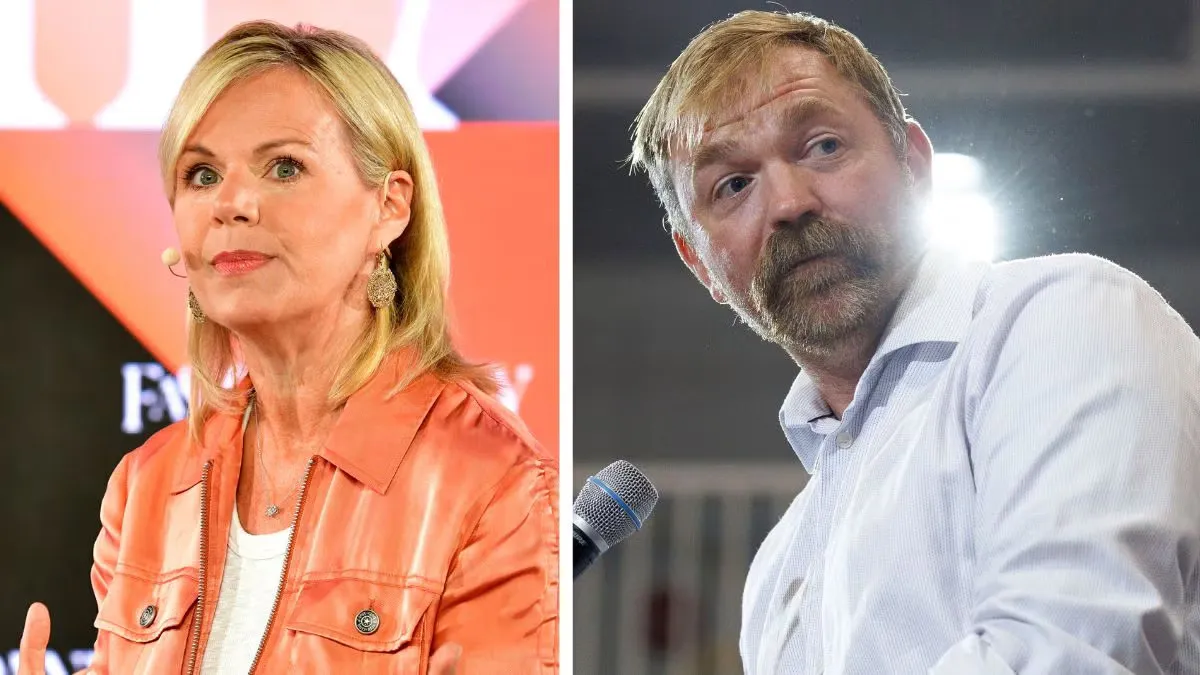
Gretchen Carlson calls Graham Platner’s exit “hubris” after he denies rape allegations
In a CNN segment, Carlson blasts Platner’s suspension statement as a moral refusal to take accountability, while others respond online.