

Graham Platner suspends Maine campaign after rape allegation, forcing Democrats to scramble
A must-win Senate seat just got harder, and the replacement timeline has no patience.
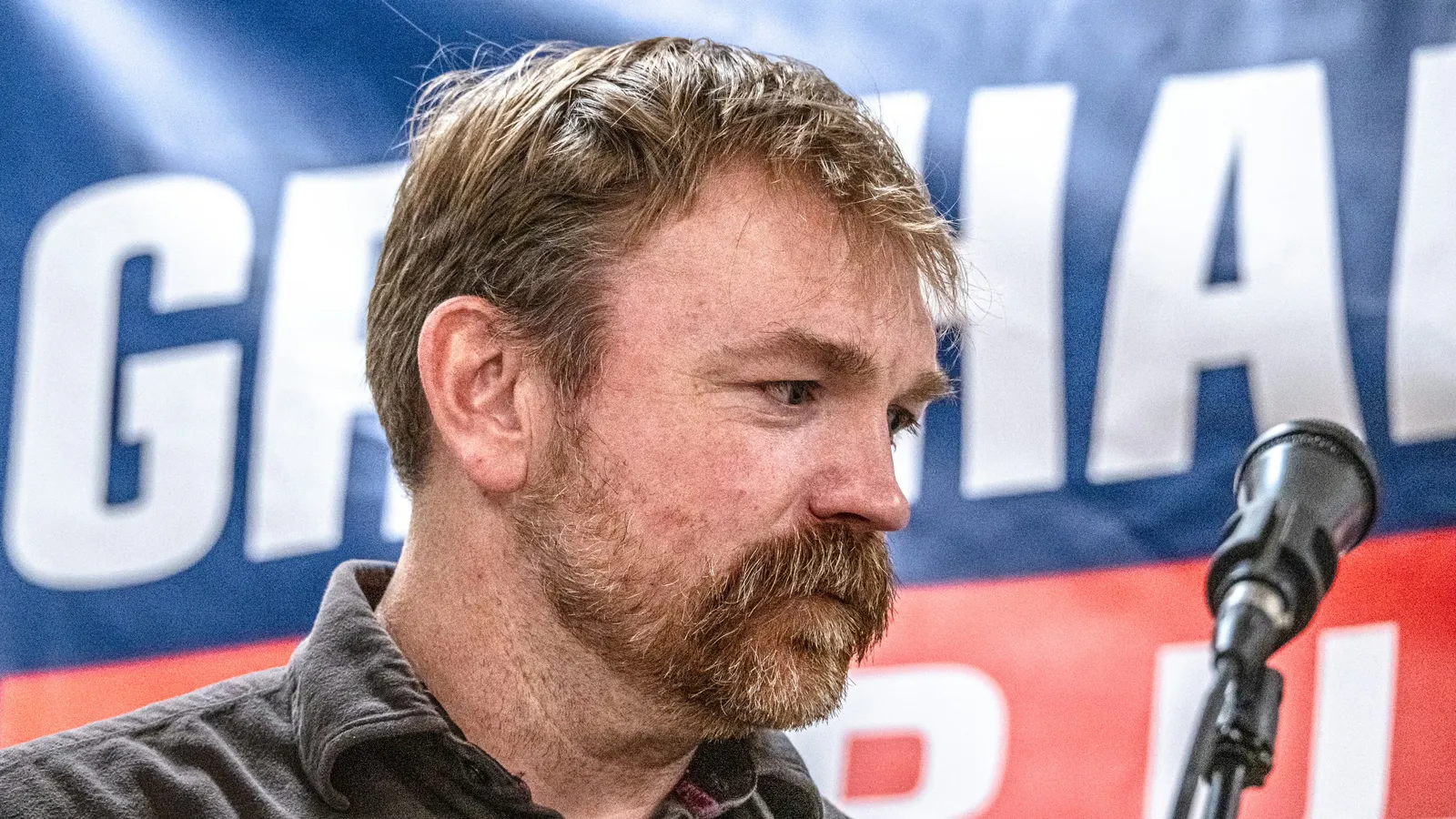
Graham Platner, an oyster farmer running for the U.S. Senate in Maine, suspended campaign operations after a woman accused him of rape, which Platner called categorically untrue. The abrupt exit forces Democrats to replace him fast, in a race Democrats already saw as their most feasible pickup opportunity against Susan Collins.
Graham Platner suspended campaign operations in Maine after In a video posted to social media, he said, “For the movement to continue, it can’t be me. For that reason, we are suspending campaign operations.”
That one decision detonates a lot more than a candidate profile. It hits a Senate race Democrats have been circling for months as one of the best chances to flip a Republican-held seat, specifically the seat held by 73-year-old Susan Collins, running for a sixth term. Democrats need to flip at least four GOP-held Senate seats in November to capture the majority, and Maine has been described as the party’s most important, maybe most feasible pickup opportunity. Platner’s exit gives Democrats a chance to replace him with someone “less encumbered,” but it also puts pressure on the party to reassemble a grassroots coalition that may or may not transfer.
To understand why the scramble matters, zoom out to how Maine got here. Collins has been electorally sturdy for nearly 30 years, and even in 2020 she beat Democrat Sara Gideon by nearly nine points even as Joe Biden carried Maine by roughly the same amount. Still, Collins’s approval ratings have slumped, and she’s 73, which is part of why Democrats kept pointing to this seat as writable. But writing doesn’t happen on vibes. It happens through timing, candidate choice, and the ability to lock in voters before the general election becomes a referendum.
For months last year, Democrats in Maine and Washington were waiting for Senate Minority Leader Chuck Schumer’s preferred candidate, the two-term Governor Janet Mills, to decide whether to run. Mills expressed ambivalence, delayed her decision until last fall, and then suspended her campaign in late April, essentially conceding the nomination to Platner. Platner had surged into the vacuum. He emerged last fall seemingly out of nowhere, but with a well-connected, well-choreographed rollout backed by advisers who had worked on high-profile insurgent candidates like John Fetterman’s Pennsylvania Senate run and Zohran Mamdani’s mayoral race in New York City in 2025. The pitch was a gruff but charismatic oyster farmer with a military-combat record who could channel progressive energy and voters’ distaste for establishment politicians.
Even with that momentum, Platner’s campaign carried a series of controversies. Defenders argued earlier this year that a Nazi tattoo was not enough to derail a Senate bid, and that young Marines might misread a skull and crossbones as “Badass.” There were also now-deleted Reddit posts mocking rural white people, insulting cops, and making light of assault, plus allegations of extramarital sexting that his wife said the couple had healed. Additional allegations of volatile behavior from past girlfriends also circulated, with one described as a Republican activist. And then, on Monday, the story shifted again when Even staunch supporters began calling for his exit.
In the video tied to his suspension, Platner fervently denied the sexual-assault allegations and seemed to imply the party establishment was responsible for how it all played out, saying, “We did it the right way. We did it the way that we were told we are supposed to make change. And now they are not going to let us have it.” Meanwhile, Platner’s defenders and critics were never just debating personal behavior. They were debating what Democratic campaign strategy is supposed to do with risk: vet it, frame it, and avoid building a national argument on a local foundation that could crack.
That’s why this implosion has nationwide Democrats exasperated. The party’s task is brutal math: at least four GOP-held Senate seats to flip control. Maine is one of the few paths that looks plausible because it’s the only state that Kamala Harris won in 2024 with an incumbent Republican senator now up for reelection. Collins is a unicorn in polarization, but incumbency is not immortality, and the party believes the atmosphere could change if it gets the right messenger.
The problem is that candidate replacements are not just procedural. They are coalition experiments. Charlie Cook, a political analyst who lives in Maine, said, “They may get a mulligan. That doesn’t mean they’ll hit it well.” That matters because Platner had assembled a powerful grassroots coalition in Maine that may or may not be transferable depending on whom Democrats replace him with and how that replacement is chosen.
The replacement decision also comes with a hard deadline. State law requires a replacement candidate be named by July 27. The Maine state party says it intends to make the process public once Platner formally withdraws, and officials said they were prepared to do it already if not for Platner’s obstinance. Multiple options appear to be on the table, including leaders meeting behind closed doors, a party convention where state delegates select a nominee, a caucus, or a statewide version of a mini-primary that some national Democrats wanted. Each method changes incentives. Closed-door selection can move faster but risks alienating the grassroots base. A convention or caucus can reflect local momentum but can also take time and create internal friction just when Democrats need external focus.
Second-order effect alert: Platner’s exit also forced reckonings among his most loyal supporters. Senators Bernie Sanders and Elizabeth Warren, and the leftist streamer Hasan Piker, among others, rescinded support after Platner’s ex-girlfriend alleged that he entered her home in 2021 and raped her. Platner called the allegation categorically untrue. Joseph Geevarghese, executive director of Our Revolution, said there’s “no secrets in politics,” and described the disappointment with the phrase, “You feel deeply, deeply disappointed.” In practice, this means Democrats now have to rebuild not only voters, but trust within their own ecosystem.
So the stakes for decision-makers are immediate and operational: how quickly can Maine Democrats choose a replacement that voters will rally behind, and can they do it without losing the energy Platner generated? Because the longer this carries on, the weaker Democrats say they will be come November. That is the real takeaway for executives of campaigns, boardrooms that oversee political programs, and investors who track political risk in real time: the governance of candidate selection is now directly tied to the probability of flipping the Senate.
This story's Key Insights and Take-aways are locked.
Create a free account to unlock Executive Actions for one credit.
Register to UnlockAlways free for Executives Club members. Join the Club
More in Politics

US says it hit 90 Iran military targets, as Tehran targets Gulf states
A retaliatory cycle escalates fast, with 90 targets named and Gulf states in the crosshairs.

Graham Platner suspended his Senate campaign. Democrats must pick a nominee by July 27
With a July 27 deadline and candidates already lining up, state party leaders are discussing a new path to renominate.

Gretchen Carlson calls Graham Platner’s exit “hubris” after he denies rape allegations
In a CNN segment, Carlson blasts Platner’s suspension statement as a moral refusal to take accountability, while others respond online.