

groundcover raised $100M, pushes BYOC AI-agent telemetry so data never leaves enterprise cloud
The startup says pricing and architecture need to change for exploding agent telemetry. Here’s the playbook and the stakes.
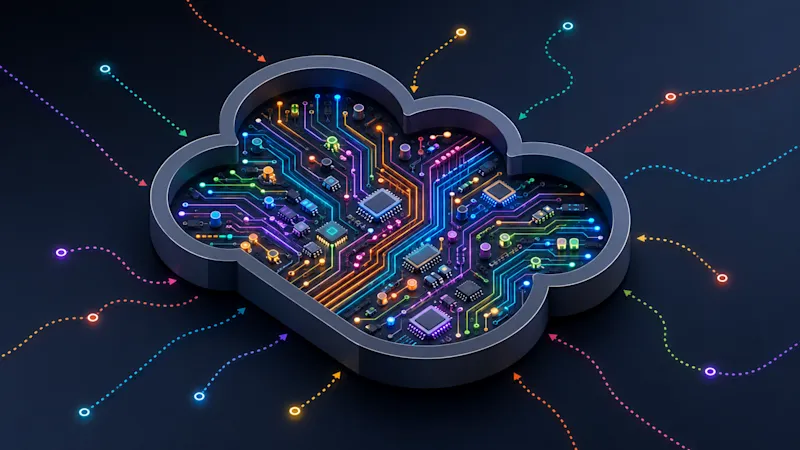
groundcover, an AI agent observability startup, announced a $100 million funding round led by One Peak, bringing total funding to $160 million. The company says it has more than 250 paying customers and is increasingly replacing established observability platforms inside enterprise environments by using a bring-your-own-cloud architecture and a Linux eBPF approach.
groundcover just raised $100 million in a round led by One Peak, taking its total funding to $160 million. The company also claims more than 250 paying customers and says it has tripled annual recurring revenue over the past year, positioning itself as an observability replacement for some enterprises that already run platforms from Datadog, Dynatrace, New Relic, Splunk, and Grafana.
The twist is not the money. It is the product philosophy: groundcover argues that AI agents are making observability a different kind of infrastructure problem, and that the biggest fix is keeping agent telemetry inside the customer’s own AWS, Microsoft Azure, or Google Cloud. In other words, it wants to stop the “telemetry ships somewhere else” default and instead run what it calls a bring-your-own-cloud (BYOC) data plane, while it handles a managed control plane and user experience.
To understand why this is a live wire for enterprise decision-makers, start with what is changing in day-to-day engineering. Observability used to be mostly post-production. Teams deployed apps, then monitored logs, metrics, and traces, investigated incidents, and improved reliability over time. Now AI-assisted development is accelerating deployment cycles, coding assistants are generating more code, and infrastructure is evolving faster. On top of that, many enterprises are operating AI agents that execute multi-step workflows, call external tools, and interact with production systems. Each of those actions generates telemetry.
That is where the “explosion” comes in, and it has nothing to do with theoretical telemetry. The source points to additional AI-specific layers of observability that traditional infrastructure monitoring does not cover directly, including prompt execution, model latency, token consumption, retrieval pipelines, tool invocations, and agent behavior. As organizations try to retain more of this context, they also hit a familiar economic friction: many observability vendors charge based on how much data is ingested.
Historically, when ingestion pricing gets uncomfortable, teams respond by sampling traces, shortening retention periods, or limiting which data is collected. That cuts cost, but it also reduces visibility at the exact moment AI-driven systems demand richer operational context. groundcover co-founder and CEO Shahar Azulay says, “We’ve seen telemetry exploding. Users are frustrated by not getting all the value from Datadog and similar platforms. They’re limiting the data, siloing it, sampling it.” Whether every enterprise is equally fed up is an open question, but the direction of travel is hard to ignore: AI is turning observability from “collect enough” into “collect everything you might need later.”
So how does groundcover claim it changes the game? It says the architecture, not just features, needs to change. The company acknowledges that many vendors have added AI assistants, AI-powered root cause analysis, and AI observability features aimed at monitoring AI applications or automating operational tasks. But it argues those additions do not solve the more fundamental problem it cares about: where telemetry lives and how customers pay for it.
Instead of a conventional SaaS model where the vendor stores customer telemetry in vendor-managed infrastructure, groundcover uses BYOC. Customers keep the data plane, including telemetry storage and processing, inside their own cloud environments. groundcover then provides a managed control plane and the user experience. A fully self-hosted deployment option is also available. The source also notes that while some competitors, including Datadog and a few others, offer limited hybrid or customer-controlled data residency, those options are generally not equivalent to full BYOC. In many cases, telemetry is still processed and stored in the vendor’s managed infrastructure, with only partial controls such as regional data residency, private links, or selective log forwarding.
That architectural decision ties directly into pricing incentives. groundcover argues it can avoid charging based on telemetry ingestion because customers already pay for their own cloud infrastructure. It prices primarily based on monitored hosts, “regardless of telemetry volume,” and Azulay frames the distinction bluntly: “We don’t price by data volume. We price by the size of the infrastructure.”
This host-based model is not guaranteed to be cheaper in every scenario. The company’s briefing notes per-host pricing is most advantageous for organizations with high telemetry density and may be less compelling for lightly utilized fleets. Still, the broader pitch is about predictability. Enterprise infrastructure teams often wrestle with observability bills that fluctuate alongside application growth, and teams can end up trading away visibility to manage costs. groundcover is betting that aligning pricing more closely with infrastructure planning will let customers retain more complete telemetry for operational analysis, compliance, and AI-assisted troubleshooting, without constantly revisiting sampling policies.
The second pillar is technical, and it is built around eBPF, a Linux kernel technology that has become central to cloud observability. Instead of requiring developers to manually instrument applications, eBPF allows observation inside the kernel, watching network traffic, system calls, and application behavior with minimal code changes. That reduces instrumentation complexity, which in turn can shorten deployment times and expand telemetry coverage, especially in Kubernetes and cloud-native environments.
groundcover argues it differentiates by combining automatic eBPF collection with customer-controlled storage, OpenTelemetry compatibility, and a unified approach across infrastructure, application, and AI workloads. The strategic relevance here is not just “another observability tool.” It is a potential shift in how enterprises structure data governance and operational debugging for autonomous systems, where the value of telemetry is tied to having the full context of what an agent did, not a downsampled proxy.
For boards and operators, the stakes are straightforward: AI-agent observability is becoming a competitive market, but groundcover’s bet is on changing incentives and data placement at the same time. In a space long dominated by mature incumbents, a BYOC-centric approach plus host-based pricing and automatic eBPF collection is either a wedge that solves a real pain point, or a hard sell against entrenched budgets and procurement patterns. Either way, it is one of the clearest signals yet that enterprises are going to demand both observability depth and telemetry control as AI moves from “assist” to “operate.”
This story's Key Insights and Take-aways are locked.
Create a free account to unlock Executive Actions for one credit.
Register to UnlockAlways free for Executives Club members. Join the Club
More in Technology

Falcon 9 will deliberately crash into the Moon, and astronomers can likely spot it
SpaceX’s planned lunar impact is expected to loft a high debris plume visible through some telescopes, drawing live scientific attention.

Starship’s Flight 13 deployed 20 Starlink V3 satellites, captured 65-second heat-shield video
A new Starlink V3 camera view shows Ship firing Raptors as 100,000-satellite ambitions draw closer.
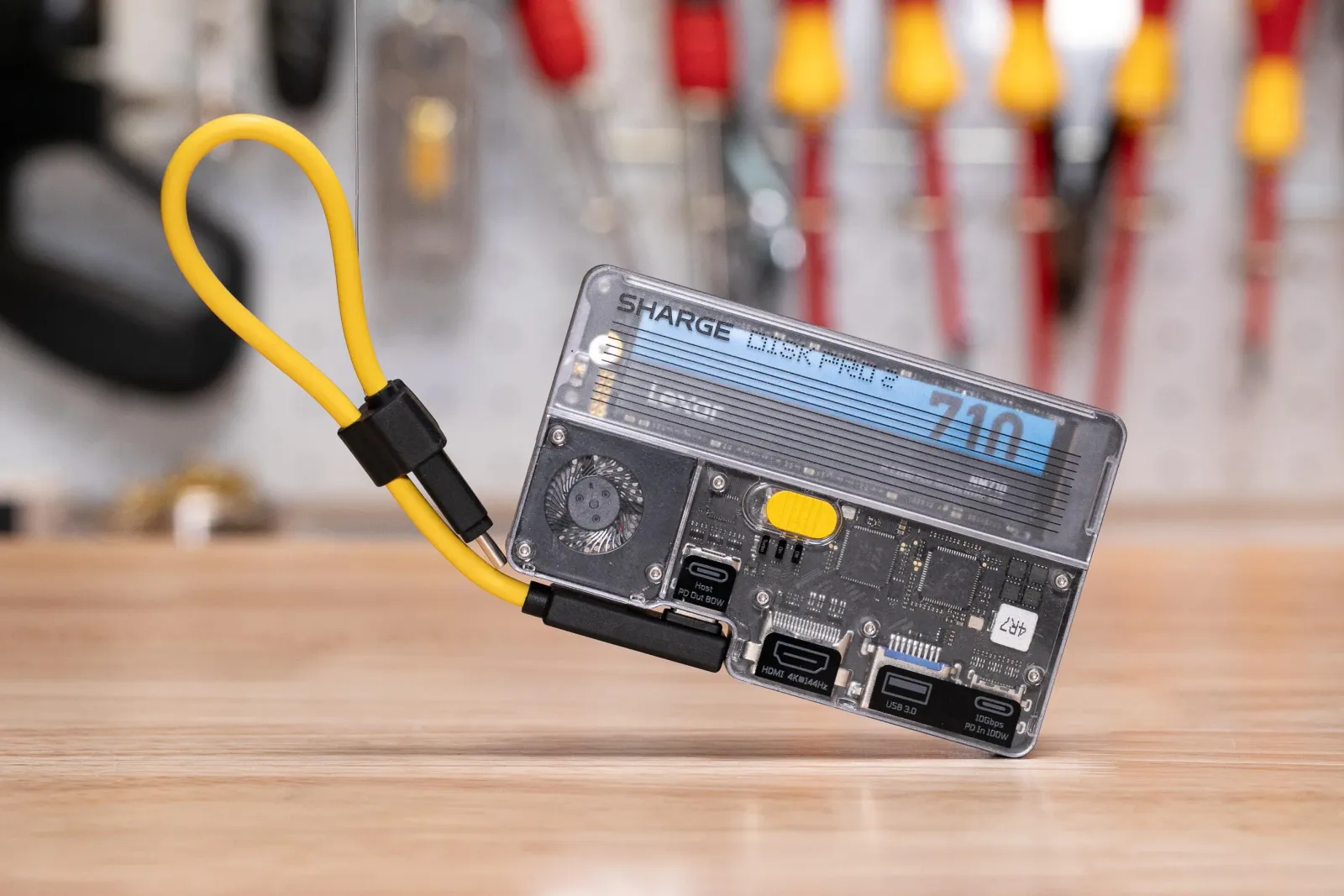
Sharge Disk Pro 2 turns into a 4K HDMI dock and USB-C hub for iPhone and Switch 2
This new portable SSD is more than storage, it is a Swiss Army knife for laptops, phones, and even dock-style gaming.