

Gulf council head calls Iran strikes on civilian sites 'war crimes' in deadly live update
France 24 reports Iran attacks on civilian facilities, with the Gulf council head saying they amount to war crimes.

In a Middle East live update, France 24 reports Iran attacks on civilian facilities and quotes the Gulf council head calling them 'war crimes'. For decision-makers, the key consequence is how these claims harden legal and diplomatic positions during an escalating conflict.
A France 24 live update centers on accusations tied to Iran attacks on civilian facilities. The Gulf council head said the strikes are “war crimes,” a blunt legal characterization that raises the temperature well beyond immediate battlefield outcomes.
That framing matters because it shifts the conversation from military tactics to potential accountability. When a senior regional figure uses the word “war crimes,” it signals a deliberate attempt to put legal and moral pressure on the parties involved, not just political pressure. Even if day-to-day reporting focuses on strikes, casualties, and regional responses, a war-crimes label is designed to outlast the news cycle. It can shape how states coordinate diplomacy, how they justify sanctions or other measures, and how they prepare for international scrutiny.
To understand why executives and investors should care, look at how legal narratives travel. In conflicts involving major regional players, claims about civilian targeting can accelerate or complicate policy choices in ways that ripple into markets. For businesses operating or selling into the region, “war crimes” rhetoric can influence risk assessments, insurance pricing, and contracting standards. For capital allocators, it can change the expected path of sanctions, export controls, and compliance obligations. Even when the immediate impact is political, the downstream effects often land in governance, not just geopolitics.
There is also a governance angle. Boards today increasingly treat geopolitical risk as a compliance and continuity issue, not a communications problem. A live situation like this tends to generate rapid internal requests: What is our exposure? Which suppliers are in-country? Are there counterparties tied to sanctioned entities? Do we have documentation that allows us to demonstrate good-faith compliance? Legal accusations around civilian facilities add an extra layer because they can intensify diligence expectations. Regulators and auditors may look less at what a company “intended” and more at whether it could show robust screening and documentation during rapidly evolving events.
The second-order effect is diplomatic escalation through legal escalation. Calling attacks on civilian facilities war crimes is not simply condemnation. It is an attempt to redefine what comes next. It can narrow the space for compromise by making the moral and legal positions more rigid. That in turn can affect the incentives for negotiation, because leaders may feel they cannot walk back their statements without political cost. When the narrative hardens, the conflict can become harder to de-escalate, which increases uncertainty for anyone with supply chains, logistics routes, or staffing considerations tied to the broader Middle East.
For decision-makers, the operational takeaway is to separate “headline risk” from “actionable risk.” The headline is about a statement from the Gulf council head in a France 24 live update, but the actionable part is what such statements tend to trigger. Expect more robust monitoring of sanctions and shipping rules, and more conservative corporate behavior in affected markets. Expect heightened scrutiny of customers, freight partners, and intermediaries. And if your firm has contracts that rely on predictable cross-border movement, expect counterparties to push for clauses tied to force majeure, sanctions, or legal risk.
Finally, there is a strategic stake for peers in adjacent roles: whether you are in risk, legal, finance, or strategy, you need a way to interpret legal language as an early signal. “War crimes” is not just vocabulary. It is a signal that the dispute is being framed for longer-term accountability and international attention. If these claims intensify, the compliance burden often rises first, then the financial impacts follow. Today’s messaging can become tomorrow’s audit trail, and tomorrow’s audit trail can become next quarter’s cost.
This story's Key Insights and Take-aways are locked.
Create a free account to unlock Executive Actions for one credit.
Register to UnlockAlways free for Executives Club members. Join the Club
More in Politics
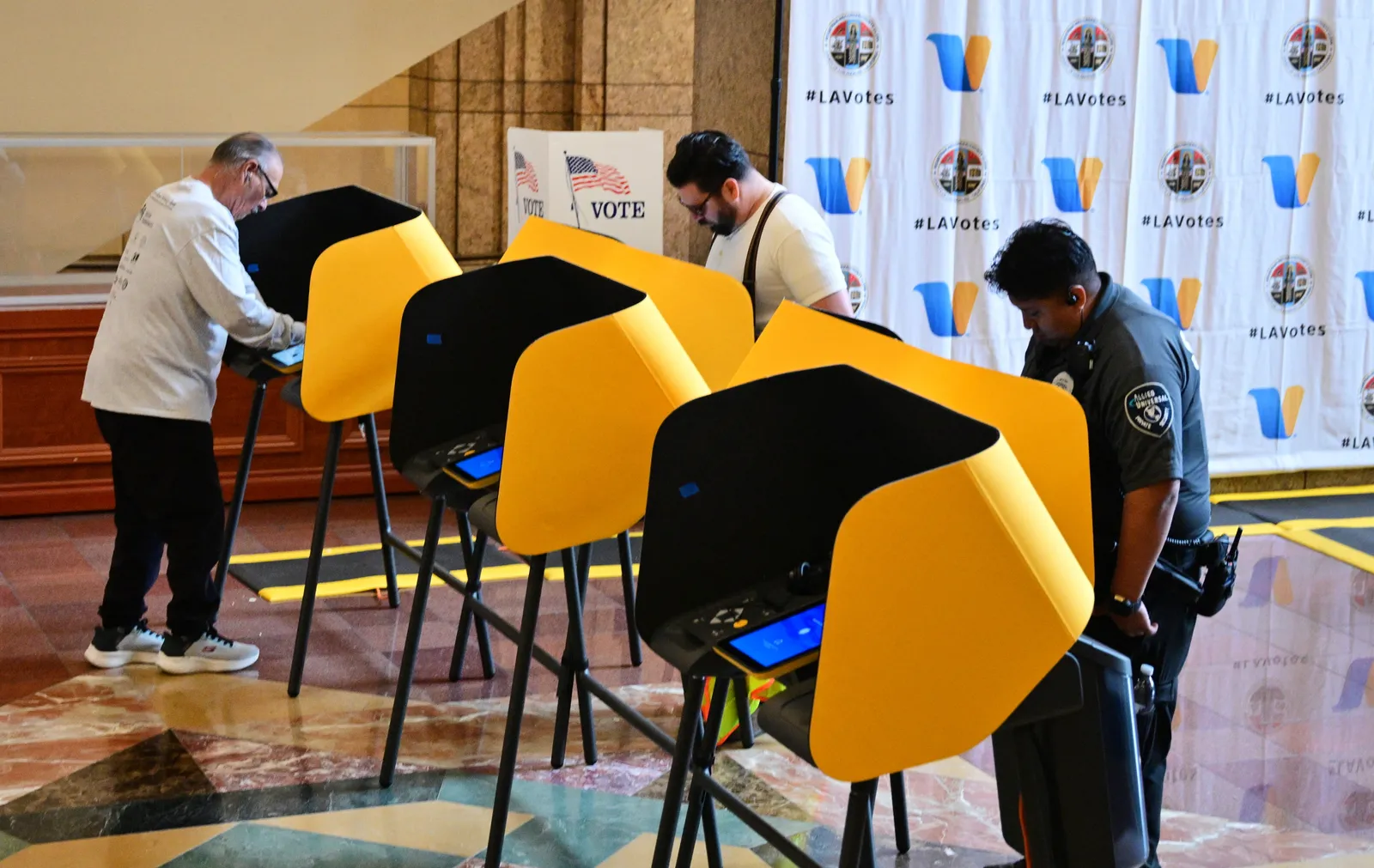
LA County: DOJ's 20,000 'noncitizen' voter list is 'unreliable,' includes U.S.-born
Preliminary review by Los Angeles County election officials finds errors in the federal list, raising the stakes for voter roll integrity ahead of November.
Trump's $1.5B Pentagon chip investment lands in North Carolina
A $1.5 billion defense infusion for North Carolina chipmaking signals a new era of Pentagon-backed reshoring - here's what it means for the industry.

Nigeria confirms first Ebola case in Abuja, a woman just off a Uganda flight
Health Minister Muhammad Ali Pate says the patient flew in from Uganda, putting Africa's latest outbreak on Nigeria's doorstep.