

Haivya claims acoustic signals boost yields in soybean, pepper, and cannabis
A start-up says sound can steer plant growth, with reported yield gains across multiple crops that matter commercially.
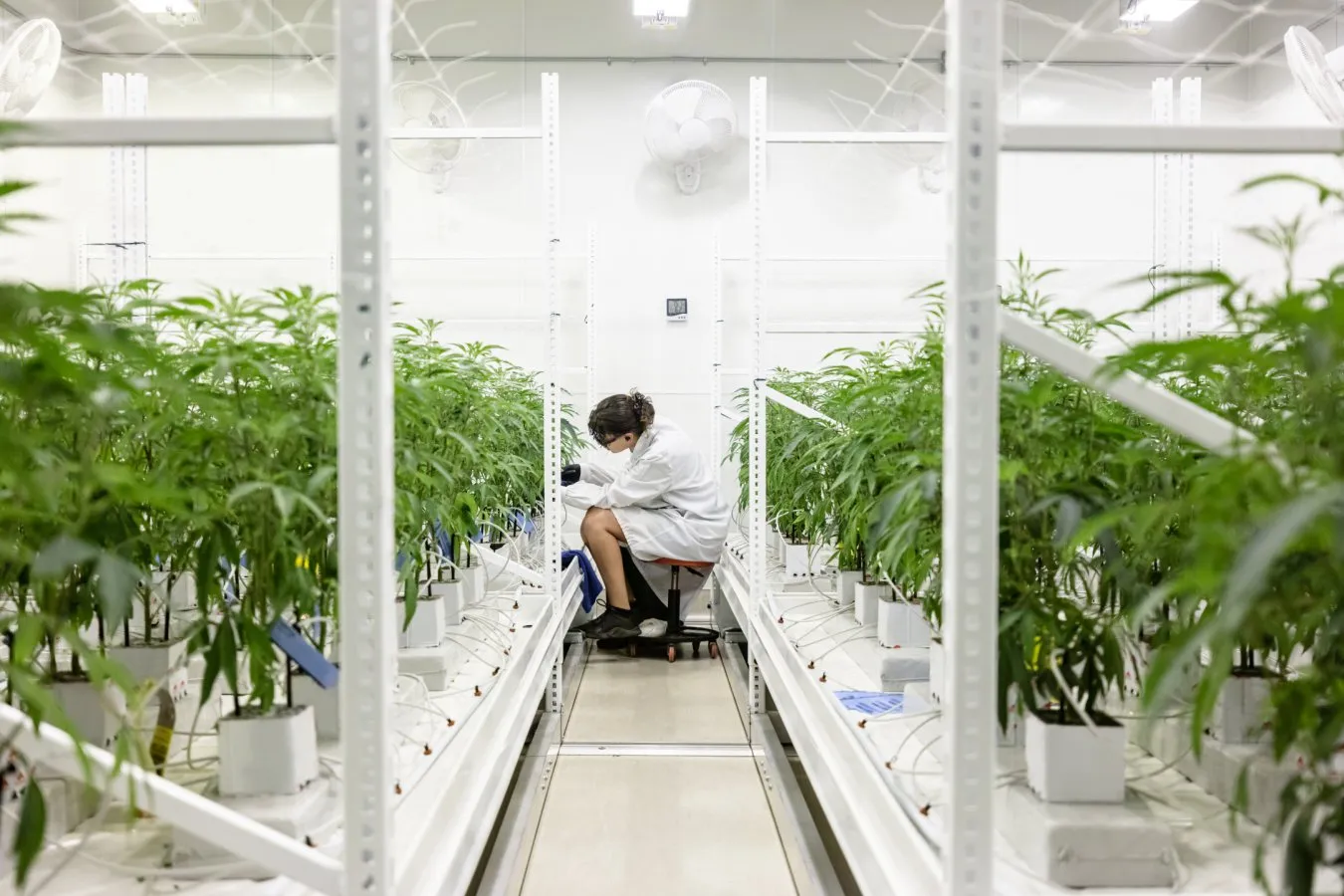
Haivya has developed acoustic signals intended to influence plant development, and its trials reportedly show large yield increases in soybean, pepper, and cannabis crops. For decision-makers, the story is a live test of whether non-traditional inputs can become scalable, fundable agricultural technology.
A start-up called Haivya says it can make plants grow bigger by using acoustic signals to influence plant development. According to the report, its trials have reportedly delivered large yield increases in soybean, pepper, and cannabis. The headline question is simple and potentially huge: if sound can change outcomes at the crop level, it could rewrite how some growers think about inputs, margins, and differentiating their production.
In Haivya’s framing, acoustic signals are not random noise. They are designed to steer how plants develop, and the reported trial results span multiple crops, including soybean and pepper as well as cannabis. That matters because a single-crop “miracle” is easy to dismiss as a fluke. Cross-crop claims, even if they are only “reportedly” based on trials, are the kind of data that can move a technology conversation from curiosity to commercial scrutiny.
To understand why this is attracting attention, zoom out one step. Agriculture has always been a game of inputs: seed genetics, fertilizer, water, light, pesticides, and labor. Many of those inputs are physical and operational. Sound-based stimulation, if it holds up, changes the cost structure and the operational playbook. Instead of pouring in more nutrients or expanding land to chase yield, an operator would potentially invest in a system that delivers a controlled signal. That also raises a key board-level question: can the benefit be made consistent enough that it survives variability in weather, soils, and farm practices?
There is also the commercial incentive angle. Growers typically adopt new tech when it either reliably increases yield per unit of resource or reduces volatility. Reported “large yield increases” sounds like the first lever. But decision-makers will also care about the second-order reality: how much of the gain comes from the signal itself versus how the trials were run, how plants were managed, and how “yield” was measured. Even without getting into specifics that are not provided in the source, the logical takeaway is that executives will want to know whether the acoustic approach is robust across deployment conditions, and whether it can be standardized.
Then comes regulatory and compliance framing, and it is not uniform across all three crops mentioned. Soybean and pepper are mainstream agricultural categories, usually governed by conventional ag rules around inputs and field operations. Cannabis is different. The source explicitly references trials in cannabis, which typically sits inside a more complex regulatory environment depending on jurisdiction, with tighter controls around cultivation practices. For Haivya and for any partners that deploy its systems, that means the question is not only “does sound work?” It is also “what approvals or documentation would be required for a sound system used in cultivation?” Executives should expect a compliance pathway that is at least as important as the science.
There is another reason this could matter beyond Haivya itself. Agricultural technology budgets are increasingly competitive, and “new inputs” are harder to launch than traditional solutions because they must clear both scientific skepticism and operational logistics. If acoustic signals prove effective at scale, the competitive set expands. Companies that previously focused on sensors, automation, nutrient management, or greenhouse lighting may find themselves facing a new category: biophysical stimulation. Boards of ag tech firms will likely watch for whether funding and partnerships shift toward solutions that can be deployed quickly and measured clearly.
At the same time, this kind of approach tends to trigger a capital allocation stress test. Investors typically want credible trial design, transparent measurement, and a path to repeatability. The report’s language says Haivya has developed acoustic signals designed to influence plant development, and that its trials reportedly show large yield increases. “Designed” and “reportedly” are meaningful qualifiers. They also hint at an evidence gap that decision-makers will want to close with more details: scale, duration, outcomes across environments, and whether results can be reproduced by third parties.
So what should executives take from this? If Haivya’s trials translate into consistent, measurable results for soybean, pepper, and cannabis, the strategic implications are big: a non-chemical, potentially non-nutrient input that could be standardized into cultivation protocols. That could change competitive dynamics for growers and ag tech providers alike, and it could become an acquisition or partnership target for companies already serving cultivation markets. In a sector where yield is the scoreboard and repeatability is the referee, acoustic signals are either the start of a new playbook, or the next promising claim that needs stronger validation.
This story's Key Insights and Take-aways are locked.
Create a free account to unlock Executive Actions for one credit.
Register to UnlockAlways free for Executives Club members. Join the Club
More in Science

Wharton finds people trust AI ethical advice more once it looks accurate
A new Wharton study flips the assumption that “AI ethics” is always a deal-breaker for users.

UCLA’s Daniel Blumstein launches “OnlyMarms” after funding cuts
A marmot research lab turns to OnlyFans for supplies and expenses, but it is not a replacement for federal money.

Chris Williams wraps eight months on the ISS, then heads home to Earth
NASA astronaut Chris Williams returned from an eight-month first ISS mission packed with cancer, semiconductor, and solar-power wins.