

Hali Mo quit McKinsey and built a microbakery selling 400 laminated pastries weekly
A former product manager’s leap from corporate dread to joy shows the real cost of running in your own lane.
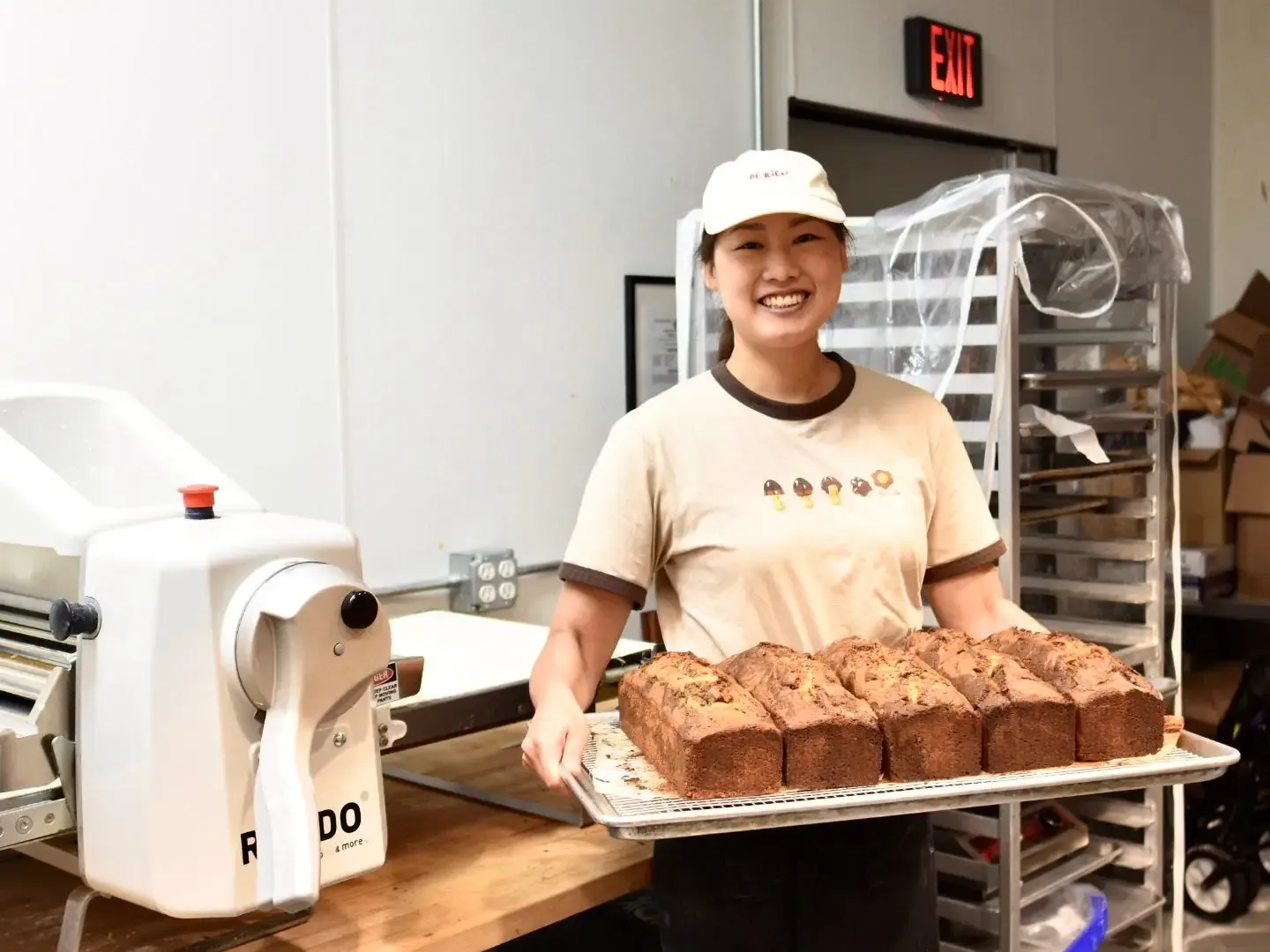
Hali Mo, a former McKinsey business analyst, moved into product management, then quit her corporate job to start Hali Home Bakes, a San Francisco microbakery specializing in laminated pastries, after attending pastry school in Paris. For decision-makers, her story is a live case study in incentives, regulatory constraints, and how customer demand can scale faster than internal comfort.
Hali Mo quit her corporate job and turned a Paris pastry-school detour into Hali Home Bakes, a San Francisco microbakery producing around 400 laminated pastries each week, with plans to expand to 1,000. She didn’t describe this as some overnight reinvention. She described waking up with dread in her corporate role, quitting at 29, building demand through social media, starting with a first preorder of 40 pastries in New York, and then effectively rebuilding again after an eight-year relationship ended.
If you only remember one thing from her arc, it’s this: the moment she left corporate America, her daily emotional baseline flipped from dread to joy, even though the business risk got louder. As she put it, running the microbakery removed perks like paid time off and employer-sponsored retirement contributions, while adding very plain constraints: if she gets sick, there are no pastries to sell and no income, and she pays her own health insurance. That trade-off is the whole story. It is also the whole reason her case matters beyond “life is short.”
Mo’s path started with the résumé many ambitious people are trained to pursue. After graduating from Stanford in 2018 with degrees in economics and computer science, she joined McKinsey as a business analyst, then moved into design consulting, and later became a product manager at a startup. On paper, everything looked right: a good salary, clear career progression, and prestigious companies. But after five years in corporate America, she said she was waking up dreading work every day. She turned 29 and decided she did not want to live like that, quitting with an initial plan to take a year off, not to become a baker, but to figure out what actually made her happy.
That “year off” detour is where the strategy starts to separate from the typical founder origin story. She had a long-running passion for baking. If someone had asked her for a bucket-list item, it would have been attending pastry school in France. So in early 2024, she quit her product management job and moved to Paris. She described loving being a student again because it removed the performance review and promotion pressure that had shaped her corporate life.
The regulatory and market mechanics show up immediately once she got back to selling. Her first serious move from hobby to commerce began in New York, where her partner lived at the time. She bought a tiny convection oven and a countertop dough sheeter, started baking under a cottage food license, and launched with a first preorder selling 40 pastries. For the first few months, selling even a dozen boxes felt difficult. Then customers came back, word of mouth spread, and social media continued to grow. By spring she realized this could become something real, and by fall she was consistently selling out pop-ups with lines of customers.
That kind of demand signal matters to operators and investors because it is not just “likes.” It is proof that a specialty product can find repeat behavior even when production capacity is constrained and distribution is limited. Laminated pastries also require specialized equipment and careful process consistency, so scaling is less about marketing volume and more about throughput and quality control. Mo later said that when she moved to San Francisco in January, she rebuilt her customer base within months and found a commercial kitchen that could support the specialized equipment she needed.
Life events collided with business math too. After an eight-year relationship ended, she described it as “every part of my life was starting over.” Personally, she was rebuilding after the breakup. Professionally, she was leaving behind the New York customer base she had spent months building. That meant restarting in San Francisco. But because she had already learned what worked, she was not starting from zero in capability. Now she is producing around 400 pastries each week and plans to expand to 1,000 with the help of a part-time baking assistant she is looking to hire. This is where the second-order implications land: scaling a specialty baked-good business often forces you to confront labor, training, and scheduling before you confront expansion headlines.
And the cost of that freedom is very explicit in her accounting. She highlighted that, in corporate life, there are safety rails: paid time off, employer-provided health insurance structures, and retirement contributions like 401(k) matching. In her microbakery, none of that is guaranteed. There is no paid time off. If she gets sick, there are no pastries to sell and no income. She pays for her own health insurance. She hasn’t had employer 401(k) contributions. In her first two years as a business owner, she said she couldn’t contribute to a traditional retirement account because she wasn’t paying herself enough. There is also the cashflow reality of small business: funding your own runway, spending money long before you are making much of it.
For boards, CFOs, and founders who sit in the middle of “mission” and “math,” her story is a reminder about incentives. Mo described the biggest mindset shift as believing in herself, and she said that when she first started, she was half in and half out, assuming she’d probably return to corporate. That hesitation made her pass on opportunities and avoid investments that could have helped the business grow. Her later framing is blunt: she believes the business will succeed because she believes in her product and her ability to make it succeed. She is also careful not to romanticize the leap. She does not think everyone should quit corporate jobs. Some people genuinely love traditional careers. But if you have the introspection, a financial runway, and you know your work is making you miserable, she said there is no reason to fear taking the next reasonable step.
So what should executives take from a microbakery story that seems, at first glance, too niche to matter? The operational lesson is that customer-driven momentum can build quickly when distribution is right, your product is consistent, and your brand is authentic. The financial lesson is that autonomy is expensive when it replaces employment benefits and shifts health and labor risk onto the owner. And the cultural lesson is that “joy” is not a corporate slogan. It is a measurable input to decision-making, endurance, and willingness to invest. For the ambitious professionals and investors watching talent move, Mo’s headline outcome is real, but so are the constraints that explain how it happened.
This story's Key Insights and Take-aways are locked.
Create a free account to unlock Executive Actions for one credit.
Register to UnlockAlways free for Executives Club members. Join the Club
More in Business

Anthropic’s Levant Alpöge cracks the Jacobian conjecture after 87 years
A Harvard valedictorian used Claude to hit a 1939 breakthrough, but the missing “why” is the real problem.

Uber buys Delivery Hero for nearly $15B, vaulting to top food delivery outside China
The deal doubles Uber's dual-services footprint and pushes a ride-and-eats bundling play into 50 more markets.

Epic and Google drop settlement bid, forcing rival Android app stores by July 22
Google told the court it is ready to carry third-party app stores starting Wednesday, July 22.