

Helaena’s Season 3 dream maps Dreamfyre to the Dragonpit storm, not the book death
The show’s Helaena (Phia Saban) foresees her own end in a sequence that closely matches Fire & Blood’s Dragonpit reckoning.
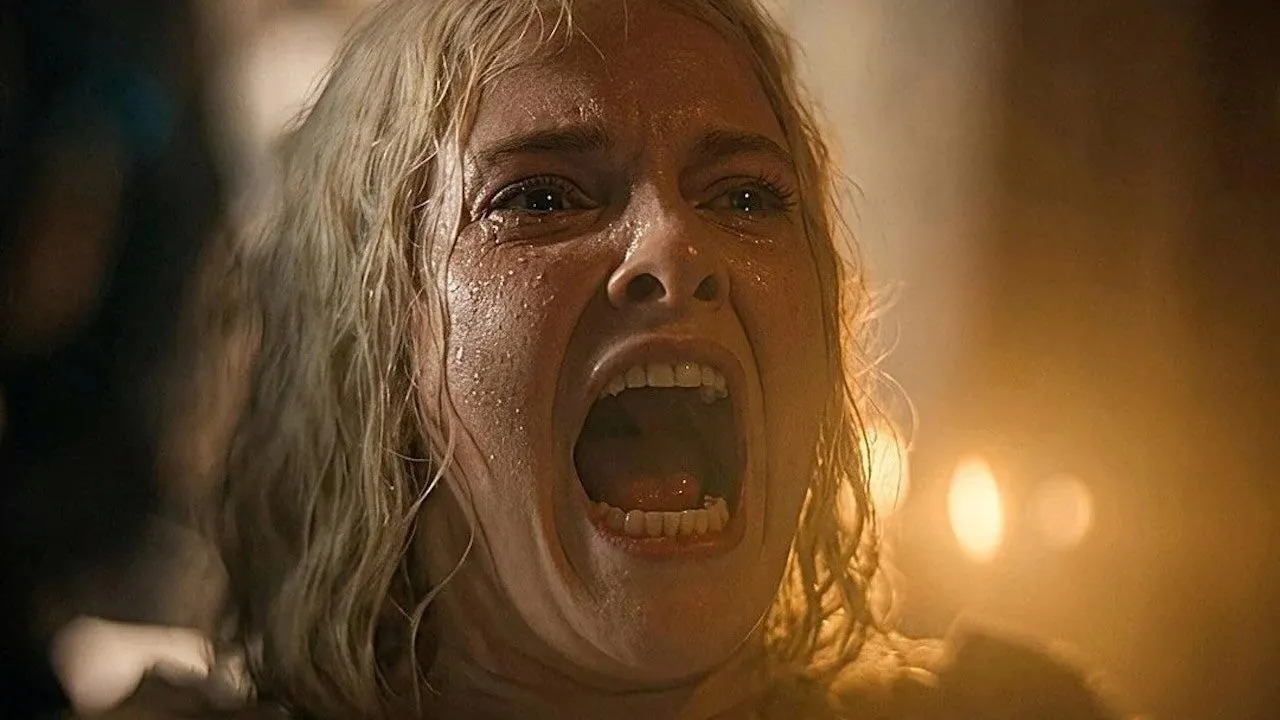
In House of the Dragon Season 3, Episode 7, Helaena Targaryen (Phia Saban) has dreams that shift her fate away from the specific Fire & Blood account. For decision-makers watching how adaptations manage canon risk, the episode signals a deliberate re-write of the character’s “how she dies” mechanics.
Major spoilers follow for both House of the Dragon and Fire & Blood.
In House of the Dragon Season 3, Episode 7, Helaena Targaryen dreams of her own death in a way that lines up with one of the most explosive passages in George R.R. Martin’s Fire & Blood. The dream ends with what looks like ash or snow, followed by a debris cloud that consumes her, and the middle sequence shows a militant Helaena riding Dreamfyre as people storm the Dragonpit chanting “Dracarys!” That matters because, in the book, Helaena dies before the Storming of the Dragonpit, meaning Dreamfyre perishes without her.
The episode starts in King’s Landing with Helaena approaching a white horse hitched to a wagon. There’s a breeze and low light, then the gates open and sunshine pours in. Freedom, at least visually, looks close. But Rhaenyra’s voice yanks her back to reality. Helaena confirms she was asked by Aemond to ride her dragon, Dreamfyre, into battle with him, and she refused. As a girl she dreamed of flying, but now, when she’s with Dreamfyre, “it’s too much.” She adds a blunt fear that the dragon “alters” her, and the subtext lands: other characters, including Rhaenyra, seem to have been reshaped by dragons the way Viserys was.
If you care about narrative mechanics, this is where the episode gets strategically interesting. Helaena is treated like a human fortune-telling device as Rhaenyra pushes her harder, and the dream language becomes less “prophecy as information” and more “prophecy as inevitability.” Later, Helaena dreams of giving birth, but the newborn is whisked away before she can hold it. The show leaves the outcome unclear: taken to be killed, or removed as a threat to Rhaenyra’s rule? That ambiguity is not just melodrama. It sets up a clock where the Dreamer can’t protect what she sees, and where the political system turns intimate moments into leverage.
Then comes the center of the dream sequence. Helaena appears in her dragon rider garb, saddled atop Dreamfyre. She’s inside the Dragonpit while scores of enraged people charge toward her. She cries “Dracarys!” and Dreamfyre breathes fire down on the mob, turning chaos into spectacle for a second. The final section pivots into a quiet horror. Helaena lives on a farm, the same white horse from the opening dream grazing nearby, with two slightly older children, a boy and a girl, feeding chickens. She told Alicent she would like to have chickens if she were ever free of King’s Landing. In other words, the dream isn’t random wish fulfillment. It’s a direct answer to a long-running craving for agency, for normal life, for distance from court control.
But the bliss doesn’t last. The sun is eclipsed by the moon. What seems to be either ash or snow starts to fall, and then a debris cloud engulfs her. Interpreted through Fire & Blood’s major set pieces, the dream reads like a premonition of her own death, not just a political forecast. All season, Helaena has yearned to be free, first from Alicent’s control and then as a hostage under Rhaenyra’s regime in King’s Landing. This dream gives her something she never fully had: a self-directed future where she’s feeding chickens, not being handled. And then it proves how fragile that future is.
Here is the book problem the show seems determined to solve differently. The Storming of the Dragonpit in Fire & Blood is one of the most momentous passages: with King’s Landing in chaos and citizens of the city rebelling against Rhaenyra, thousands of people, many inspired by the teachings of The Shepherd, charge the Dragonpit to slay the dragons held there, including Dreamfyre. The dragons are chained at a disadvantage but still roast and kill countless attackers. Eventually, humans kill every dragon kept in the Dragonpit. Dreamfyre is the last to fall, battling attackers until she breaks free enough to soar into the domed ceiling, fatally bringing the structure down upon herself and the attackers.
In the book, however, Helaena dies before the Storming, so Dreamfyre perishes without her. Fire & Blood’s unreliable narrators offer competing accounts of how Helaena’s death happens: she plunges to her death from Maegor’s Holdfast, impaled on spikes. One account says she was driven to suicide, devastated by the recent murder of her son Maelor. Another says she was murdered on Rhaenyra’s orders, and that a rumor spreads among the masses, taking hold of how people explain the tragedy and enraging them further against the queen.
So what does Episode 7 do? It seems to graft the “Dragonpit reckoning” onto Helaena’s personal end. If the show is aligning her dream with the Storming imagery, it would represent a meaningful canon change at the level that matters most to viewers: not just that a tragedy happens, but that Helaena is present for the mechanism of the tragedy, not absent from it like the book. The key wrinkle is the child Helaena dreams of giving birth to, and what that might mean in the show. The source notes that Maelor does not exist in the show but might be connected to the child she’s pregnant with in Season 3. If the baby is intended to be Maelor, the book’s suicide logic becomes relevant. If Helaena is meant to die before the Dragonpit storm, her dream of riding Dreamfyre could be her connecting with the creature at the time of the dragon’s demise, or sensing her death from the afterlife when the Dragonpit is stormed.
There’s another interpretation that turns the adaptation’s risk into a character choice: the show may forgo the book’s more “mysterious” death setup and instead have Helaena go out as a warrior queen defending the Dragonpit. That would mean Helaena finally accepts the inherent violence required to be a Targaryen ruler. For a gentle soul whose story has been shaped by captivity, removal of agency, and the constant “don’t ask, just know your place” dynamics of court life, that kind of ending is both cruel and efficient. It is also, from a storytelling standpoint, a clean solution: if you want to keep the audience’s emotional investment while changing canon order, you give the Dreamer a death that looks like agency even when it is still tragedy.
For anyone tracking adaptations, this is the real stake. Canon isn’t just trivia. It’s the order of cause and effect that viewers use to infer what happens next. Episode 7 doesn’t merely reference Fire & Blood. It re-wires Helaena’s relationship to Dreamfyre and to the Dragonpit storm, and that tells you the show is actively managing how prophecies cash out on-screen. If your job is strategy, product, governance, or narrative, the lesson is the same: small changes in the sequence of events create big downstream shifts in what audiences believe is “inevitable.” And right now, Helaena’s inevitability is being rewritten.
This story's Key Insights and Take-aways are locked.
Create a free account to unlock Executive Actions for one credit.
Register to UnlockAlways free for Executives Club members. Join the Club
More in Entertainment

'It's a Magic Trick': Ballet Experts Say Rosalía's SNL Pose Is Impossible
Three ballet experts tell Rolling Stone Rosalía's gravity-defying SNL stillness shouldn't be possible - and why the debate is now part of the show.

Activision CMO: GTA 6 Will Boost Call of Duty, Not Bury It
Activision's top marketer says Rockstar's blockbuster will drive players back to consoles and into Modern Warfare 4, even as the company admits its recent strategy failed.

Justice to Score GTA 6, Share New Song with Tame Impala, SZA, King Gizzard
Rockstar taps the French duo for the GTA VI score, and the first taste is a genre-melting collab with Tame Impala, SZA, and King Gizzard & The Lizard Wizard.