
Historian argues Eilmer of Malmesbury saw different comets in 989 and 1018
The “medieval flying monk” story may hinge on whether Halley's comet and a separate comet were mistaken for each other.
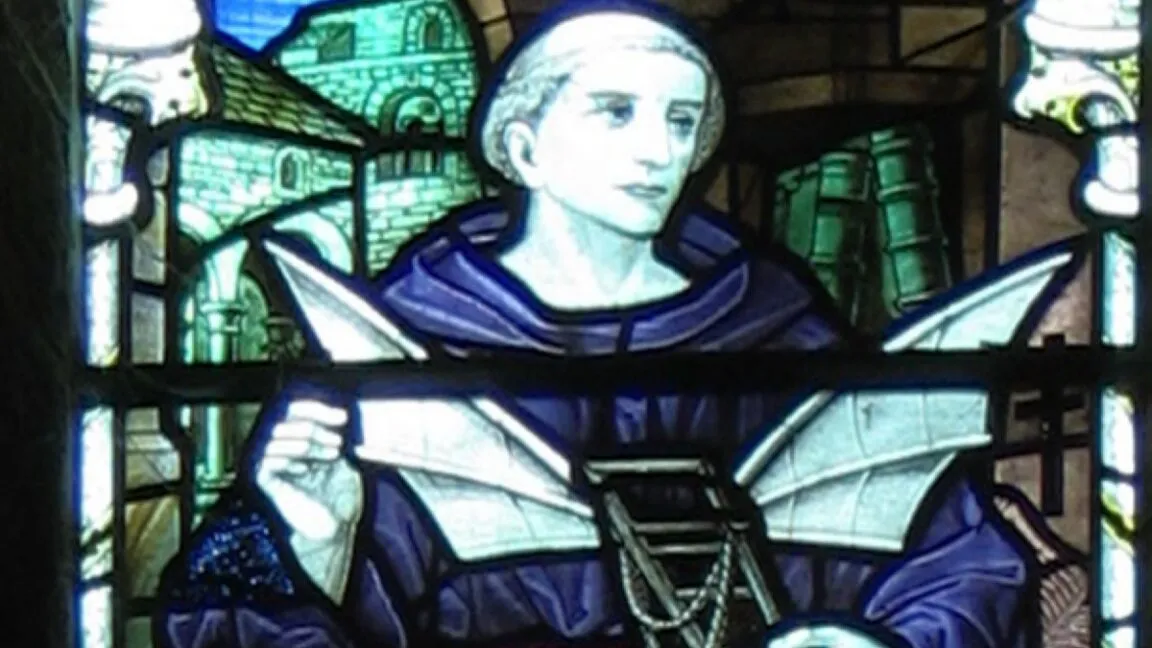
University of Leicester historian James Aitcheson says the monk Eilmer of Malmesbury likely saw the comet of 1018 as a youth, not Halley's comet in 989. That reframes when Eilmer was born, when he flew, and what historians think they know from William of Malmesbury’s account.
The medieval “flying monk” Eilmer of Malmesbury might not have seen Halley's comet twice. Ars Technica reports that University of Leicester historian James Aitcheson argues Eilmer may have witnessed a different comet altogether when he was young, pointing to the comet of 1018 instead of Halley's comet's earlier fly-by in 989.
Here is why that matters right away. The 12th-century historian William of Malmesbury, writing an account circa 1125, describes Eilmer as “advanced in years” when he witnessed Halley's comet in 1066 and added, “It is long since I saw you.” Some historians interpreted that line as evidence Eilmer had seen Halley's comet during its earlier 989 appearance, meaning Eilmer would have been old enough to remember it. Aitcheson’s twist, published in the journal Notes and Queries, is that the “you” Eilmer references may have been a different comet entirely, the comet of 1018.
To see how big the uncertainty is, rewind the story’s other anchor: Eilmer’s flight. William recounts that Eilmer, a young Benedictine monk, jumped from the 150-foot tower of his abbey in the small English town of Malmesbury. He wore crude wings fashioned from willow wood and cloth and managed to glide about 600 feet, passing over the city wall before crash-landing in a small valley near the River Avon. The fall broke both his legs, crippling him. Malmesbury Abbey still has a stained-glass window honoring Brother Eilmer.
The problem for historians is that William’s account, circa 1125, does not provide an exact date for the flight. That forces scholars to build timelines from indirect clues. One approach assumes Eilmer really was talking about Halley's comet both in 989 (when he was young) and again in 1066 (when he was “advanced in years”). On that reading, if Eilmer was at least five years old in 989, he would have been born no later than 984. That would put him in his 80s in 1066, and would make the flight, described as happening when he was “in his first youth,” likely fall between 1000 and 1010.
Aitcheson says that estimate leans too hard on assumptions. In his analysis, Eilmer may have seen the comet of 1018 instead, when he was young. If that shift is right, the birth-year math moves later, which then moves the flight. The result is a different plausible window: the date of Eilmer’s attempt at flight could fall between the 1020s and 1040s rather than between 1000 and 1010. In other words, a single line about a comet can ripple through a whole life timeline.
It might feel weird to treat medieval astronomy like an investment memo, but the underlying logic is familiar: timelines are only as strong as the assumptions you are willing to make. In business, the “signal” is usually the documented fact, and the “model risk” comes from the inferences you pile on top. Here, the documented fact is William of Malmesbury’s circa 1125 narration of Eilmer’s comet sighting in 1066 and his comment, “It is long since I saw you.” The contested “model” is what “I saw you” refers to: Halley's comet in 989, or a different comet in 1018.
That analogy matters because boards, executives, and decision-makers operate under the same time-and-evidence constraints, especially when records are incomplete. You rarely get perfect data; you get fragments and a narrative that tries to connect them. Aitcheson’s argument highlights a classic governance lesson: when evidence is sparse, certainty can be the first thing that quietly goes missing. The more a story depends on linking two events, the more fragile it becomes if the linkage is wrong.
For leaders in any field that depends on historical reconstruction, the strategic stake is clarity. If historians are right that Eilmer’s youth involved the comet of 1018, then the “Halley's comet twice” framing stops being a clean match and becomes a more complicated interpretation. The second-order implication for how people remember Eilmer is not about romanticizing a stunt, but about accuracy in how we date key moments from limited sources. And for anyone tracking how narratives form, evolve, and sometimes unravel, that’s a reminder that even a single phrase like “It is long since I saw you” can reshuffle a timeline.
This story's Key Insights and Take-aways are locked.
Create a free account to unlock Executive Actions for one credit.
Register to UnlockAlways free for Executives Club members. Join the Club
More in Technology

Nvidia's $89B data center quarter: the 9 companies cashing in
The AI buildout is minting fortunes beyond GPUs, and memory, cloud, and cooling suppliers are riding the same wave.

A YouTuber dissected the iPhone Duo and thinks he found crackgate's cause
CuriousHagi's teardown of Apple's foldable reveals a gear-like hinge that may explain why screens crack in the same spot within hours.

Google quietly links your phone number to every Android account on your SIM
Adding a SIM now ties your phone number to all Google accounts - and future accounts inherit it. Here's the security and privacy stakes.