

HKEX sets thin margins for 5-year China bond futures, drawing institutions Monday
Offshore investors want Hong Kong access to new 5-year China government bond futures, and HKEX is making entry cheap.
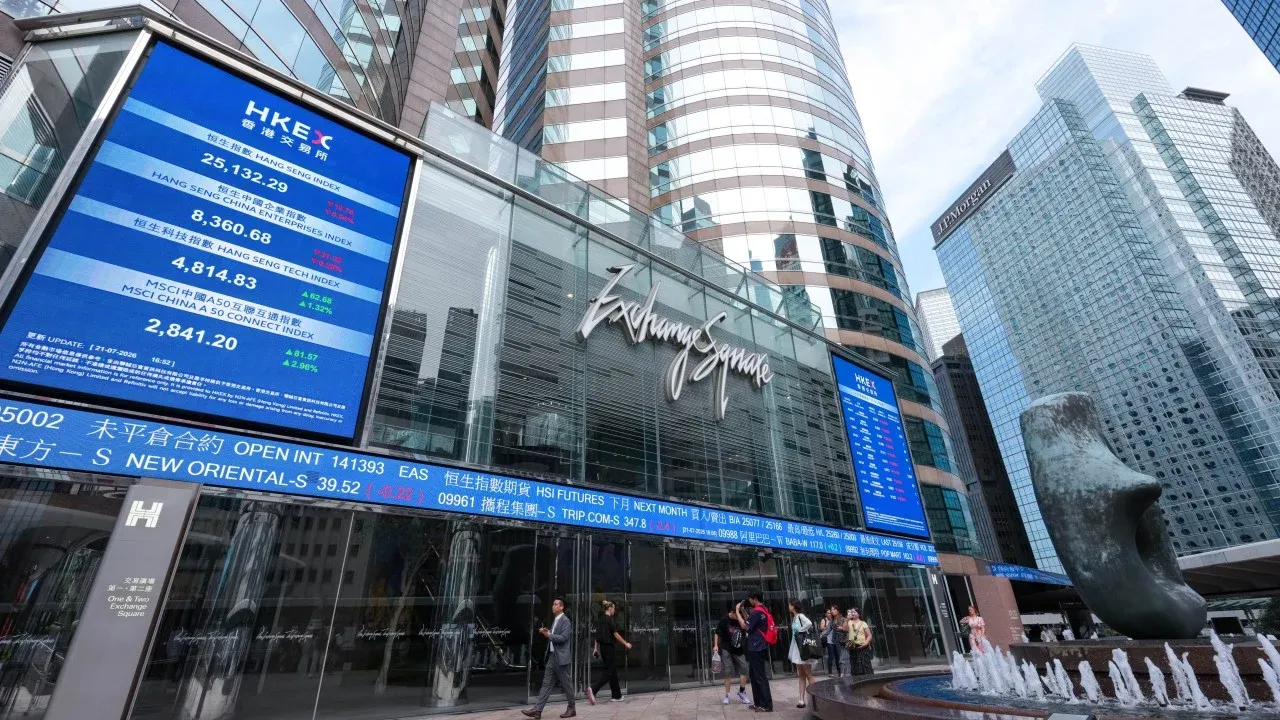
Hong Kong Exchanges and Clearing (HKEX) says global institutional investors including asset managers, pension funds, and insurance companies are eager to trade offshore China government bond futures starting Monday. The exchange’s structure, including a low minimum margin ratio, could accelerate HKEX volumes and shift how institutions hedge China rates from Hong Kong.
Hong Kong is about to get its first taste of offshore China government bond futures on Monday, and HKEX executives say global institutions are already lining up. The key product is a new 5-year China government bond futures contract, designed for trading outside mainland China, with a contract size of 500,000 yuan, or US$74,051.
Why does HKEX executives care about the “eager” part? Because offshore bond markets live and die by participation, and futures participation tends to be path-dependent. According to senior stock exchange executives cited by SCMP, international asset managers, pension funds, and insurance companies have shown strong interest in these contracts. And HKEX is not just hoping for demand. It is actively shaping it with contract and risk plumbing that aims to lower friction for first-time participants.
In futures trading, “margin” is the working capital investors must post to open and maintain positions. It is a real cost, even though it is not exactly a fee. A higher margin requirement can slow adoption because institutions either need more cash sitting idle or must route the risk through more complex internal processes. SCMP reports that HKEX has set a low minimum margin ratio so investors only need to invest 7,980 yuan. That specific number matters for decision-makers because it changes how quickly an institution can spin up trading activity when markets move.
This is the first time these 5-year China government bond futures will trade in Hong Kong, which makes Monday a testing ground for a broader strategy: whether Hong Kong can deepen its role as a platform for offshore China rates exposure. Hong Kong has long been a financial hub bridging mainland and international capital flows. But futures add a different layer. They let institutions hedge duration, express rate views, and manage risk more dynamically than many cash instruments, especially for large portfolios that need operational flexibility.
Institutional interest is not automatically surprising, but the timing and product specs are. Asset managers, pension funds, and insurance companies are typically sensitive to how easily they can enter a market, how reliably they can manage margin through volatility, and how the contract size fits their internal risk systems. A 500,000 yuan contract size and a low minimum margin ratio are design choices that can make the product feel tradable rather than experimental, particularly for risk managers who are skeptical by default.
From HKEX’s perspective, this is also about ecosystem effects. Once institutions start trading, it can attract liquidity providers and market-makers who want tighter spreads and more activity. More activity can lead to better price discovery, which in turn can bring in more hedgers and speculators. That feedback loop is why exchanges obsess over “firsts” like Monday’s start date. SCMP’s framing implies HKEX believes the demand story is already credible, not just aspirational.
Regulatory and operational considerations matter here too, even if Monday is the headline. Offshore trading in China government bond-linked products raises questions about access, settlement mechanics, and how overseas participants handle risk controls. While SCMP’s excerpt focuses on investor interest and HKEX’s margin setup, the underlying message is clear: HKEX is trying to make offshore participation straightforward enough that institutions do not stall at the first compliance or treasury hurdle.
For decision-makers at institutions watching from the sidelines, the second-order question is not just “will the contract trade,” but “what will the trading turn into once margins, contract size, and start-up liquidity collide with real hedging needs.” If these futures catch on, it can influence how institutions allocate risk capital, structure hedges for portfolios exposed to China government bonds, and decide whether Hong Kong becomes a routine venue for rates risk management.
Monday’s launch is therefore more than a product date. It is a signal to the market about whether HKEX is prepared to actively onboard global institutions into offshore China bond derivatives, and whether it can convert early interest into sustained volume. If it works, peers with similar mandates will have to take Hong Kong’s futures infrastructure seriously, because liquidity and hedging tools can become the quiet advantage that compounds over time.
This story's Key Insights and Take-aways are locked.
Create a free account to unlock Executive Actions for one credit.
Register to UnlockAlways free for Executives Club members. Join the Club
More in Business

Anthropic’s Levant Alpöge cracks the Jacobian conjecture after 87 years
A Harvard valedictorian used Claude to hit a 1939 breakthrough, but the missing “why” is the real problem.

Uber buys Delivery Hero for nearly $15B, vaulting to top food delivery outside China
The deal doubles Uber's dual-services footprint and pushes a ride-and-eats bundling play into 50 more markets.

Epic and Google drop settlement bid, forcing rival Android app stores by July 22
Google told the court it is ready to carry third-party app stores starting Wednesday, July 22.