

Honda and Nissan bet on US AI startups to catch up in software-defined cars
Two of Japan's biggest automakers are buying next-gen vehicle software from US AI startups, a strategic shift that will shape their competitiveness for the next decade.
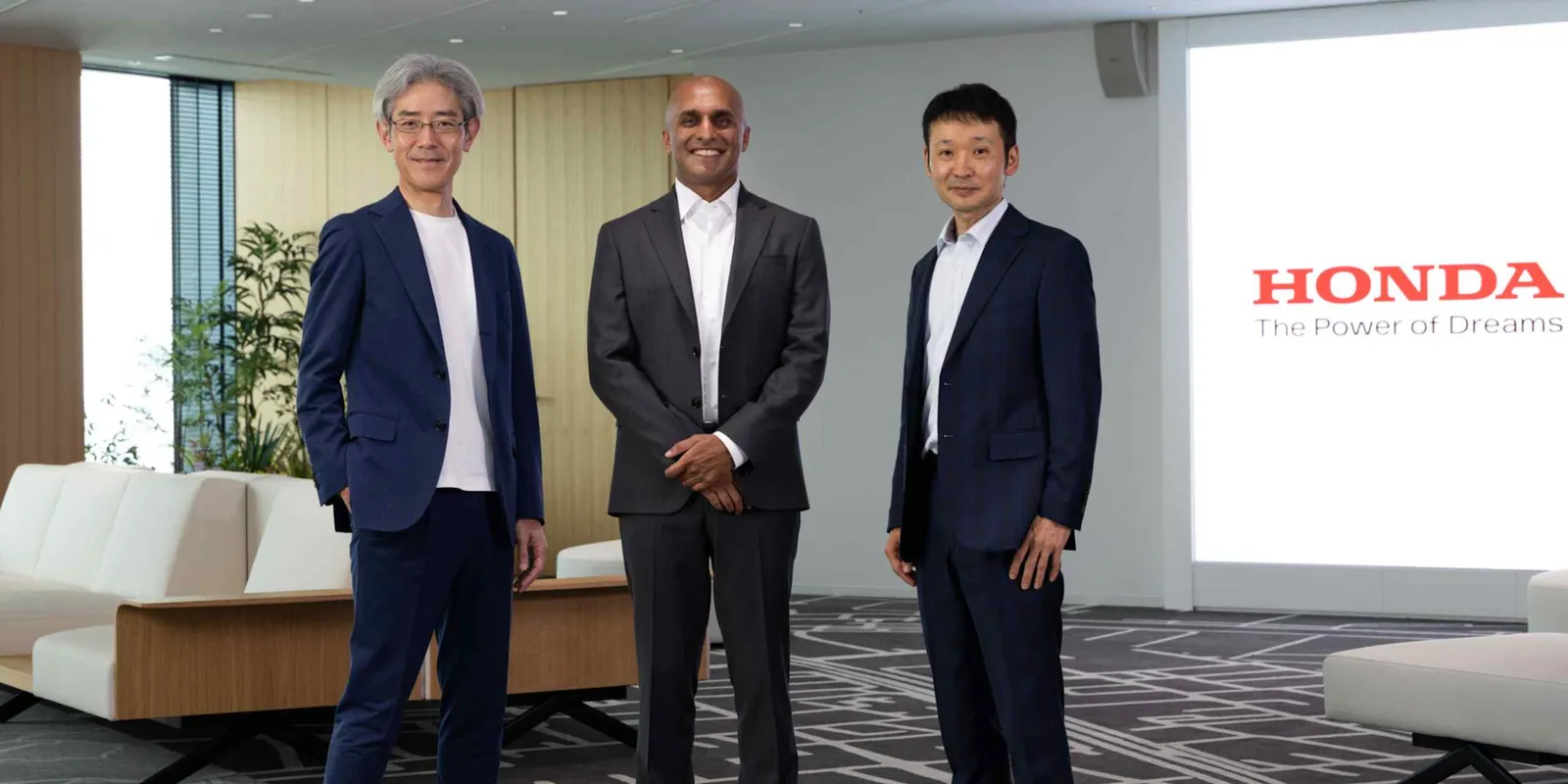
Honda and Nissan have each formed partnerships with a US AI startup to develop next-generation vehicle software, according to Nikkei Asia. The moves signal a strategic pivot for Japanese automakers, which have trailed Tesla and Chinese rivals in the race to make cars software-defined.
Honda and Nissan are each teaming up with a US AI startup to develop next-generation vehicle software, according to Nikkei Asia. The separate partnerships mark a notable departure for two of Japan's largest automakers, which have long favored in-house engineering and tight control over core vehicle systems. By turning to outside AI specialists, they are effectively acknowledging that the future of the car is code - and that they cannot write it all themselves.
The stakes are immediate and structural. The global auto industry is in the middle of a once-in-a-generation shift from mechanical performance to software-defined vehicles, where features like over-the-air updates, advanced driver assistance, and AI-powered infotainment are the new battlegrounds. Honda and Nissan have been widely seen as laggards in this transition, trailing Tesla and Chinese EV makers that have built their entire platforms around software from day one. These partnerships are a bid to close that gap quickly, without the years of R&D and talent building that a fully in-house approach would require.
For context, the software-defined vehicle trend has been accelerating for years. Traditional automakers have struggled to replicate the rapid iteration cycles of tech companies, where software updates can ship weekly and features are added over the air. In contrast, many legacy carmakers have treated software as an afterthought, bolted onto hardware designed years earlier. The result has been clunky interfaces, delayed features, and a growing competitive disadvantage against newer entrants. Japanese automakers, in particular, have a history of excellence in hardware, manufacturing efficiency, and quality control, but software has been a persistent weakness. Their infotainment systems have often been criticized for being dated, and their over-the-air update capabilities have lagged behind those of Tesla and Chinese rivals.
The competitive pressure is intense. Tesla has set the benchmark with its vertically integrated software stack, while Chinese automakers like BYD and NIO have pushed the envelope on AI-assisted driving and connected services. In this environment, Japanese automakers have been scrambling to catch up. Honda and Nissan's decision to partner with US AI startups suggests they believe the fastest path to parity is to buy expertise rather than build it from scratch. It also reflects a broader trend of automakers looking beyond their traditional supply chains to Silicon Valley for innovation.
The strategic logic is clear. US AI startups are at the forefront of machine learning, computer vision, and natural language processing - the technologies that will power the next generation of vehicle intelligence. By partnering with them, Honda and Nissan can access cutting-edge capabilities without the multi-year lead time of internal development. They can also tap into the startup ecosystems of Silicon Valley, which have become the de facto R&D hub for automotive software. For the startups, these partnerships offer a fast track to scale, with the automakers providing the hardware, manufacturing, and distribution channels that the startups lack.
But the strategy carries real risks. Software is becoming the core of the vehicle - the differentiator that determines brand loyalty and resale value. Outsourcing that core to an external startup could create dependencies that are hard to unwind. Questions about data ownership, intellectual property, and long-term control will be critical. If the startup is acquired or pivots, the automaker could be left stranded. Moreover, integrating AI software into vehicles that must meet stringent safety and reliability standards is a complex engineering challenge that cannot be fully delegated. The automakers will need to build internal capabilities to oversee and integrate these partnerships, or they risk becoming mere hardware suppliers to their own vehicles.
The broader industry will be watching closely. These partnerships could trigger a wave of similar deals as other automakers seek to avoid being left behind. They also put pressure on traditional suppliers, who may find themselves squeezed out of the software layer. For executives across the automotive and mobility sectors, the message is clear: the center of gravity is shifting from mechanical engineering to software and AI, and the ability to partner effectively will be as important as the ability to build. The moves also raise questions about the future of the Japanese auto industry's famed keiretsu system, where suppliers and automakers are tightly intertwined. If core software comes from outside that system, the balance of power within the industry could shift.
Ultimately, Honda and Nissan's moves are a bet on speed over control. They are choosing to buy their way into the software race rather than build from the ground up. Whether that bet pays off will depend on how well they integrate the startups' technology, how they manage the inevitable cultural clashes between engineering-driven automakers and agile tech teams, and whether they can retain the ability to differentiate their vehicles in a world where the underlying software may be shared. For now, the message to the industry is unmistakable: even Japan's most established automakers no longer believe they can win the software game alone.
This story's Key Insights and Take-aways are locked.
Create a free account to unlock Executive Actions for one credit.
Register to UnlockAlways free for Executives Club members. Join the Club
More in Technology

A Chinese rocket deorbited over Minnesota and landed in a farmer's cornfield
Experts tied the fragment to LandSpace's Zhuque-2E, which launched on September 15 and shed debris over the American Midwest after deploying 10 satellites.

JPMorgan Chase deploys first $5B into defense tech and hypersonic missiles
The bank is moving off its balance sheet to back robot factories, hypersonic missiles, and supply chains, signaling a new era of bank-backed military innovation.

Cop fired after sharing Flock login with ICE husband: 983 searches
A Savannah officer's shared credential let an ICE agent run hundreds of plate searches on Hispanic drivers, exposing a surveillance backdoor.