

Hormuz traffic hits 3-month low, but 25M barrels flow via ship-to-ship
Ship-to-ship transfers in the Gulf of Oman keep non-Iranian oil moving even as direct Strait of Hormuz transits collapse, reshaping global energy logistics.

TankerTrackers reports at least 15 simultaneous ship-to-ship transfers in the Gulf of Oman moving roughly 25 million barrels of crude and refined products, bypassing the Strait of Hormuz. Direct Hormuz traffic fell to just two commodity vessels on Monday, a three-month low, forcing producers to adapt logistics and reshaping oil market risk.
The Strait of Hormuz is quieter than it has been in three months, but the oil is still moving - just not the way you might expect. Maritime tracking firm TankerTrackers reported at least 15 simultaneous ship-to-ship transfer operations underway in the Gulf of Oman on Wednesday, involving roughly 25 million barrels of crude oil plus refined products. That volume is flowing even as direct vessel traffic through the chokepoint has collapsed to a multi-month low, with Kpler recording just two commodity vessels transiting the strait on Monday - one very large gas carrier and one very large crude carrier, both entering from the Gulf of Oman. That is the lowest daily tally since early May and well below the recent 10-day average of about 14 vessels.
The workaround is elegant in its simplicity: instead of risking the most contested stretches of the Strait of Hormuz, operators use shorter shuttle voyages or dark transits - with Automatic Identification System transponders switched off - to move oil to larger tankers waiting outside the chokepoint. The cargoes originated from nearly every country in the region except Iran, according to TankerTrackers, though a later update noted an additional set of transfers that included one Iranian LPG cargo. The practice mirrors a technique long used by Iran to evade sanctions, now applied more broadly to keep non-Iranian barrels flowing while Iranian exports face intense US pressure and a naval blockade.
The numbers tell the story of a market adapting under fire. Provisional data from Vortexa put Monday's oil transits through the strait at about 5 million barrels per day, with a seven-day moving average through Aug. 23 of roughly 6 million to 7 million barrels per day. Before the conflict began in late February, the strait carried approximately one-fifth of the world's crude oil and liquefied natural gas supplies, with daily vessel traffic typically in the range of 95 to 130 ships. Commodity carrier traffic fell to an average of about 10 transits per day after Iran restricted the waterway in early March, rebounded temporarily to around 36 during a June interim understanding, then settled near 15 per day after hostilities resumed in July, according to analyses of Kpler data.
A large share of recent transits have been dark or unclassified, complicating precise counts. Iran has blacklisted dozens of tankers it says violated its passage rules and threatened action against vessels involved in ship-to-ship transfers with them. The contrast is stark: significant volumes of regional non-Iranian oil continue moving via transfers outside the highest-risk zone of the chokepoint, while Iranian exports remain constrained. Analysts note that every successful non-Iranian cargo that reaches market without full reliance on Iranian-controlled routes erodes Tehran's longstanding claim that it can hold global energy flows hostage by threatening the strait.
US officials have described military escorts and enforcement actions as limiting Iran's ability to close the waterway. Iran maintains that the strait remains under its control and has rejected unilateral US measures. The ship-to-ship activity in the Gulf of Oman has become a critical, if imperfect, safety valve for Gulf producers seeking to bypass the most dangerous segment of the route, according to TankerTrackers. The report underscores a key adaptation by regional exporters and shippers six months into the conflict.
Oil markets have partly adjusted to the lower but persistent flows and the workaround logistics. Direct Hormuz throughput remains a fraction of pre-war levels, leaving the global supply picture sensitive to any escalation in attacks or enforcement. For executives and boards, the takeaway is that the Strait of Hormuz is no longer the single point of failure it once was - but the new logistics layer brings its own risks, from dark transits that complicate insurance and tracking to the threat of Iranian retaliation against vessels involved in transfers.
The strategic stakes are clear: every barrel that bypasses the strait weakens Tehran's leverage over global energy flows. But the workaround is not a permanent solution. It depends on the Gulf of Oman remaining relatively safe, on tanker operators willing to run dark, and on insurers and charterers accepting the added risk. As long as direct traffic stays near multi-month lows, the ship-to-ship transfer network will remain the quiet backbone of Gulf oil exports - and a key variable for anyone pricing energy risk.
This story's Key Insights and Take-aways are locked.
Create a free account to unlock Executive Actions for one credit.
Register to UnlockAlways free for Executives Club members. Join the Club
More in Business
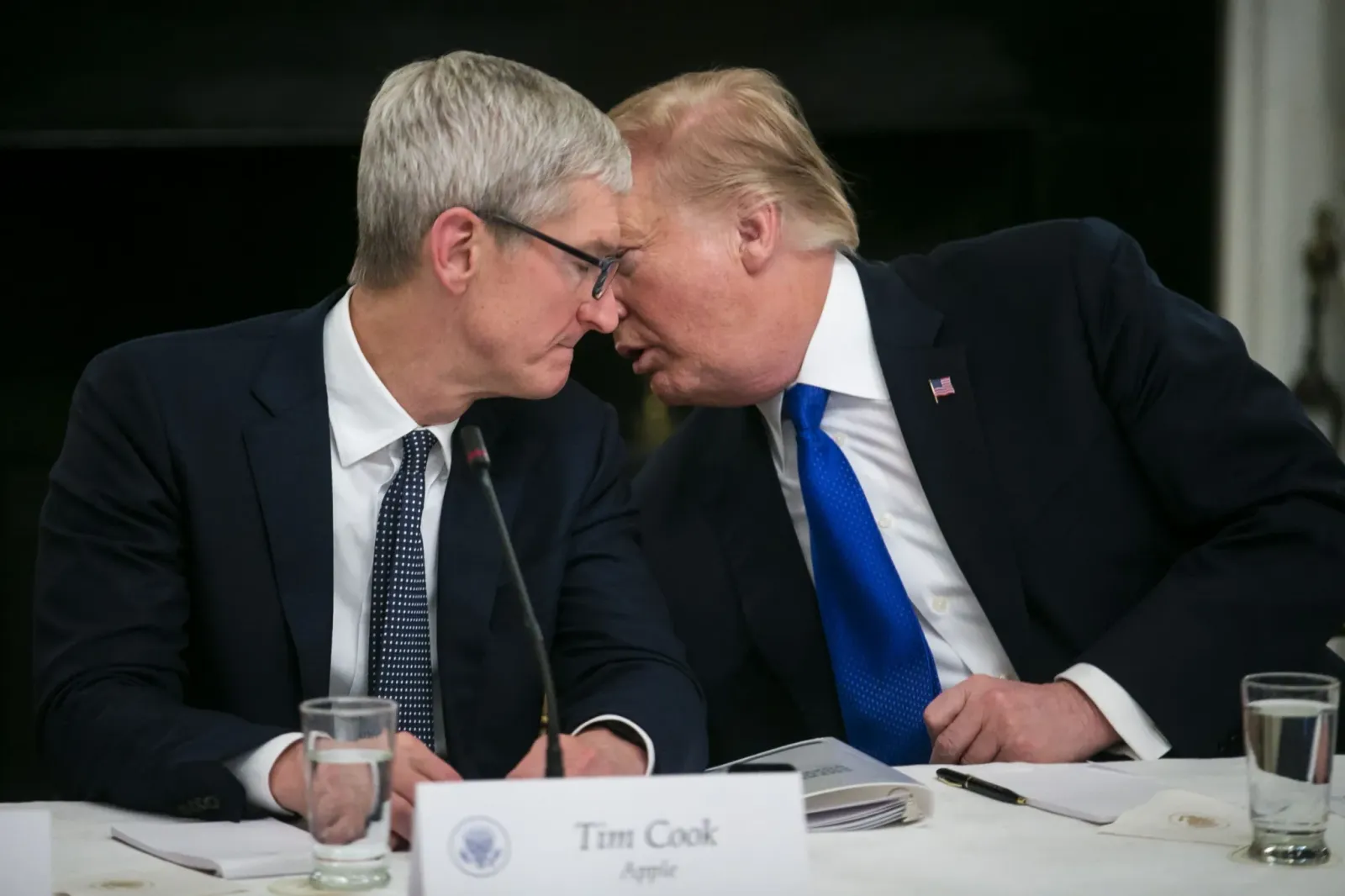
Tim Cook steps down as Apple CEO, stays on as chair with $45M equity
The 'Trump whisperer' keeps his White House and Beijing access as Apple navigates tariffs and a $4.6 trillion market cap.

Snowflake shares surge as AI data demand crushes estimates, lifting full-year forecast
Stocks jumped on stronger-than-expected guidance, signaling enterprise AI workloads are accelerating faster than Wall Street priced in.

Tim Cook's 15-year Apple CEO run ends: 3 lessons for any successor
After 15 years, Tim Cook hands Apple to John Ternus - here's how he turned a $350B company into a $4.6T juggernaut.