
Hossam Hassan’s “this time we’re staying longer” turns Egypt’s World Cup drought into a countdown
Egypt, one point from knockout qualification in Group G, is betting 2026 is different. Here’s why the ads hit now.
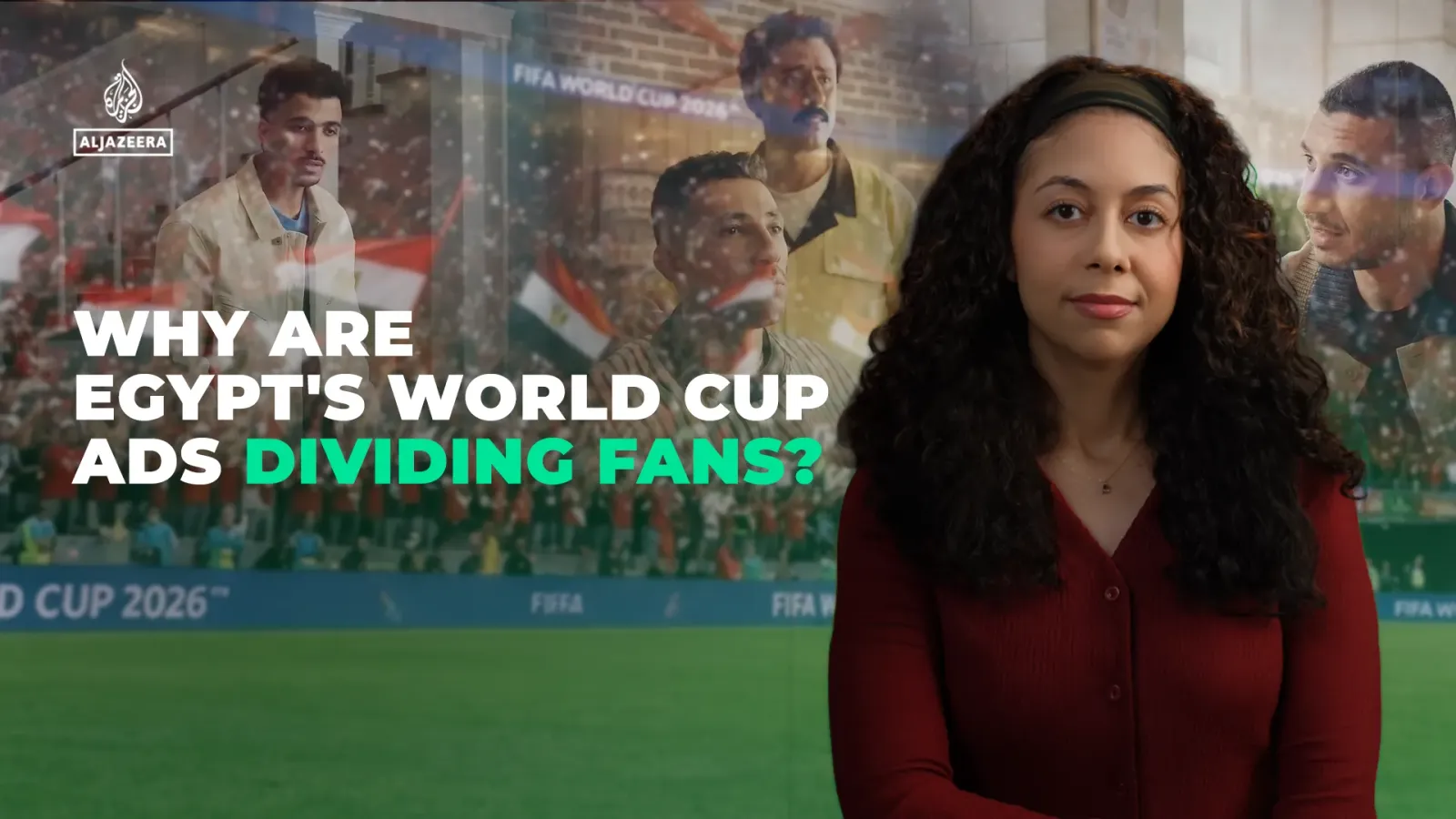
Hossam Hassan, Egypt’s all-time top scorer and national team coach, is at the center of a World Cup moment shaped by “doubter” commercials. The ads reflect and amplify how Egypt’s fans are processing past failures, current Group G standings, and the pressure of what comes next.
The line is simple, almost throwaway, and yet it has landed with the force of a national weather system: “To all the doubters, this time we’re staying longer.” The voice in the ads is an Egyptian footballer pushing back against the assumption that Egypt will go home after the group stage, a theme that is resonating as the Pharaohs sit on the cusp of the knockout rounds.
That timing matters because Egypt is not just hoping. After two matches, Egypt is at the top of Group G with four points, with games still ahead that can change the country’s World Cup story in one weekend. Egypt’s first match ended 1-1 with Belgium, then Egypt beat New Zealand 3-1. Those results are already a record for the tournament itself: Egypt’s four points are the most it has ever earned at a World Cup, and its four goals are the most it has ever scored at a World Cup.
So when the commercials start by showing familiar figures like a barber, an aunt, or a family member discussing the FIFA World Cup, and then assume Egypt will be leaving after the group stage, they are not merely setting up a joke. They are mirroring a real historical pattern. Egypt was the first African and Arab nation to play in a World Cup back in 1934. It has also won the Africa Cup of Nations a record seven times. But in World Cups, the record has been stark: before this tournament, Egypt had qualified just three times, in 1934, 1990, and 2018, and it had never won a single match. That long stretch of disappointment is part of why the commercials’ “expect the worst” framing lands. Fans still carry painful memories, including a penalty shootout loss to Senegal that kept Egypt out of the Qatar World Cup 2022 entirely.
Now, the ads are basically arguing that the script is changing. And the football supports the pitch. With two games played, Egypt sits above Iran, Belgium, and New Zealand in Group G. On Friday night in Seattle, early Saturday morning in Egypt, the team faces Iran in its final group game. A win or a draw would guarantee that Egypt’s national team goes into the knockout stages for the first time. If Egypt loses to Iran, qualification is still possible, but it becomes conditional on other results, including the Belgium-New Zealand match that takes place at the same time. Even then, the tournament format keeps a door open: eight of the 12 teams that finish third in their groups also move into the next round.
This is where the “main man standing outside the pitch” becomes more than a sports detail. Hossam Hassan is Egypt’s all-time top scorer and one of the most iconic figures in the country’s football history. In 1990, he scored the goal that ended a 56-year wait and sent Egypt to the World Cup in Italy. More than three decades later, he is the national team’s coach, making him the first Egyptian to reach the World Cup as both player and manager. For older fans, that dual role is a kind of emotional time machine, a reminder of a moment when Egypt genuinely believed it could make its mark on the world stage.
That belief is exactly what the advertisements play with, and it is also why the campaign has been divisive. The humor is not aimed at “making fun of the team” so much as challenging the deeply ingrained expectation that Egypt won’t go very far. The source points to reasons beyond football: years of economic hardship and political uncertainty have made expecting the worst feel like common sense for many Egyptians. When a mindset becomes protective, “low expectations” stops feeling like a failure and starts feeling like discipline. The commercials, by turning that habit into punchlines, force viewers to debate whether the country has normalized disappointment.
For decision-makers watching this kind of campaign, the lesson is not that sports advertising can sell hope. It is that hope sells faster when it matches a live scoreboard. When fans are one result away from uncharted territory, media that challenges doubt does more than entertain. It becomes part of how people interpret reality, how they manage risk emotionally, and how they negotiate what “normal” should look like after a long run of exits.
And the second-order implications go beyond Egypt’s living rooms. In a tournament where qualification can depend on matchups in other groups, the commercials are effectively dramatizing tournament-level uncertainty at a personal level. Humor becomes a proxy for strategy: protect yourself, or lean in. Boards and operators in media, telecom, and consumer brands that sponsor sports campaigns should note what is happening here. The source includes an Orange Egypt post on June 8, 2026, aligning the brand with the “doubters” narrative as Egypt’s own performances start to validate the message. When the content’s premise matches the standings, the audience treats the campaign as reflective, not manufactured.
Right now, Egypt’s stakes are concrete. A win or draw versus Iran would send the Pharaohs into the knockout stages for the first time, while a loss could still allow passage but only through permutations, including Belgium-New Zealand and results across the tournament. That is why “this time” is not just a slogan. It is a real-world hinge. Whether the campaign turns out to be a prophecy or a cope depends on the next match, but either way, it has already captured the zeitgeist by turning football’s biggest question into a national conversation about faith, identity, and what happens when a country tries to believe again.
This story's Key Insights and Take-aways are locked.
Create a free account to unlock Executive Actions for one credit.
Register to UnlockAlways free for Executives Club members. Join the Club
More in Business

Bungie cuts most Destiny 2 staff as Sony says Marathon still matters
Herman Hulst confirms layoffs affecting most Destiny and some Marathon teams after Bungie admits Destiny fell short.

SK Hynix jumps 11% after seeking up to $29.4B in Nasdaq listing
The chip giant filed for a Nasdaq listing plan that could raise $29.4 billion, instantly reshaping investor expectations.
Micron revenue hits nearly $42B as AI memory lifts gross margins above 81%
Fiscal Q3 results crush estimates, prove AI memory is rewriting Micron's margins, and change the momentum math for the whole chip stack.