
Host cities for the 2026 World Cup gained 44% in housing after the bid
Saudi Arabia’s 2034 win turns real estate timing into a board-level question, not a football one.
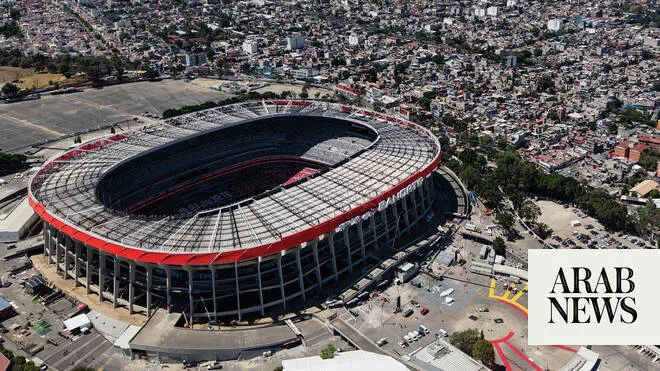
New analysis by London-based brokerage Enness Global finds property values in all 16 2026 host cities rose an average 44% after the 2018 bid award. For decision-makers in Saudi real estate, the 2034 World Cup now arrives alongside Vision 2030 regulatory and infrastructure changes, meaning timing, market structure, and oversupply risk matter.
Saudi Arabia’s 2034 World Cup confirmation is already changing the real estate conversation, because new data on the 2026 tournament gives a very specific clue: housing in the 2026 host cities averaged 44% price growth since FIFA awarded the World Cup to the US, Canada and Mexico in June 2018.
Even more telling, every single one of the 16 markets that hosted matches for the 2026 World Cup showed positive growth over that period. Enness Global’s analysis points to a pattern investors can actually use for timing, not just hype: the meaningful appreciation came after the announcement, not in the final months before the tournament.
So what does that mean for Riyadh, Jeddah, Abha, and the broader Kingdom? If the 2026 pattern holds, then the window for early entry for Saudi-area property investors may be narrowing, because early years after an announcement tend to deliver the strongest appreciation. That is the core stake here. If you arrive too late and the cycle has already front-loaded gains, you may be left paying for optimism rather than capturing value.
But Saudi Arabia is not a plug-and-play repeat of past hosts, and industry observers push back on the simplistic “tournament causes a property boom” narrative. Oliver Morgan, partner and real estate leader at Deloitte Middle East, told Arab News that the critical distinction is that World Cup 2026 host cities are largely passive recipients of tournament-driven investment. In his framing, Saudi Arabia is different because it is actively architecting its real estate transformation through Vision 2030, backed by marquee events.
Morgan’s point matters for how executives should think about causality. He noted that the residential market alone is projected to reach $164.85 billion in 2026, up from $154.61 billion in 2025. Growth, he said, is underpinned by the Riyadh Metro, the Green Riyadh initiative, and major events including Expo 2030 and the ongoing Riyadh Seasons program. In other words, the World Cup is an amplifier rather than a catalyst.
Enness Global, for its part, acknowledged the nuance. Major international events often coincide with infrastructure investment, urban regeneration, increased global visibility, and greater inward investment, all of which can support long-term property performance. The practical question for investors becomes whether the World Cup itself drives price growth, or whether it arrives alongside the underlying conditions that do. For boardrooms, that debate can look philosophical, but it usually becomes operational fast: what fundamentals are you buying, and what risks are you underwriting?
The “fundamentals over the obvious headline markets” lesson is one Enness data brings into focus. The standout performers among the 2026 host nations were not necessarily the cities that grabbed the most attention in 2018. Guadalajara surged 111.6 percent, Monterrey rose 99.7 percent, and Mexico City increased 60.7 percent. In the US, Miami led with 71.3 percent, Kansas City followed at 66.2 percent, and a clutch of major cities including Dallas, Philadelphia, and Houston all posted gains above 40 percent. Even lower-growth examples like Vancouver at 8.6 percent and San Francisco at 2.9 percent still sat on positive territory, with Enness pointing out they started from significantly higher price bases.
That rerouting from the “obvious plays” to secondary or overlooked markets is exactly where co-founder and co-CEO Manar Mahmassani of Stake sees parallels for Saudi Arabia. When asked which markets investors are currently overlooking, she pointed to Madinah, Alkhobar, and Abha. She added that while Riyadh has grown rapidly in recent years, early-entry opportunity in other cities is still open.
Mahmassani anchored each market case in specific development and capital commitments. Madinah has over $53 billion in development in the pipeline, anchored by a $37 billion Public Investment Fund-backed mega-development delivering 47,000 hotel rooms. Alkhobar is described as a confirmed host city with a stable rental base anchored by Aramco employees, plus a $2 billion mixed-use development, a $1.3 billion PIF waterfront entertainment district, and 8,100 new homes underway. Abha, which will host matches at a new high-altitude stadium, has a PIF-backed mountain tourism destination at Soudah Peaks and over $440 million in mixed-use developments underway, with price points well below major cities.
Then she makes the argument boards should underline: “Alkhobar doesn’t get enough attention.” Her logic is that confirmed host-city status plus a stable rental base and a relative price gap to north Riyadh can eventually close. Whether that “eventually” becomes a year-by-year thesis or a multi-cycle bet depends on how investors manage the regulatory and supply picture, which is where Saudi Arabia’s story gets more interesting and less forgiving.
Perhaps the most significant development for international investors is regulatory, not football. The Kingdom’s foreign ownership law for real estate has now come into effect, for the first time allowing non-Saudi nationals to own property in the country. Mahmassani said this means a market that was largely closed to international capital until this year is now open, and she described herself as mobilized to benefit because fractional ownership has been explicitly recognized in the Kingdom’s plans.
Morgan at Deloitte frames the regulatory environment as a feature rather than a constraint. He pointed to Saudi Arabia implementing rental freezes in Riyadh and structural policies governing international freehold ownership, describing these frameworks as “stabilizers” designed to match the volume of supply reaching the market. The comparison to Qatar is instructive here. Lusail apartment rents fell significantly after the 2022 World Cup as supply built aggressively for event demand found itself without the post-tournament population to sustain it.
Saudi Arabia’s fundamentals are structurally different, Morgan said, including a population of 38 million, an active urbanization story, and demand drivers that will outlast 2034. But the risk of oversupply still matters. Mahmassani called out oversupply as a risk that “doesn’t get talked about enough,” and her takeaway is blunt: buy the fundamentals, not just the event.
Timing is where the 2026 data becomes a practical benchmark. Morgan framed the cycle in phases: early-stage investors through 2027 should focus on foundational infrastructure plays and secondary market positioning. At the end of the decade, as Expo 2030 Riyadh approaches and tournament infrastructure nears completion, speculative capital may intensify, so regulatory discipline becomes most critical. His operational framing is to view the World Cup as a 10-year transformation cycle, not a 2034 event.
Mahmassani’s strategy for retail investors is similarly long-view: buy property that generates yield in a city with real demand, collect income through the World Cup preparation period, and treat 2034 as an exit window rather than the payoff itself.
The 44% average recorded across the 2026 host cities since 2018 will not replicate mechanically in Saudi Arabia. Markets differ. The regulatory environment differs. Vision 2030 is larger than a single tournament. But the underlying decision logic is shared. The World Cup can be a milestone, but the real job for executives is to underwrite the market structure that keeps value working after the crowds leave.
This story's Key Insights and Take-aways are locked.
Create a free account to unlock Executive Actions for one credit.
Register to UnlockAlways free for Executives Club members. Join the Club
More in Business

A flaw in PHP just forced governments to pull their own sites offline
European agencies from Belgium to Germany took websites dark to patch a critical weakness in the language behind almost 70% of the web, and the blast radius extends far beyond government portals.

BioWare shuts down, Mass Effect 5 dead after $55B EA buyout
The legendary RPG studio's closure lands months after a $55 billion investment group buyout of EA, raising tough questions for gaming's biggest acquirers.
Musk barred from the room as Tesla, SpaceX boards weigh $3.5 trillion merger
The CEO of both companies is a 'conflicted party' watching independent directors negotiate a tie-up that would create a $3.5 trillion giant he would own about a third of.