
House of the Dragon’s Battle of the Gullet required 3 million liters to film
The cast explains why the opening naval brawl demanded training, choreography, and constant soaking.
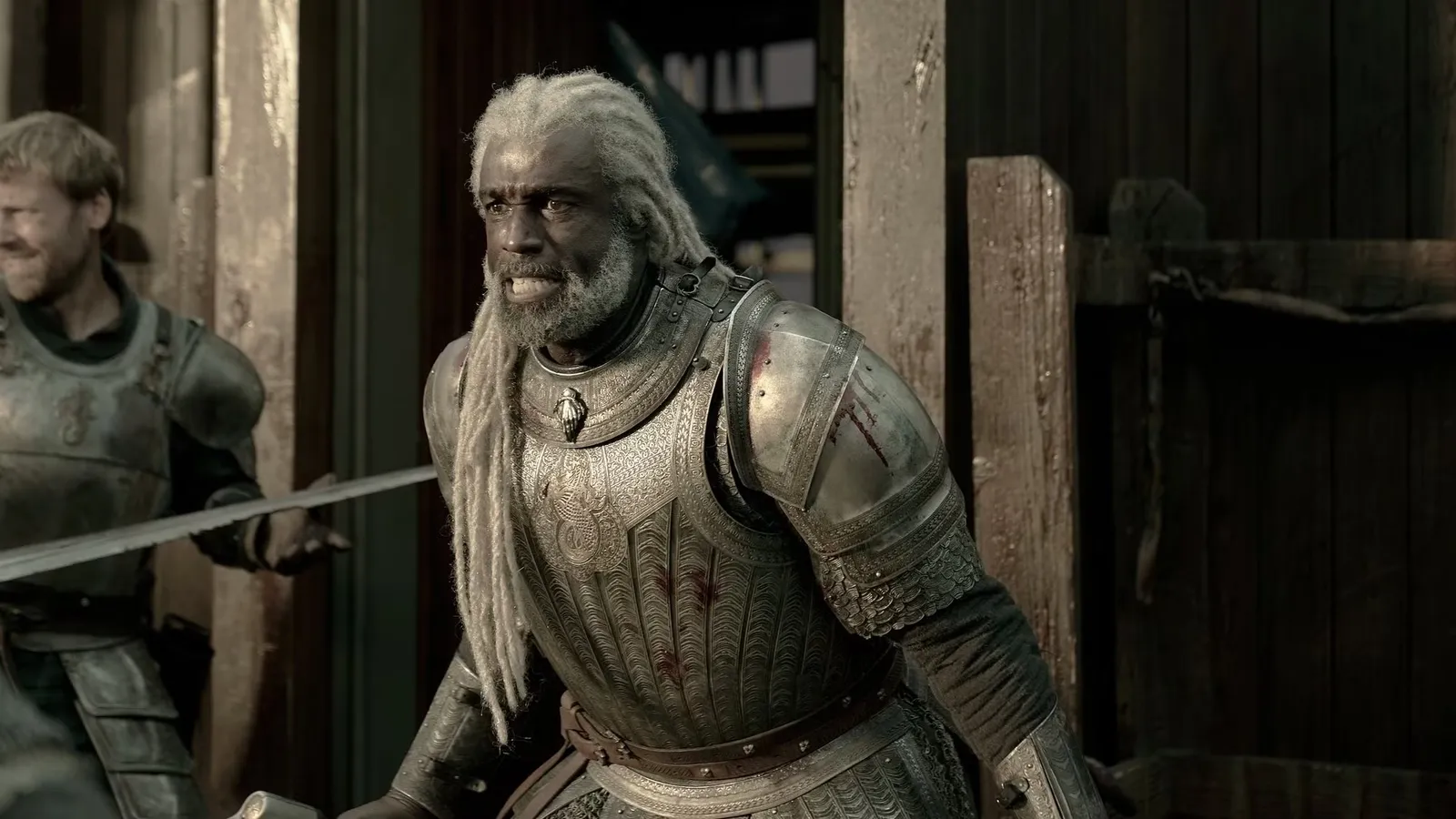
House of the Dragon season 3 kicks off with Steve Toussaint’s Lord Corlys Velaryon and Abubakar Salim’s Alyn of Hull leading Rhaenyra Targaryen’s navy against the Triarchy fleet. The production’s scale, including a tank-and-water setup built around 3 million liters, reshapes how decision-makers should think about complex spectacle costs.
House of the Dragon season 3 opens with the Battle of the Gullet, a naval clash that the show treats like an engineering problem disguised as fantasy. Lord Corlys Velaryon (Steve Toussaint) and his bastard son Alyn of Hull (Abubakar Salim) lead Rhaenyra Targaryen’s navy in a battle against the Triarchy fleet as it tries to break her blockade of King’s Landing. In other words: this is not a background set piece. It is the first impression of the season, and it lands by going big on realism, movement, and chaos at sea.
And the biggest “wait, that is real?” fact is how much water the production had to move. The set included four boats, a dry tank, a wet tank, and an underwater tank, plus three million liters of water. That is the number that turns the Battle of the Gullet from a cool scene into a logistics story. If you are running anything with major operational risk, this is the same lesson you get when you scale a process beyond what humans can do by willpower alone. You need infrastructure, rehearsal, and controlled environments, or the whole thing turns into injury, downtime, and budget drift.
The cast described the battle as needing training, complex choreography, and the practical reality of getting very wet. That matters because filming a naval battle is not just about cameras and costumes. It is coordinated motion across multiple boats, with actors hitched to precise marks and timing, then moved through distinct water conditions. The dry tank and wet tank are not interchangeable, and the underwater tank is its own world. The show is essentially running multiple rehearsals in parallel modes, so when action hits, it looks effortless. It almost never is.
There is also an incentive angle hiding inside the spectacle. HBO spared no expense when producing the “glorious spectacle,” and you can see why. In a show world where viewers decide quickly whether to stay, the opening episode is your retention lever. A faithful adaptation of George R.R. Martin’s books can anchor expectations, but production design has to deliver payoff in real time: the kind of blood and scale readers remember. The Battle of the Gullet is, in Martin’s books, described as the bloodiest naval battle in the history of Westeros. Translating that from page to screen means spending to make the danger legible, not just the drama loud.
Now zoom out to how this connects to decision-making beyond entertainment. Executives managing big budgets, complicated deliverables, or high-risk operations should recognize the same pattern: complex choreography is not a “nice-to-have” artistic choice, it is a risk control. Training reduces mistakes. Clear choreography reduces collisions and injuries. Segmented environments, like dry, wet, and underwater tanks, function like safety layers for execution. In any regulated or compliance-adjacent setting, you would call this process governance. In television, the governance is choreography, tank choice, and the amount of water you plan for before anyone steps onto a boat.
If you are on a board, your second-order question is not “is it cool?” It is “what does it imply about cost predictability and schedule resilience?” When the production uses four boats plus multiple specialized tanks and three million liters of water, you are not buying a simple shoot day. You are building a system that must work continuously. Weather, equipment availability, water handling, set integrity, and rehearsal time all become scheduling variables. Even if you are not in entertainment, the takeaway is transferable: when the output requires extreme physical constraints, your plan must assume higher execution complexity, not higher optimism.
Finally, the strategic stakes for peers are straightforward. Big franchises compete on immersion and credibility. House of the Dragon does not just stage a fight, it commits to the most expensive part of making it feel real: the environment. For executives in any industry, that is a reminder that “scale” is not a marketing word. It is a build decision, a training decision, and a risk decision that shows up later as either dependable delivery or painful overruns. The Battle of the Gullet looks like myth. The work behind it looks like operations.
This story's Key Insights and Take-aways are locked.
Create a free account to unlock Executive Actions for one credit.
Register to UnlockAlways free for Executives Club members. Join the Club
More in Entertainment

Russell Brand's accuser 'bewildered and confused' as he denies 7 sex charges
The criminal case against the comedian is a live test of how media companies manage talent risk when serious allegations go public.

'It's a Magic Trick': Ballet Experts Say Rosalía's SNL Pose Is Impossible
Three ballet experts tell Rolling Stone Rosalía's gravity-defying SNL stillness shouldn't be possible - and why the debate is now part of the show.

Activision CMO: GTA 6 Will Boost Call of Duty, Not Bury It
Activision's top marketer says Rockstar's blockbuster will drive players back to consoles and into Modern Warfare 4, even as the company admits its recent strategy failed.