

House of the Dragon Season 3 credits swap who killed Sharako Lohar
The opening tapestry tweaks Fire and Blood’s “history,” turning the show’s credits into a controlled misinformation lesson.
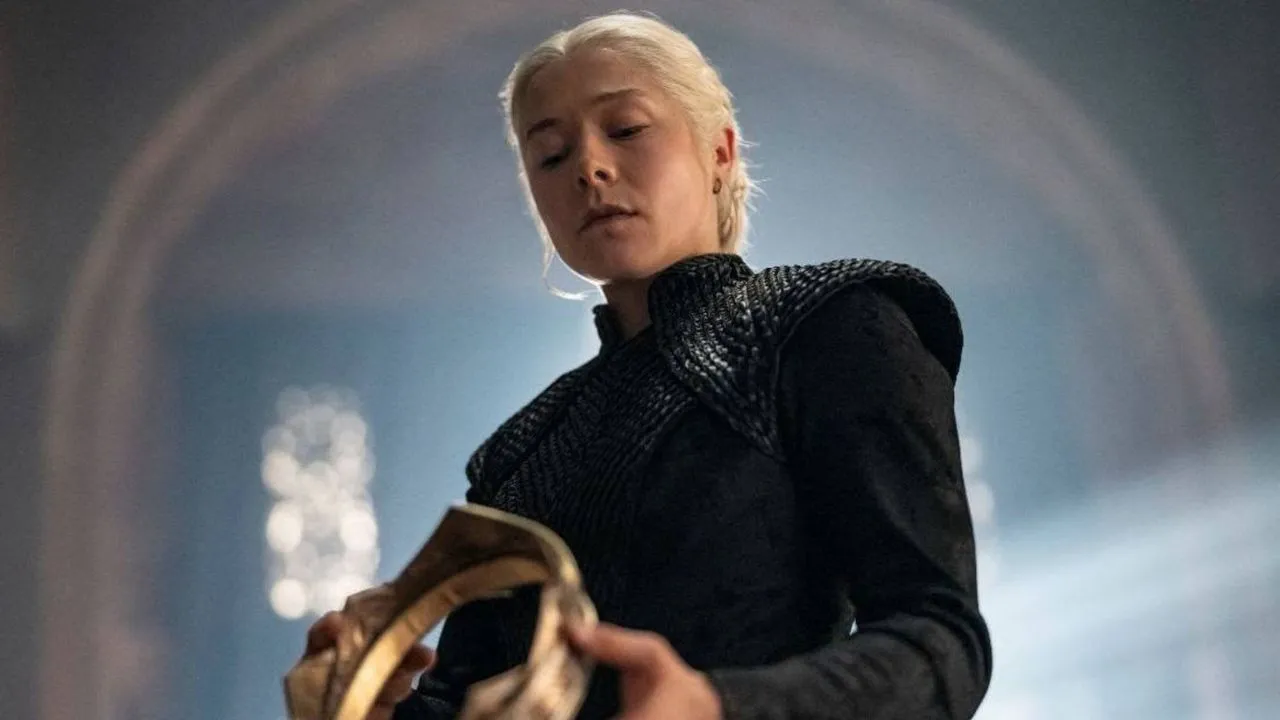
House of the Dragon season 3’s new opening credits add a tapestry at the start of each episode, updating the Targaryen history with the season’s latest major events. The “who did what” details in the tapestry diverge from what viewers see, echoing George R.R. Martin’s Fire and Blood, and forcing executives to think about how narratives shape audience memory and engagement.
House of the Dragon season 3 is doing something sneakier than a normal recap. In the opening credits, a tapestry that chronicling Targaryen history is updated episode by episode, but the “history” it presents is not a perfect match for what happens on screen.
The clearest example is the Battle of the Gullet. In the show, it is Alyn who kills Sharako Lohar. In the tapestry, Corlys Velaryon is shown dramatically facing off with Lohar. That is the kind of mismatch you normally only notice if you are rewatching frame-by-frame. Here, it is the point.
The credits keep playing the same game in other moments. Jacaerys Velaryon is shown being killed by arrows in the tapestry, while in the actual episode his death is subtly different. In the tapestry, he is depicted falling backwards, while in the show he was already in the water. These are not random errors. They read like editorial decisions about what gets remembered, what gets credited, and which version of the story gets to look “official.”
That matters because Fire and Blood is not written like a single, authoritative account. It is a pseudo-historical text about House Targaryen that is presented as coming from three different sources, and those sources disagree with each other on details. In other words, the truth of what “really happened” is unknown, because the record itself is contested. So when the show’s tapestry effectively tells a slightly false version of events, it is aligning the credits with the book’s themes. It is treating history as something that is curated for posterity, not something that is faithfully reconstructed.
This is also why the credit sequence feels like more than set dressing. Opening titles are prime audience real estate. They are one of the few parts of the episode that most viewers see even when they are half multitasking, and they set the tone for what kind of story you are about to get. Here, the tapestry frames the season through a lens of “generations-later memory,” where details get reassigned and circumstances get smoothed into a narrative that looks coherent. The strategic implication is simple: engagement is not only about what happens in the plot. It is about how the framing changes what audiences believe happened, and then how that belief gets reinforced each week when the tapestry updates.
For decision-makers watching this kind of serialized storytelling, the season 3 opening credits are a reminder that narrative systems create stickiness. If viewers start comparing tapestry scenes to on-screen scenes, you get repeat viewing, social discussion, and an incentive to “audit” the show. That is not just fan service. It is a retention mechanism built into the product itself.
The source material itself has been a hot topic around House of the Dragon season 3, tied to George R.R. Martin’s infamous blog post about a “toxic” butterfly effect caused by making changes to his book. One change might have accidentally erased Daenerys Targaryen from canon, though it’s described as an easy fix. The show might even have referenced Martin’s blog post with a sly Easter egg. Put those together with the credits’ deliberate discrepancies, and you get a clear picture of why the tapestry concept resonates: it is about the fragility of canon, the instability of records, and the way small changes can ripple through a world and then be remembered as if they always made sense.
House of the Dragon continues weekly on HBO in the US and HBO Max, Sky, and NOW in the UK. For executives and boards in entertainment, this is a useful case study in how IP works when the “source of truth” is inherently contested. If your franchise is built on multiple accounts, competing memories, and partial perspectives, your format choices can do the heavy lifting. The opening tapestry is effectively telling viewers: history is edited, and you should expect disagreement between versions.
That is the real stake for peers managing similar properties. When the product teaches audiences to compare, verify, and debate, you strengthen the ecosystem around the show. And when the credits explicitly mirror the book’s theme that truth is unknown because sources disagree, you turn a weekly viewing habit into an ongoing investigation. In a market where attention is expensive and switching is one click away, the best retention tricks do not look like tricks. They look like lore.
This story's Key Insights and Take-aways are locked.
Create a free account to unlock Executive Actions for one credit.
Register to UnlockAlways free for Executives Club members. Join the Club
More in Entertainment

Russell Brand's accuser 'bewildered and confused' as he denies 7 sex charges
The criminal case against the comedian is a live test of how media companies manage talent risk when serious allegations go public.

'It's a Magic Trick': Ballet Experts Say Rosalía's SNL Pose Is Impossible
Three ballet experts tell Rolling Stone Rosalía's gravity-defying SNL stillness shouldn't be possible - and why the debate is now part of the show.

Activision CMO: GTA 6 Will Boost Call of Duty, Not Bury It
Activision's top marketer says Rockstar's blockbuster will drive players back to consoles and into Modern Warfare 4, even as the company admits its recent strategy failed.