
How a 'Japanese approach' to business landed Bloober Team a Switch 2 horror exclusive
CEO Piotr Babieno explains how stability and trust, not one-off hits, convinced Nintendo to back Onyx: The Dark Grip, the first third-party horror exclusive in over a decade.
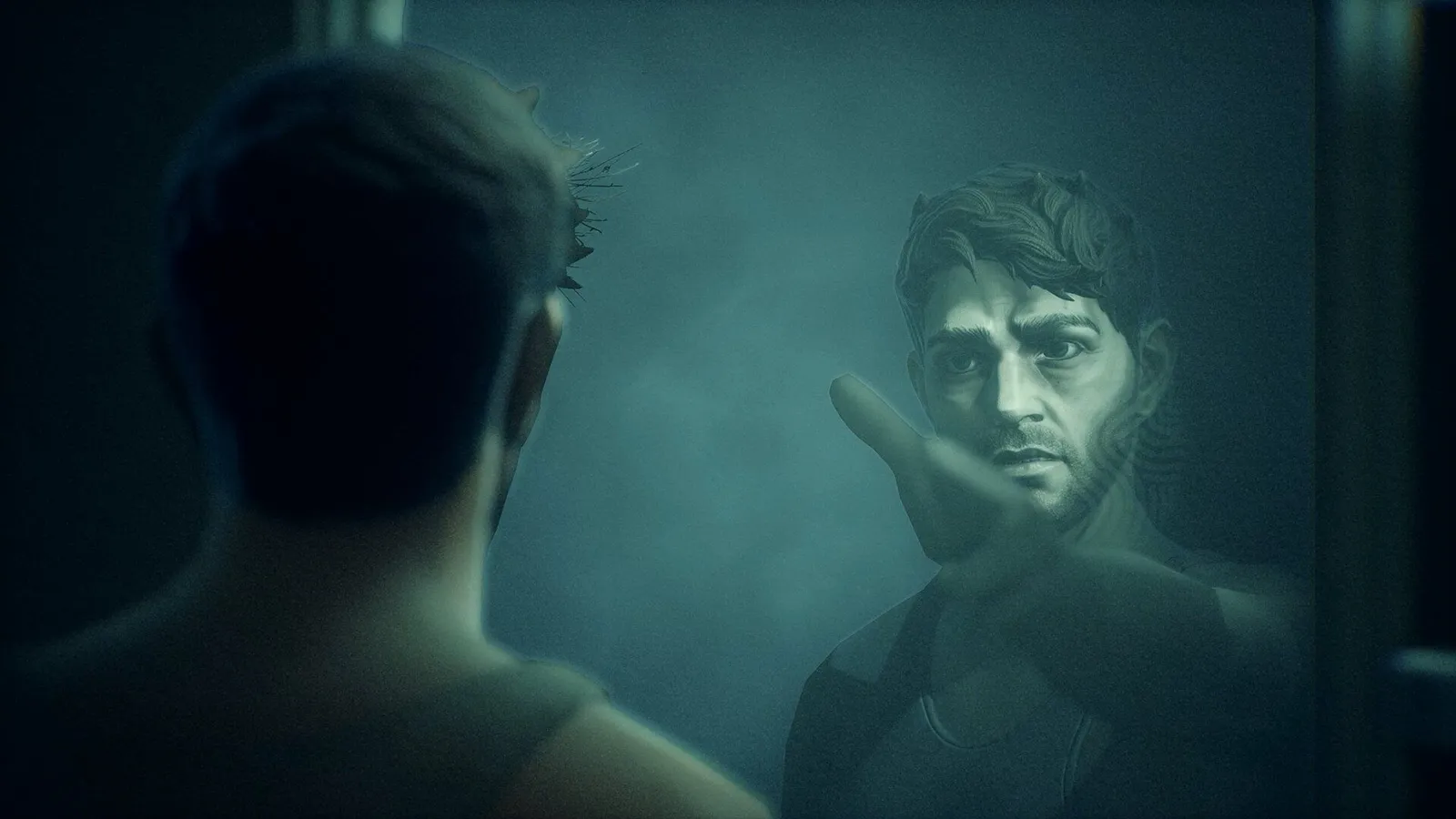
Bloober Team CEO Piotr Babieno and Broken Mirror executive director Tymon Smektała landed Onyx: The Dark Grip as a Switch 2 exclusive, the first third-party Nintendo-exclusive horror game since 2014. For decision-makers, it signals that a reputation built on long-term stability and Japanese-style trust can unlock platform relationships that rivals assumed were closed.
Bloober Team CEO Piotr Babieno calls it "a Japanese approach" to business: build trust, keep knowledge inside the company, and never cut staff to chase a quarterly number. That philosophy just produced something the industry thought impossible. Onyx: The Dark Grip, a 2.5D psych-horror game built exclusively for the Nintendo Switch 2's handheld mode, will be one of the first third-party Nintendo-exclusive horror titles in over a decade. The announcement came via a Nintendo Direct, and it marks a reputational turnaround that few studios have matched.
The last true third-party Nintendo-exclusive horror game was 2014's Fatal Frame: Maiden of Black Water on the Wii U. Nintendo's family-friendly image, combined with Japan's stricter ratings boards, has historically kept horror at arm's length. Babieno admits, "It wasn't easy for Nintendo to deal with horror." So how did a Polish studio, known for a few stumbles before its acclaimed Silent Hill 2 remake, get past that gate? According to Babieno and Broken Mirror executive director Tymon Smektała, it comes down to how Bloober conducts itself as a business: not as a one-shot project shop, but as a company built for decades. "Nintendo doesn't work with just anyone," Smektała says. "Generally, Japanese companies are companies that you have to build trust with, and you have to prove that you are worthy of that trust."
That trust was earned, in large part, by Silent Hill 2 Remake. The gorgeously faithful yet modernized survival horror was met with staggering praise, impressing even those who balked when Konami first revealed the Polish studio's involvement. It became one of the most important remakes in the genre to date. Babieno says Konami's seal of approval extended beyond the publisher and into the Japanese market itself. "Definitely," he says when asked if that success played a role in the Nintendo deal. But he insists the deeper reason is philosophical.
"For us, it was never a one-shot. It was never that we would like to create a game, and that's it. It's [about] the long run, and so we would like to build not just the next successful title, but a successful and very stable company." That stability-first mindset is what Babieno describes as "a Japanese approach" rather than a Western one, an alignment of values with companies like Nintendo and Konami. It also shapes internal decisions. "We are a publicly traded company, so business is very important," he says. "But I think that even more important is to keep knowledge inside of the company."
Babieno ties that approach directly to headcount. "We always are making decisions by thinking, 'okay, are we able to do this without cutting staff in the future?' Because if we need to cut anyone, maybe it doesn't make sense." He cites a favorite Satoru Iwata line: "If we let go 5% of our team, 95% will live with the fear that it could happen to them in the future." Bloober and Broken Mirror now employ almost 270 people, and Babieno says they are responsible not just for those employees but their families. That ethos, he argues, is why Nintendo was willing to take a chance on a horror exclusive.
The game itself is designed to exploit the Switch 2's hardware. Onyx casts the player as both a God and the person possessed by it, and Babieno says it is Broken Mirror's chance to "put horror literally back into players' hands." He grins, "I'm a Nintendo fan, so I'm making my dreams come true in some way." Smektała emphasizes breaking the fourth wall: "New hardware, new opportunities, are giving us something we didn't have before." He wants to "trick the player, make him doubt what he's seeing on screen, make him doubt how he interacts with the device." That interactive ambition extends to other Broken Mirror titles, including Saw: Genesis, a social horror game in the vein of Repo and Lethal Company, and this month's asymmetrical co-op Beyond the Dark: Nightwatch.
For executives watching from the outside, the lesson is not about horror or Nintendo specifically. It is about how trust compounds. Babieno wants to bring back "those amazing times of GameCube" when Eternal Darkness and Resident Evil 4 lived on Nintendo consoles, but in a new way. "I believe that Nintendo fans always like to play something exclusive to them." The fact that Nintendo chose a Western studio for this bet suggests that platform holders are willing to open their gates to partners who demonstrate long-term reliability, not just commercial firepower.
The strategic stakes are clear. In an industry where layoffs and one-and-done projects are common, Bloober's "Japanese approach" offers an alternative model: prioritize stability, retain knowledge, and let reputation open doors that short-term thinking cannot. For peers in similar roles, the question is whether they can afford to think in decades when the market demands quarters. Babieno's answer, backed by a Switch 2 exclusive, is that the long run is the only run that gets you past Nintendo's gates.
This story's Key Insights and Take-aways are locked.
Create a free account to unlock Executive Actions for one credit.
Register to UnlockAlways free for Executives Club members. Join the Club
More in Business

Elon Musk unveils a flying car, and SpaceX helped build it
The Tesla CEO's showcase at a SpaceX facility signals a future where road and rocket engineering converge.

Apple's $2,000 iPhone Duo opens preorders, taking on Samsung and Google
Apple's first foldable hits the market at a premium price, reshaping a category Samsung and Google have led.

Pope Leo XIV, first American pope, diagnosed with lung cancer
The 71-year-old Chicago-born pontiff underwent successful surgery on his right lung, and his diagnosis raises new questions about his AI-focused papacy and the Vatican's future.