
Hunter Schafer’s Cora partners with Michelle Yeoh’s Olwen in Blade Runner 2099
Prime Video drops the eight-episode series on Nov. 25, with Ridley Scott’s sequel set 50 years after Blade Runner 2049.

Hunter Schafer leads as Cora in Prime Video’s Blade Runner 2099, executive produced by Ridley Scott. The new teaser, unveiled at San Diego Comic-Con’s Hall H, tees up a binge release on Nov. 25 and a replicant-human power shift that has real business implications for series strategy and IP risk.
Hunter Schafer’s Blade Runner 2099 moves fast, and the teaser’s central move is painfully clear: Cora, a fugitive trying to stop running, gets forced into an uneasy partnership with Olwen, a replicant played by Michelle Yeoh. The show’s day-one pitch is not just “more Blade Runner.” It’s the idea that replicants are no longer an exception, they are the political weather system. In the trailer, Yeoh’s Olwen pushes back on the emotional isolation Cora clings to, saying, “The old world forever fights to come back - humans want what was taken from them.” Then Olwen reframes the story in a way that signals the stakes are existential for both sides: “But it’s our time now.”
That matters for one very practical reason. Blade Runner 2099 is arriving as a binging event for Prime Video, with an eight-episode series that drops Nov. 25, the day before Thanksgiving. That release timing is designed for momentum. The holiday window tends to compress viewing into shorter bursts, which is exactly what platforms want when they are trying to turn marketing spend into measurable retention. In other words, this isn’t a slow-burn prestige play announced months in advance just to keep the IP warm. It’s a full launch push: teaser on Friday at San Diego Comic-Con’s Hall H, then a defined binge date that viewers can plan around.
Set 50 years after the events of Denis Villeneuve’s 2017 Blade Runner 2049, the series re-anchors the franchise in Los Angeles, but with a twist: the city is “reborn,” just not by humanity. The official logline lays out the core engine for the plot: Cora takes on one last identity as a Blade Runner in a final bid to stop running. She is forced to partner with Olwen, a replicant days from dying, to hunt down a runaway hiding a truth that could collapse their fragile city. That last phrase, “collapse their fragile city,” is not just world-building. It implies the show is built for consequences, not mood.
From a business lens, the creative choice to center a partnership between a human blade runner and a replicant guide is a smart way to widen the franchise’s audience without breaking its DNA. Blade Runner stories traditionally thrive on identity, memory, and what counts as “real” when technology and society collide. This teaser keeps those themes but turns the dynamic into a two-way negotiation: Cora can’t win her fight alone, Olwen insists replicants are here to stay, and the narrative is positioned as a hunt with a truth attached. That structure is especially relevant for platform decision-makers because it gives viewers clear episodic momentum. Even before the first episode airs, the premise already suggests why you would keep watching.
The on-screen team behind this pivot is equally telling. Ridley Scott executive produces the series, with showrunner Silka Luisa also serving as executive producer. Additional executive producers listed include Andrew Kosove and Broderick Johnson. The production leadership stack also names Alcon’s President of Television Ben Roberts, David W. Zucker, and Clayton Krueger from Scott Free Productions, along with Tom Spezialy, Richard Sharkey, Michael Green, Cynthia Yorkin, Frank Giustra, and Isa Dick Hackett. For executives, that kind of lineup signals continuity in franchise management, while the showrunner role lets the creative direction be updated for a new audience and a new streaming era. Continuity reduces brand risk. A visible showrunner reduces creative drift. Both are valuable when the release calendar is crowded.
Casting-wise, the teaser doesn’t just rely on its two marquee leads. Dimitri Abold (The Hunger Games: The Ballad of Songbirds & Snakes) and Lewis Gribben (Somewhere Boy) are also starring. The recurring guest stars listed include Katelyn Rose Downey (The Nun II), Daniel Rigby (Renegade Nell), Johnny Harris (A Gentleman in Moscow), Amy Lennox (Only Child), Sheila Atim (The Woman King), Matthew Needham (House of the Dragon), Tom Burke (Furiosa), and Maurizio Lombardi (Ripley). That roster matters because streaming viewers often sample based on familiarity. Guest stars that already live inside major franchises can help a new series earn quick recognition, which is crucial in the week it launches.
There’s also a regulatory-adjacent subtext worth noting, not because this is a policy drama, but because the premise is basically a stress test for governance. A city where replicants are rising, a society that “reborn” looks like it was rebuilt without human control, and a truth that could collapse the city all map neatly onto questions regulators and lawmakers often fight in real life: how societies define rights, how technology changes labor and identity, and what happens when enforcement lags behind reality. Even if no real-world agencies are named in the source, the story’s framing reflects why the Blade Runner IP keeps coming back. It’s not just dystopia. It’s the tension between what institutions promise and what technology actually delivers.
For peers in media leadership roles, Blade Runner 2099 is a reminder that franchise strategy today is a performance problem as much as a creative one. Prime Video is betting that Ridley Scott’s Blade Runner world still has enough gravitational pull to carry an eight-episode binge on a specific holiday-adjacent date. The trailer’s partnership dynamic between Schafer’s Cora and Yeoh’s Olwen also suggests the show wants viewers to emotionally commit quickly, not just admire the aesthetic. If that works, it reinforces a broader playbook for executives: pair iconic IP with a character-driven relationship that forces a moral decision early, then package it with a clear drop date that turns buzz into hours watched.
This story's Key Insights and Take-aways are locked.
Create a free account to unlock Executive Actions for one credit.
Register to UnlockAlways free for Executives Club members. Join the Club
More in Entertainment

'It's a Magic Trick': Ballet Experts Say Rosalía's SNL Pose Is Impossible
Three ballet experts tell Rolling Stone Rosalía's gravity-defying SNL stillness shouldn't be possible - and why the debate is now part of the show.

Activision CMO: GTA 6 Will Boost Call of Duty, Not Bury It
Activision's top marketer says Rockstar's blockbuster will drive players back to consoles and into Modern Warfare 4, even as the company admits its recent strategy failed.
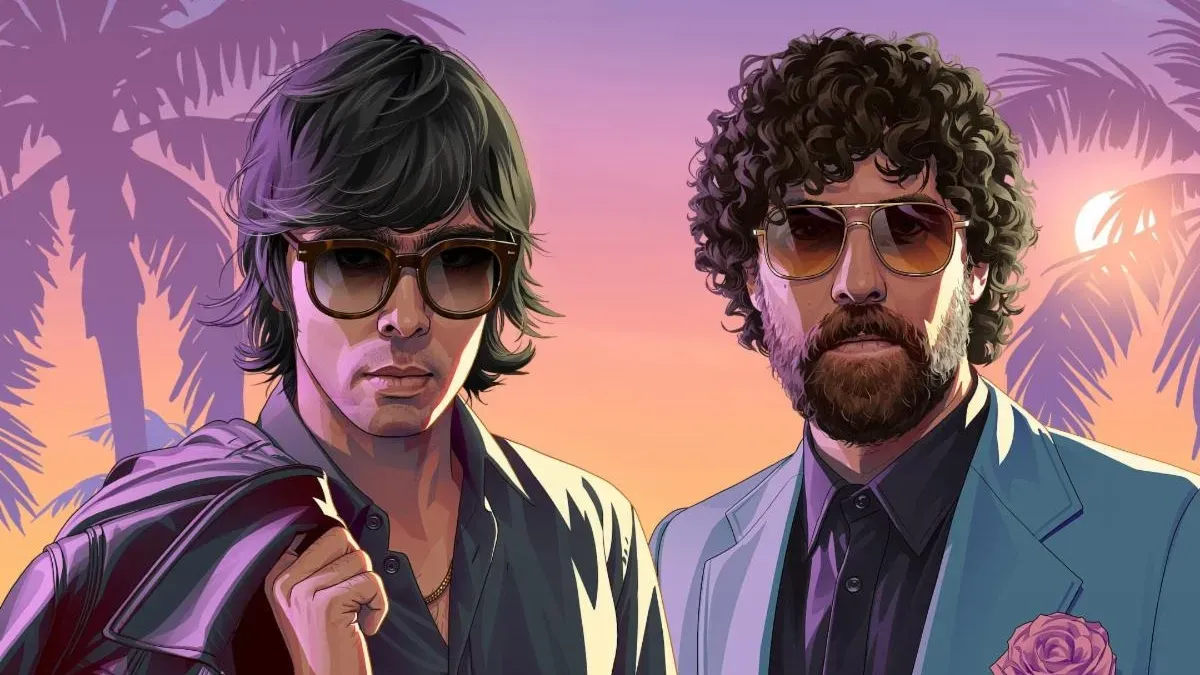
Justice to Score GTA 6, Share New Song with Tame Impala, SZA, King Gizzard
Rockstar taps the French duo for the GTA VI score, and the first taste is a genre-melting collab with Tame Impala, SZA, and King Gizzard & The Lizard Wizard.