
Hyundai turns World Cup into a robot audition, then faces union strike risk at home
The Atlas robots go viral on FIFA grounds, while Hyundai’s South Korean factory robot rollout hits stalled labor talks and a possible strike.
Hyundai Motor Group is using its FIFA sponsorship to market Boston Dynamics robots, including Atlas displays and a five-part documentary on teaching Atlas to play soccer. For decision-makers, the bigger story is the collision of brand theater with a real labor dispute that could cost Hyundai hundreds of millions and has a U.S. deployment timeline.
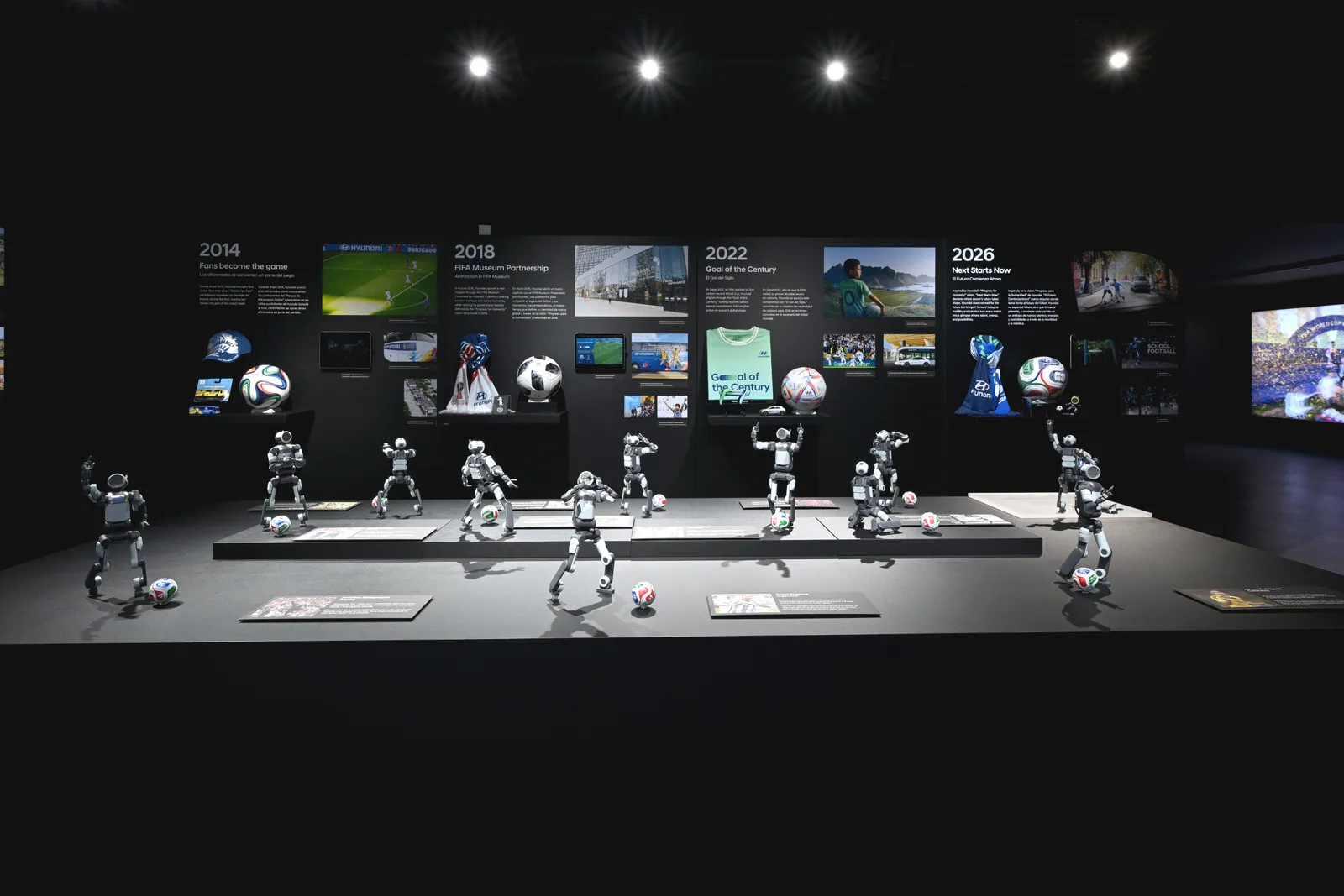
Hyundai is using the World Cup like a showroom, but the sales pitch has teeth. The FIFA Museum presented by Hyundai in New York City is packed with Boston Dynamics robots, including a robot dog at the entrance and Atlas posing with a soccer ball for photos. The pitch is clear and constant: Hyundai wants the world to see it as a robotics company, not just an automaker. And crucially, Hyundai is not doing this in a vacuum. At the same time the robots are delighting kids and drawing photo lines, Hyundai is dealing with union resistance in South Korea over plans to stock factories with robots, and a stalled negotiation has left the company exposed to a potential strike.
Here is the real stake for executives: Hyundai’s labor dispute is not just a headline risk. If industrial action happens, the source says the union, considered one of the largest and most influential in South Korea, would be a blow for Hyundai and could cost the company hundreds of millions of dollars. That matters because Hyundai is also laying out a U.S. robotics future, planning to deploy Atlas humanoid robots in the United States by 2028, starting with the Hyundai Motor Group Metaplant America in Georgia, and ultimately deploying more than 25,000 robots. When a company is trying to sell a “future” narrative globally while labor negotiations are unraveling locally, the operational and reputational risks start to compound fast.
In the New York FIFA Museum, robots are literally staged around soccer symbolism. At 50 Rockefeller Plaza, visitors encounter the robot dog greeting them with head nods and hind shimmies. Atlas is positioned by the door with a banner above showing Atlas with arms raised. Inside, Atlas stands holding a soccer ball, and the elevator closing doors show Atlas merged into the iconic image of Diego Maradona hoisting the World Cup trophy in 1986. Even before you get to the security layer, the experience is designed like a funnel: awe first, then familiarity, then association with one of the most recognizable sporting moments on Earth.
Outside the museum, Hyundai expands the theme with a five-part documentary about teaching Atlas to play soccer as part of its World Cup marketing. And to cement the robotics storyline in the tournament itself, the source says Hyundai has deployed robot dogs in stadiums to patrol the area for added security. That is not just a cute PR flourish. In a World Cup context, “security” is a trusted word. By embedding robots into security roles at stadiums, Hyundai is trying to normalize the idea that robots belong in public spaces, not only in factories or research labs.
The corporate backstory behind the show is longer than the current hype cycle. Hyundai’s robotics push began in earnest in 2020 when the automaker agreed to acquire a controlling stake in Boston Dynamics, the company behind Atlas and the dog-like robot Spot. Since then, Hyundai has increasingly positioned robotics as a core pillar of its future, describing it as capable of automating factory work and assisting with other industrial tasks. The World Cup campaign becomes the latest move in that bid, using FIFA’s global reach to broadcast a particular identity: Hyundai as “robotics company,” not “car company with robotics vibes.”
Now add the hard counterweight. The source says Hyundai’s plan to stock its factories in South Korea with robots met strong resistance from the union, which fears humanoid robots will one day replace factory workers. Talks to negotiate wages and the deployment of these robots have stalled, and the union overwhelmingly voted Wednesday to authorize a strike. The scale of potential disruption is a key reason this dispute is so dangerous for Hyundai’s broader robotics story. The faster Hyundai tries to scale automation, the more the company is forced to answer the question labor is asking: who benefits, who gets displaced, and what happens to wages and jobs during the transition.
This is where the World Cup strategy becomes more than brand management. Hyundai is one of FIFA’s select group of global sponsors, and the source notes that this ensures no other automakers can advertise at official World Cup locations worldwide. When Hyundai renewed its FIFA sponsorship contract in 2023, it included Boston Dynamics, with the stated purpose to “showcase future mobility solutions,” according to a press release referenced by the source. In other words, Hyundai did not stumble into robotics marketing. It bought a platform and built a narrative around it.
For decision-makers tracking robotics, labor risk, and international expansion, the second-order implication is straightforward: marketing robots is the easy part. Operationalizing them across plants and geographies is where politics, economics, and workforce planning collide. Hyundai is signaling it will bring Atlas to the U.S. by 2028, starting with Metaplant America in Georgia, and scaling to ultimately deploy more than 25,000 robots. If labor negotiations remain unresolved in South Korea, the company may face either costly delays or expensive mitigation strategies, both of which can ripple into timelines, cost targets, and investor confidence. Meanwhile, the World Cup bubble can keep the robots looking like the future, but the factories decide whether the future ships on schedule.
This story's Key Insights and Take-aways are locked.
Create a free account to unlock Executive Actions for one credit.
Register to UnlockAlways free for Executives Club members. Join the Club
More in Business

Bungie cuts most Destiny 2 staff as Sony says Marathon still matters
Herman Hulst confirms layoffs affecting most Destiny and some Marathon teams after Bungie admits Destiny fell short.

SK Hynix jumps 11% after seeking up to $29.4B in Nasdaq listing
The chip giant filed for a Nasdaq listing plan that could raise $29.4 billion, instantly reshaping investor expectations.
Micron revenue hits nearly $42B as AI memory lifts gross margins above 81%
Fiscal Q3 results crush estimates, prove AI memory is rewriting Micron's margins, and change the momentum math for the whole chip stack.