

Ian Anderson says The Designers Republic “was a joke”, after collectors remortgaged houses
Forty years after Sheffield’s founders started by accident, their music art became so coveted it triggered real estate gambles.
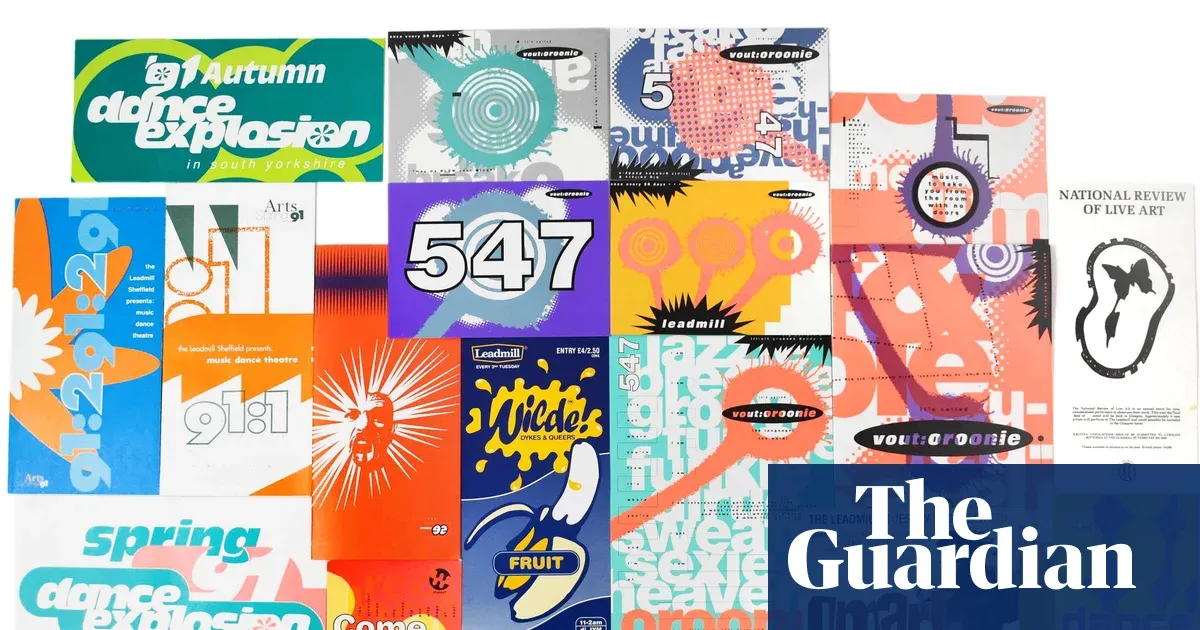
Ian Anderson, founder of The Designers Republic (TDR) in Sheffield, explains how the studio began “by mistake” in 1986 and why early work stayed black and white. His designs later shaped record covers, packaging, logos, and major collaborations, attracting extreme collectors who remortgaged houses to keep up.
Their eye-popping designs burst out of Sheffield in 1986, and forty years later the obsession is still going. Ian Anderson, the founder of The Designers Republic (TDR), says the studio’s name was “a joke” and that, early on, “we weren’t designers.” Even more telling: Anderson recounts obsessive collectors who, in his words, remortgaged their houses twice to keep up with TDR’s output.
That is the wild part. Not that TDR made music look different. Sheffield’s designers did that. The truly consequential detail is how far the demand went: some fans treated their graphic universe like a must-own asset, enough to risk real estate for physical design releases. In Anderson’s telling, the company’s rise was less about deliberate fame and more about momentum from an unplanned origin story.
Here’s how it started. Anderson describes founding The Designers Republic “by mistake” in Sheffield forty years ago, alongside co-founder Nick Phillips. The name itself was not a branding exercise, it was an inside joke: “The name the Designers Republic was a joke, because we weren’t designers.” That lack of formal design training mattered in the craft. Anderson recalls that “Early on, everything we did was in black and white because we didn’t know how to make it colour.” In other words, the early aesthetic constraints were not a style choice. They were a capability snapshot.
Then the constraint turned into a signature. With Phillips, TDR quickly became synonymous with music. The studio designed record covers, packaging, logos, and campaigns for artists and labels across electronic and alternative scenes, including Aphex Twin, Autechre, Pulp, and Nine Inch Nails. If you lived through that era, you know album art was not just decoration. It was identity. TDR’s work helped turn sound into something you could recognize at a glance.
Their reach did not stop at vinyl. The studio worked on groundbreaking video games, including Wipeout and Grand Theft Auto. They also collaborated with brand giants like Coca-Cola and Adidas. And the work has been institutionalized in design culture: TDR’s pieces are held in the MoMA and the V&A. That is a big deal for anyone who thinks design is “just” commercial. Museum holdings signal that, at minimum, the output crossed from niche subculture into durable cultural record.
So why does this matter to executives, boards, and anyone making decisions about creative IP today? Because the source hints at a demand curve that is not purely aesthetic. Anderson’s anecdote about collectors remortgaging twice suggests that for certain audiences, TDR’s output became scarce, emotionally charged, and actively pursued. That kind of behavior changes how companies think about distribution, licensing, and the economics of brand equity. It also changes what stakeholders expect when they fund creative work. If your audience treats design like an object of commitment, the asset is not limited to the first sale. It becomes something people chase over time.
There is also a strategic lesson in the origin story. TDR’s early limitations were not solved with a conventional “hire a designer” pivot. Anderson’s explanation frames early mistakes and technical constraints as the baseline, not the end point. In market terms, that means the team’s differentiated identity came from what they could do, then scaled through relevance, partnerships, and output. The company became a machine for recognizable design across formats, not a one-hit visual identity.
And if you want the strongest second-order implication from this piece, it’s about how creative companies compete for attention over decades. TDR did not just catch a moment. It built an engine of output across music, games, and mainstream brands, then retained legitimacy through museum acquisition. The fact that “obsessive collectors” still exist after forty years, and that Anderson can still recall an extreme example, tells you their work stayed sticky. For boards and leadership teams, the takeaway is clear: creative work that compounds culturally can eventually behave like capital. And when capital gets created, the downstream behavior from consumers can get intense.
This story's Key Insights and Take-aways are locked.
Create a free account to unlock Executive Actions for one credit.
Register to UnlockAlways free for Executives Club members. Join the Club
More in Business

Anthropic’s Levant Alpöge cracks the Jacobian conjecture after 87 years
A Harvard valedictorian used Claude to hit a 1939 breakthrough, but the missing “why” is the real problem.

Uber buys Delivery Hero for nearly $15B, vaulting to top food delivery outside China
The deal doubles Uber's dual-services footprint and pushes a ride-and-eats bundling play into 50 more markets.

Epic and Google drop settlement bid, forcing rival Android app stores by July 22
Google told the court it is ready to carry third-party app stores starting Wednesday, July 22.