
Iason Gabriel at DeepMind: the philosopher asking what AI is, before it ships
As commercial and geopolitical pressures intensify, DeepMind’s ethicist-in-residence tries to make moral thinking matter.
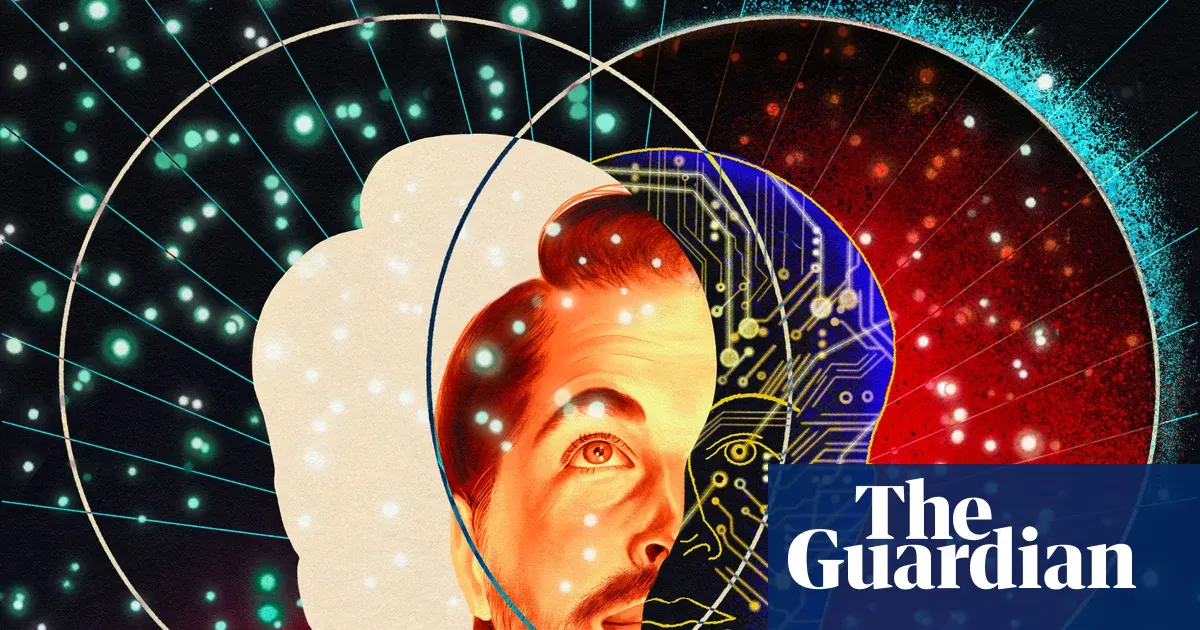
Iason Gabriel, a political philosopher working at Google DeepMind since 2017, has focused on anticipating the impact of AI. His path runs from Oxford moral philosophy to UN crisis work, raising the question: can ethicists change outcomes when pressure ramps up?
Since 2017, Iason Gabriel has been working inside Google DeepMind, the London-based arm where much of the company’s AI research has been concentrated. He did not arrive as a typical tech hire. A friend suggested in 2017 that the then-33-year-old political philosopher apply for a role at DeepMind, and Gabriel took the leap from academia and international development toward the hardest question in modern AI. Not “what can we build?” but “what is this thing, really?”
That question matters because the incentives around AI are not waiting politely for philosophy to catch up. The source frames a world where commercial and geopolitical pressures are escalating, meaning AI systems are pushed forward under timelines shaped by competition, national strategies, and market demand. In that environment, the real test for someone like Gabriel is whether ethical reasoning can do anything more than decorate the process. Can an ethicist make a difference when the organization, and the world around it, reward speed and advantage?
Gabriel’s background is an unusual résumé for a deep learning lab, and that mismatch is part of the point. He was described as cheerful but intense, with interests outside the usual corporate toolbox: he practices Vipassana meditation and, according to his brother, is “enthusiastic” about rock climbing. His education and work also span moral theory and real-world instability. He is the eldest son of a Greek management professor and a British documentary maker, a mix that hints at both structured thinking and narrative attention. At Oxford, where he was a fellow at St John’s College, he taught courses on political theory and published papers on what he framed as the moral contortions of “yuppie ethics” and the ethical blind spots of effective altruism. Those topics are not abstract. They are about how good intentions can curve out into self-justifying behavior, and how moral frameworks can miss the places where harm hides.
And then there is the fieldwork side that raises the stakes. When he was not teaching at Oxford, Gabriel did crisis work for the United Nations Development Programme in Sudan and Lebanon. That is a different kind of moral environment than a seminar room. In crisis settings, ethical tradeoffs are not hypothetical. They are forced by constraints, uncertainty, and urgency. That context likely informs why the question of AI impact cannot be postponed until the system is already deployed, especially when the source emphasizes that pressures are rising.
So what does an ethicist try to do inside DeepMind? The source’s framing suggests anticipation and thinking through impact, which is a subtle but important function. It is not only about whether AI is “good” or “bad.” It is about the “deep mystery” of what the technology actually is, which can be the difference between governance that is performative and governance that is operational. If teams cannot articulate how a system behaves and why it behaves that way, ethical checks become generic. If they can, the ethical work can translate into concrete constraints, review questions, and decision gates.
This is where the broader market context shows up, even without extra numbers. AI companies live under a familiar tension: research exploration is uncertain, but product deployment is measurable. Commercial pressure pushes for timelines, while geopolitical pressure pushes for strategic advantage. Boards and executives feel both at once. They need defensible processes for risk, but they also face competitive pressure that punishes slowness. That is why roles like Gabriel’s become interesting: they sit in the gap between technical capability and the consequences that arrive after capability.
For decision-makers, the strategic question is not whether “ethics” sounds good. It is whether ethicists can influence what gets built, what gets tested, and what gets treated as acceptable. Gabriel’s story points to a particular kind of reckoning: as pressure escalates, ethical reasoning can either become an after-the-fact compliance checkbox, or it can reshape upstream thinking. The source sets up that tension explicitly, and Gabriel’s journey from Oxford moral philosophy to UN crisis work to DeepMind suggests a bet that careful moral analysis can be more than symbolism.
If you are an executive, investor, or operator tracking AI governance, this is the takeaway: when the incentives are loud, the quiet questions become the battleground. Gabriel’s presence inside DeepMind is a signal that the organization is trying, at least in part, to prepare for impact before it lands. Whether that can truly “make any difference” under commercial and geopolitical pressure is the open question the story leaves you with, and it is the one peers in similar roles should be asking inside their own walls.
This story's Key Insights and Take-aways are locked.
Create a free account to unlock Executive Actions for one credit.
Register to UnlockAlways free for Executives Club members. Join the Club
More in Technology

Nvidia's $89B data center quarter: the 9 companies cashing in
The AI buildout is minting fortunes beyond GPUs, and memory, cloud, and cooling suppliers are riding the same wave.

Google quietly links your phone number to every Android account on your SIM
Adding a SIM now ties your phone number to all Google accounts - and future accounts inherit it. Here's the security and privacy stakes.

Hijacker AI 'Skynet mode' runs 100,000 attack steps against exposed models
Symantec caught a criminal AI agent that borrows other models, steals data, and mines crypto; the only relief is no confirmed victims yet.