

IATA warns travelers are risking lives by grabbing bags and filming emergencies
The industry says aircraft can be evacuated in 90 seconds, but hand-luggage grabs and videos can turn that into disaster.
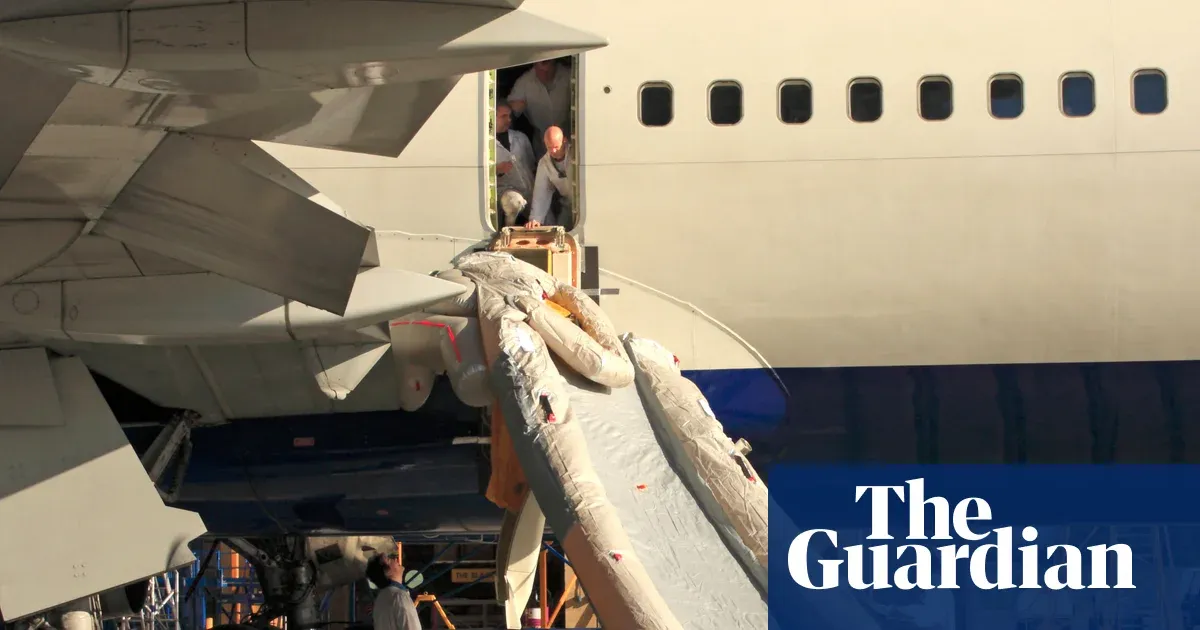
IATA officials and industry experts warn that air passengers are increasingly putting lives at risk by filming emergencies and retrieving hand luggage instead of evacuating planes. The consequence is slower evacuations, blocked exits, and calls for fines to deter the behavior.
Air passengers are increasingly risking lives by grabbing hand luggage and filming emergencies instead of evacuating, according to IATA officials and industry experts described in The Guardian. The concern is not abstract. Passenger aircraft are designed for rapid evacuation in an emergency, and the industry is saying that reaching for bags can meaningfully slow everyone down.
The operational benchmark here is blunt: passenger aircraft are designed to be fully evacuated in 90 seconds in an emergency. Industry experts point to a dangerous multiplier effect when people try to retrieve hand luggage. It does not just add a few seconds of personal decision-making. It can block exits and aisles, and it can also damage slides or cause injury, which then cascades into even slower evacuation.
Why does this matter so much for executives and boards? Because it reframes “customer behavior” from a training issue into a systems risk issue. In any emergency, evacuation is a choreography of limited space, limited time, and human improvisation. The plane is built with exits, slides, and an aisle layout intended for a coordinated flow. When passengers behave in ways that contradict the intended flow, the aircraft’s safety design can be undermined at the exact moment it matters most.
The other layer is incentive. People reaching for bags are often motivated by understandable instincts, like not wanting to lose belongings or capturing proof for social media. But in an emergency, those incentives collide with physical constraints. The Guardian’s reporting, drawing on the airline industry body IATA, suggests that the behavior is frequent enough that some experts are now considering enforcement tools, including fines, to deter it.
This is where regulation and industry self-governance start to overlap. Airlines and aviation bodies have long used a mix of policy, crew instruction, and deterrence messaging. The suggestion that “fines could be needed” signals a shift toward harder consequences, particularly if softer approaches have not changed enough passenger behavior. For decision-makers, that is a board-level question: how much of passenger safety is handled through training and communication, and how much requires economic disincentives that change actions in the moment.
There is also a reputational risk that comes with the “filming” part of the story. Emergency footage can go viral, but it also hardens public expectations about what airlines should have prevented. Even when no one is hurt, incidents create narratives. If the narrative becomes “passengers ignored evacuation guidance to take videos and retrieve bags,” that can quickly move from safety operations to brand and trust. Executives should treat this as a potential communications and compliance spotlight, not just an operational headache.
Second-order effects extend into staffing and procedures. If passengers are more likely to resist evacuation behavior, crew training and cabin procedures may need recalibration. Crews rely on passengers to follow instructions under stress; when that assumption breaks, workload rises and outcomes get harder to predict. The Guardian report’s core claim is about lives and time to evacuate. The strategic implication for airlines is that cabin operations and customer-facing rules may need to be reinforced with whatever tools can reliably change behavior before an emergency happens.
For other stakeholders, the stakes are similar even if they are not airlines. Airport operators, regulators, and insurers all care about evacuation time because it is tied to the probability of injury and the severity of outcomes. The reported 90-second design target turns passenger compliance into a measurable safety variable. If passengers routinely slow down exits and aisles, that variable shifts against everyone involved.
In short, this is a safety and governance issue wearing a customer-behavior disguise. IATA and industry experts are warning that grabbing hand luggage and filming emergencies can slow evacuation, damage evacuation equipment like slides, and cause injury. If fines enter the conversation, it would represent a more forceful deterrence approach to protect the evacuation timeline that aircraft are built around. For executives, the question is whether current messaging and enforcement mechanisms are strong enough, because in an emergency, “small” passenger decisions can become system-level failures within seconds.
This story's Key Insights and Take-aways are locked.
Create a free account to unlock Executive Actions for one credit.
Register to UnlockAlways free for Executives Club members. Join the Club
More in Business

Anthropic’s Levant Alpöge cracks the Jacobian conjecture after 87 years
A Harvard valedictorian used Claude to hit a 1939 breakthrough, but the missing “why” is the real problem.

Uber buys Delivery Hero for nearly $15B, vaulting to top food delivery outside China
The deal doubles Uber's dual-services footprint and pushes a ride-and-eats bundling play into 50 more markets.

Epic and Google drop settlement bid, forcing rival Android app stores by July 22
Google told the court it is ready to carry third-party app stores starting Wednesday, July 22.