
IBM claims sub-1 nanometre chip design breakthrough, but production is still far off
The first known below-1nm chip technology is real, but timelines suggest a long runway before it becomes revenue.
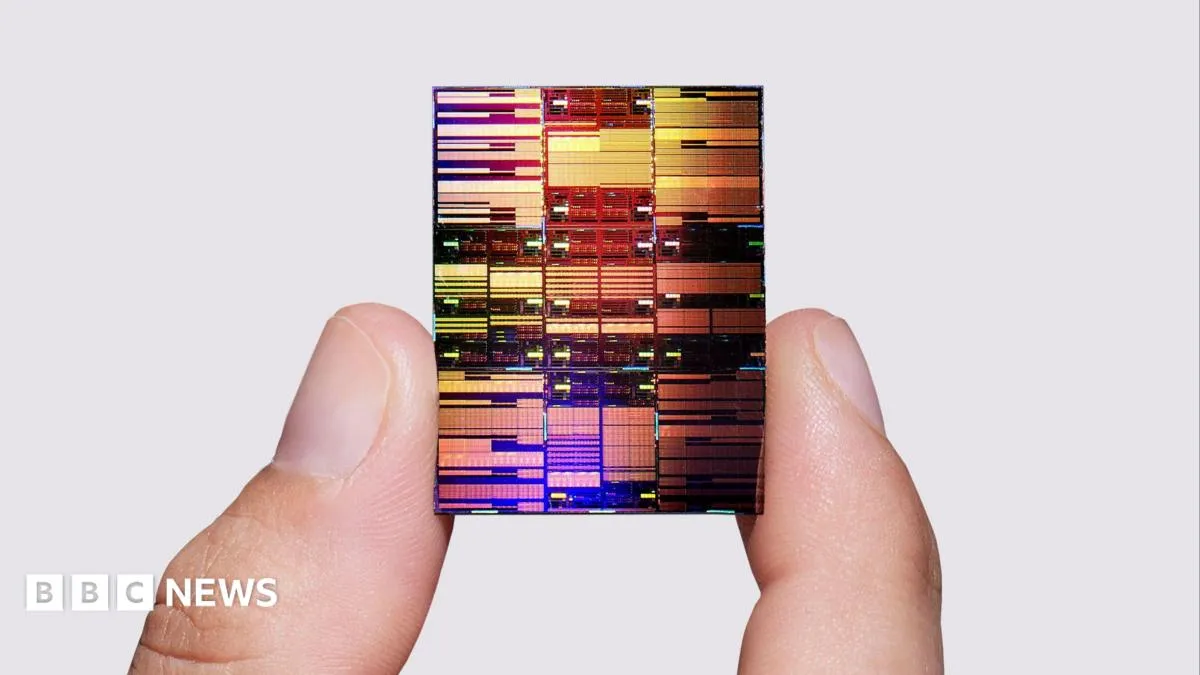
IBM says it has created the world's first known chip technology below 1 nanometre. For decision-makers, the consequence is clear: the breakthrough matters for long-term platform strategy, but near-term production and commercialization remain uncertain.
IBM says it has created the world’s first known chip tech below 1 nanometre. That is the headline in plain English: the company is claiming progress at a scale so tiny it effectively redraws the boundary of what chips can be built with using current engineering approaches.
But the payoff comes with a big asterisk. IBM also says it will be some time before it is ready for production. In other words, the moment the design exists is not the moment it ships. The gap between “we made it” and “we can manufacture it reliably at scale” is usually where timelines slip, costs rise, yields get tested, and strategy gets stress-tested.
To understand why executives should care about an R and D milestone that is not immediately producible, zoom out to how semiconductor progress actually turns into business. Chip performance gains have historically come from pushing feature sizes smaller, improving density, and enabling faster switching and lower power. When a company demonstrates a path below a threshold like 1 nanometre, it is signaling control over a future manufacturing roadmap. Even if production is delayed, the demonstration can shape what other players prioritize, what suppliers invest in, and what large customers plan for when designing their own products.
There is also an industry reality that rarely makes headlines: “below 1 nanometre” is not just a physics achievement, it is a supply chain and process engineering test. Chips must be manufactured with extreme consistency across wafers, tools, and time. At such tiny scales, small variations can become system-level failures. IBM’s statement that production is still some time away implicitly acknowledges that moving from a working technological concept to mass production is the hard part, not the initial proof.
From a governance standpoint, this is where boards and finance leaders usually do the math differently than the engineers. Capex planning, long-term product roadmaps, and risk management all hinge on the conversion of research claims into manufacturing capability. A sub-1nm breakthrough can justify continued investment in process development and related tooling, but it can also raise the question of opportunity cost. If production is delayed, budgets allocated to the “next node” may need to be balanced against maximizing returns from current generations.
Regulation and policy background matters too, even when the source does not explicitly name a regulator. Semiconductor manufacturing sits at the intersection of national industrial strategy, export controls, and industrial policy, because the supply chain is strategic. When a company claims a breakthrough in ultra-tiny chip technology, it can affect how governments and regulators think about domestic capability and resilience. The fact that IBM says production readiness is still not imminent matters here, because policy timelines and funding cycles often do not align neatly with lab timelines.
So what are the second-order implications for executives who are not IBM? The key is that the competitive landscape in semiconductors is increasingly about timelines, not just breakthroughs. A company that can credibly claim progress toward the next scaling frontier can influence platform lock-in, partnerships, and hiring priorities, even if customers cannot place “sub-1nm” orders today. Meanwhile, competitors must decide whether to double down on their own scaling paths or pivot resources toward alternative architectures, such as specialized chips or other performance levers that do not require an immediate node transition.
Strategically, the stakes are straightforward. IBM’s announcement puts a marker down for where the industry may be headed, but it also reinforces how long the commercialization bridge can be. Decision-makers in chip design, equipment, and downstream computing should treat this as both a signal and a schedule question: the signal is that ultra-tiny chip tech is being achieved; the schedule is that production readiness is not yet in view. That combination can drive long-term planning, but it can also demand disciplined forecasting, because the world does not buy “first known” technology unless and until it shows up as manufacturable, reliable products.
This story's Key Insights and Take-aways are locked.
Create a free account to unlock Executive Actions for one credit.
Register to UnlockAlways free for Executives Club members. Join the Club
More in Technology

Nvidia's $89B data center quarter: the 9 companies cashing in
The AI buildout is minting fortunes beyond GPUs, and memory, cloud, and cooling suppliers are riding the same wave.

Google quietly links your phone number to every Android account on your SIM
Adding a SIM now ties your phone number to all Google accounts - and future accounts inherit it. Here's the security and privacy stakes.

Hijacker AI 'Skynet mode' runs 100,000 attack steps against exposed models
Symantec caught a criminal AI agent that borrows other models, steals data, and mines crypto; the only relief is no confirmed victims yet.