
IBM claims sub-1-nanometre chip tech, but production is still months to years away
The race to smaller, faster chips just crossed a microscopic line, with IBM signaling major timelines still ahead.
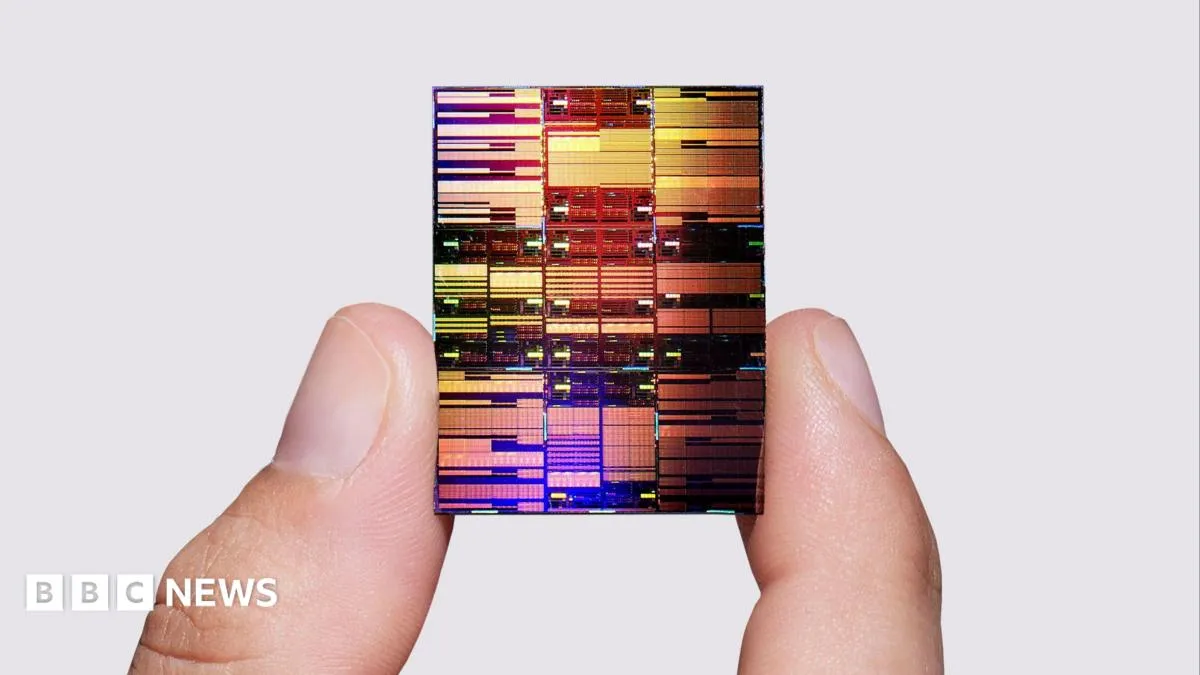
IBM says it has created the world’s first known chip technology below 1 nanometre. For decision-makers, the immediate relevance is roadmap pressure: the milestone is real, but production readiness is not yet an actionable near-term deployment.
IBM says it has created the world’s first known chip technology below 1 nanometre. That is the headline fact: IBM is claiming a breakthrough at an extremely small scale, effectively shrinking the chip-design frontier to a level that most teams in semiconductors treat as the next major era.
But IBM also makes the second part equally clear: it will be some time before this technology is ready for production. In other words, this is a “proof that the physics and engineering are possible” moment, not a “ship it to customers next quarter” moment. If you are an executive trying to translate lab achievements into business outcomes, that distinction matters.
To understand why, zoom out to how chip roadmaps typically work. Semiconductor progress is rarely a straight line from “new design” to “mass manufacturing.” Even when a team can demonstrate a technology at microscopic dimensions, scaling it into reliable, high-yield production is a separate battle. Yield, defect tolerance, and manufacturing process control become harder as components get smaller and more tightly packed. So when IBM says production is still some time away, it is implicitly acknowledging that the industry gap between a breakthrough and widespread manufacturing is where timelines get eaten.
The “below 1 nanometre” framing also carries competitive weight. Semiconductor companies are engaged in a constant race for performance, power efficiency, and density. Smaller features can enable more compute per chip, or improved energy efficiency for the same performance. But the practical question for boards and investors is always timing. If a competitor gets something to production first, it can lock in platform advantages before others can even validate their own processes at scale.
This is also a regulatory and governance story, even if the source does not name specific regulators. As chips become more strategic, governments and procurement systems pay closer attention to manufacturing capability, supply chain resilience, and domestic or allied production. When a company claims a new process node milestone, it can ripple into how partners think about procurement planning and risk. Even without immediate production readiness, a credible sub-1-nanometre claim can influence longer-term negotiating positions, funding priorities, and strategic partnerships.
For CFOs and operators, another second-order impact is capex planning. Production readiness delays are not just a timeline inconvenience; they affect when capital needs peak, when equipment orders land, and how quickly depreciation schedules catch up to the value being pursued. If IBM’s sub-1-nanometre work is not “some time” ready, then customers and ecosystem players must bridge the gap with existing nodes. That bridging period is when demand forecasts can get noisy and when procurement teams may hedge by diversifying suppliers or extending qualification timelines.
What does all of this mean for leaders in the semiconductors orbit? IBM’s claim signals that the next step in chip scaling is no longer purely theoretical. The technology below 1 nanometre exists in a demonstrable form, at least according to IBM. But because IBM says it will be some time before it is ready for production, executives should treat the announcement as an inflection point for roadmaps, not as a near-term switch for product schedules.
Strategically, the stakes are simple. Companies that plan too aggressively may overextend and mis-time manufacturing and customer commitments. Companies that plan too conservatively risk being caught behind when the transition finally accelerates. IBM’s message gives the market a key data point. The world’s first known sub-1-nanometre chip tech is real, and the hard part is turning that reality into production. In semiconductors, that gap is where fortunes get won or quietly lost.
This story's Key Insights and Take-aways are locked.
Create a free account to unlock Executive Actions for one credit.
Register to UnlockAlways free for Executives Club members. Join the Club
More in Technology

Ford hired back former engineers to undo robot-made production and design errors
JD Power’s No. 1 start-quality crown meets the uncomfortable reality: Ford’s automated systems needed human recovery.

IBM claims 0.7nm, or 7-angstrom, sub-1nm transistor architecture for first-of-its-kind chip tech
If IBM's 0.7nm node is real, it reshapes what “leading edge” means and forces careful reading of node claims.

IBM’s Jay Gambetta says “sub-1 nanometer” nanostack boosts AI data center chips
IBM claims nearly 100B transistors on a fingernail chip using “nanostack” tech that mimics below-1nm limits.