

ICE plans $2M robot dog purchase for immigration enforcement
A DHS procurement notice shows ICE seeking quadruped robots, a signal that enforcement tech is going mobile.
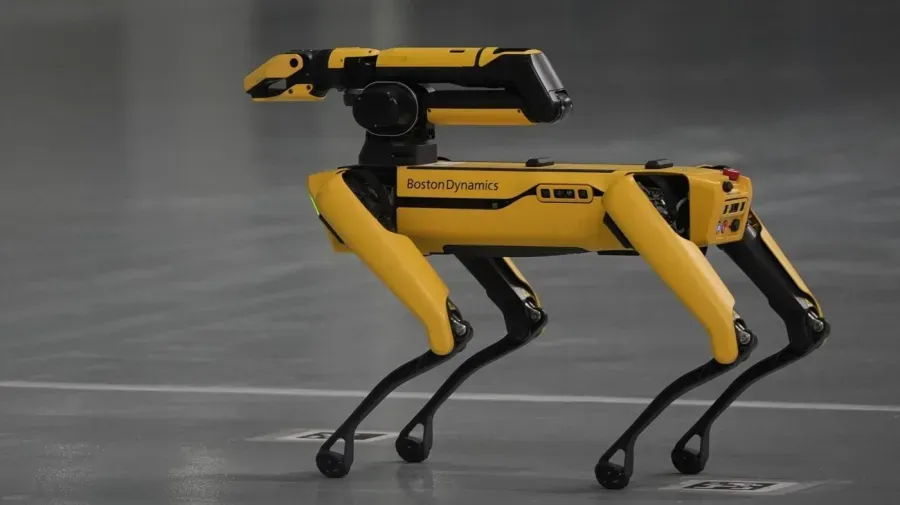
ICE is planning to spend between $1 million and $2 million on robot dogs, according to a DHS funding document posted Thursday. The move signals that federal enforcement agencies are ready to adopt quadruped robotics for field operations, opening a visible procurement lane for vendors.
Immigration and Customs Enforcement is planning to spend up to $2 million on robot "dogs" to assist its agents' operations, according to a Department of Homeland Security funding document posted Thursday to DHS's Acquisition Planning Forecast System. The notice puts the estimated cost between $1 million and $2 million, a range that suggests the agency is gearing up for a pilot or modest initial roll-out rather than a wholesale robotic takeover of enforcement.
Make no mistake: the figure is small in federal terms, but the signal is outsized. ICE deploying quadruped robots would place one of the most scrutinized federal law enforcement agencies on the cutting edge of mechanical policing. That combination - an enforcement arm under constant pressure and a machine-design category that already attracts public debate - is exactly the kind of story that moves quickly from procurement paperwork to political flashpoint.
The metric that matters for vendors is the procurement vehicle. DHS's Acquisition Planning Forecast System is a public registry where the agency posts intended purchases before formal solicitations. It functions as an early-warning radar for contractors, letting them align capability briefs, teaming arrangements, and demonstrations before an official RFP hits the street. When a forecast appears with a price range and a functional need, it tells the market that the agency has already validated a gap worth paying for.
Quadruped robots, commonly called robot dogs, are mechanical platforms designed to walk on four legs, navigate uneven terrain, and carry sensors, cameras, or other payloads. For an agency like ICE, the appeal is obvious: agents need to inspect border infrastructure, ports of entry, and remote facilities, and a machine can enter a confined or hostile space before a human does. The robot transmits video and telemetry back to an operator, effectively extending the reach of an agent without putting anyone in physical danger.
None of that happens in a policy vacuum. The very features that make robot dogs useful - remote operation, continuous surveillance, persistent recording - are the ones that trigger resistance from civil-liberties groups. Federal courts have already wrestled with warrantless surveillance systems, and any ICE robot deployment will inherit that scrutiny. The funding notice itself does not specify operational parameters, leaving a critical unknown: will the robots patrol the border, search cargo, or monitor detention facilities? Each use case carries a different political temperature and a different set of accountability demands.
For robotics founders and defense primes, this notice is a market signal worth acting on. Federal adoption of a new hardware category usually runs through exactly this path: a planned acquisition, a modest budget, then follow-on contracts as requirements harden. ICE, with its nationwide footprint and complex infrastructure, offers the kind of reference customer that can legitimize a product line for police departments, in particular, many of which look to federal agencies for procurement cues.
The strategic takeaway for executives is to read beyond the dollar value. A $1 million to $2 million forecast is not going to move a defense giant's stock price, but it is a bellwether for the long game. The agency is signaling intent, starting the clock on vendor engagement, and inviting the market to show up. For founders, getting on the radar early can mean the difference between picking up a follow-on contract and watching it go to a prime that responded to a later notice. And for privacy advocates, the notice is an early invitation to engage DHS on rules of the road before the robots hit the field.
This story's Key Insights and Take-aways are locked.
Create a free account to unlock Executive Actions for one credit.
Register to UnlockAlways free for Executives Club members. Join the Club
More in Business

Tim Cook steps down as Apple CEO, stays on as chair with $45M equity
The 'Trump whisperer' keeps his White House and Beijing access as Apple navigates tariffs and a $4.6 trillion market cap.

Snowflake shares surge as AI data demand crushes estimates, lifting full-year forecast
Stocks jumped on stronger-than-expected guidance, signaling enterprise AI workloads are accelerating faster than Wall Street priced in.

Tim Cook's 15-year Apple CEO run ends: 3 lessons for any successor
After 15 years, Tim Cook hands Apple to John Ternus - here's how he turned a $350B company into a $4.6T juggernaut.